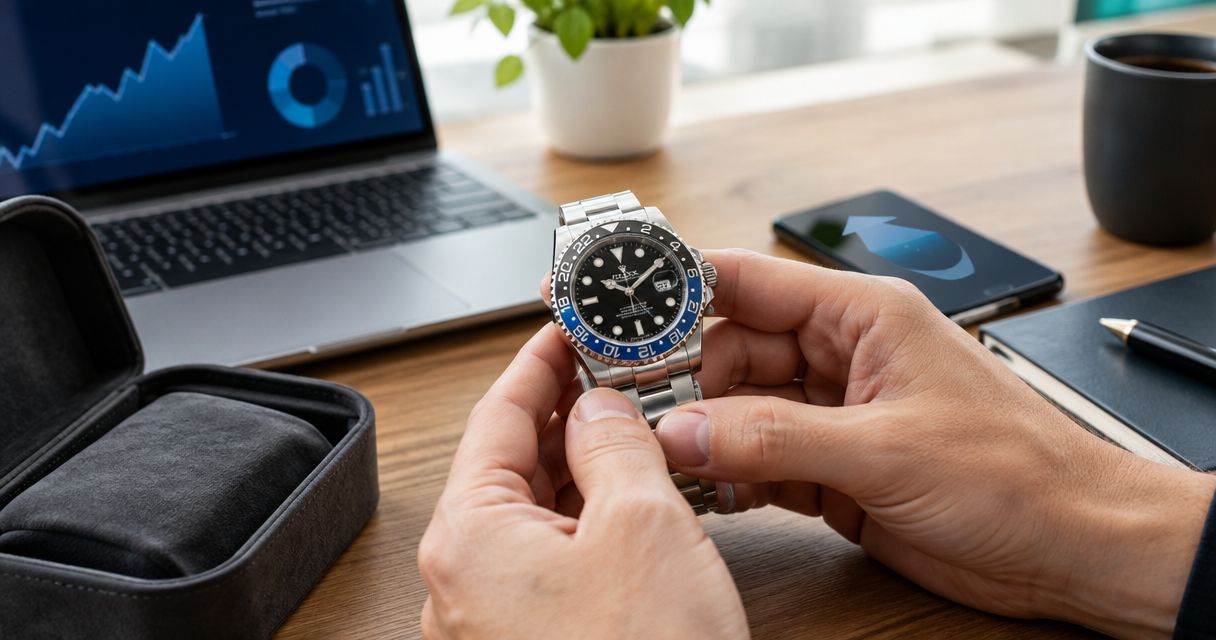
This page covers what is publicly known about luxury watch brand advertising cost in 2026, brand by brand, and what that information means for collectors buying or selling a Rolex, Patek Philippe, Audemars Piguet, Omega or Cartier.
- No major luxury watch brand publishes its advertising cost in 2026, so no honest per-brand dollar average exists.
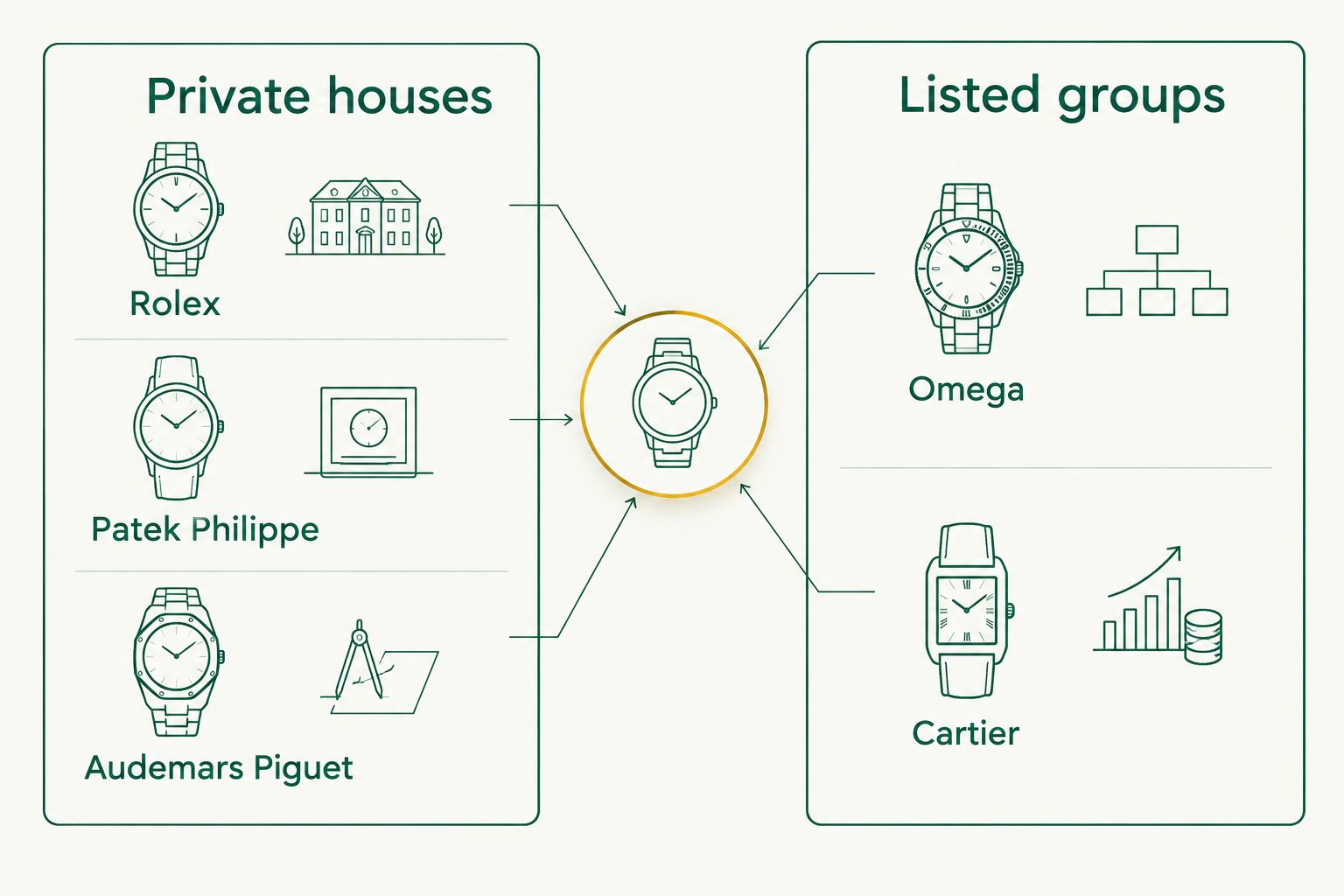
- Rolex, Patek Philippe and Audemars Piguet are privately held and disclose no marketing figures at all.
- Omega and Cartier sit inside listed groups that report marketing only at group level.
- Judge luxury watch brand advertising cost by visible channels, not rumored budgets.
- Buyers should price watches on reference, condition and papers, never on marketing weight.
The short answer: there is no verifiable average ad cost by luxury watch brand in 2026. The brands that dominate the category either are privately owned and publish nothing, or belong to listed groups that report marketing spend across the whole group rather than per brand. Any site quoting a precise Rolex or Patek Philippe ad budget is estimating. What you can compare with confidence is ownership, disclosure and the long-running sponsorships each brand puts its name on. If you came here for what the watches themselves cost, the average luxury watch price by brand guide is the page with the numbers.
Why this matters
Marketing weight shapes how a brand is perceived, and perception shapes demand on the secondary market. A brand that has timed the Olympic Games since 1932 carries a different kind of recognition than one that barely advertises.
That recognition does not translate into a published budget. For a collector in 2026, the useful question is not how much a brand spends, but where it shows up and whether that visibility supports long-term value.
Luxury watch brand advertising cost: the benchmark table
The table below compares the brands most traded on the pre-owned market. Every row is limited to facts that can be checked in public sources: ownership structure, whether brand-level ad spend is disclosed, and the brand's best-known long-running marketing channel.
| Brand | Ownership | Brand-level ad spend disclosed? | Best-known marketing channel | Best for |
|---|---|---|---|---|
| Rolex | Private, owned by the Hans Wilsdorf Foundation | No | Sports timekeeping: Wimbledon since 1978, Formula 1 since 2013 | Buyers who want the most recognized name in the category |
| Tudor | Owned by Rolex | No | Sports and ambassador campaigns | Buyers who want Rolex-group build at a lower entry point |
| Patek Philippe | Private, Stern family ownership since 1932 | No | The Generations print campaign, running since 1996 | Collectors buying for long holding periods |
| Audemars Piguet | Private, founding-family ownership | No | Brand events, ambassadors and golf | Collectors focused on the Royal Oak line |
| Omega | Swatch Group, listed on the SIX Swiss Exchange | Group level only | Official timekeeper of the Olympic Games since 1932 | Buyers who want heritage at a broader price spread |
| Cartier | Richemont, listed on the SIX Swiss Exchange | Group level only | Polo, including the Cartier Queen's Cup | Buyers who want dress and jewelry-adjacent design |
| All / Overall | Mixed | None disclose brand-level ad spend | Sponsorship and print over direct-response ads | Use as the yardstick: no dollar benchmark exists |
Omega and Cartier are the only brands in this table with any public marketing disclosure, and even that stops at group level; Rolex, Patek Philippe and Audemars Piguet disclose nothing. That split is the real benchmark. The three houses with the strongest secondary-market demand are also the three that say the least about spending.
Rolex leads on visible reach, with Wimbledon timekeeping dating to 1978 and a Formula 1 partnership dating to 2013. Omega matches it on longevity, with Olympic timekeeping since 1932. Patek Philippe trails on volume of placements but has run one consistent print idea since 1996 — the rare case of a campaign becoming part of the product's identity.
How these numbers were assembled
The table draws on public ownership records and publicly announced sponsorships current as of 2026. Group-level figures from Swatch Group and Richemont annual reports are not broken out by brand, so they are not reproduced here.
Named limitation: this data cannot rank brands by dollars spent. It shows where each brand advertises and how openly it reports, not how much any single campaign or channel costs.
What the channels tell you about each brand
Rolex
Rolex spends its visibility on sport, tennis, motorsport and golf chief among them. The foundation ownership means no shareholder report ever breaks out a figure. Verdict: highest recognition, zero disclosure.
Patek Philippe
Patek Philippe advertises less often and with one repeated message about passing a watch to the next generation. That message lines up with how Patek owners actually behave: long holds and fewer quick flips. Verdict: lowest visible volume, most consistent message.
Audemars Piguet
Audemars Piguet leans on the Royal Oak itself, with ambassadors and events doing more work than traditional ad placements. Independent ownership means no public figures. Verdict: product-led marketing, no disclosure.
Omega
Omega's Olympic role gives it global exposure every two years across Summer and Winter Games. Swatch Group reporting covers the whole group, so the Omega share stays unknown. Verdict: broadest event reach, partial disclosure.
Cartier
Cartier markets as a maison first and a watchmaker second, which is why polo and jewelry-style campaigns carry its watches. Richemont reports at group level. Verdict: lifestyle-led, partial disclosure.
How to use these benchmarks
- Do not pay a premium for marketing. Advertising cost is invisible to buyers in 2026. Price a watch on reference, condition, box and papers.
- Treat sponsorship longevity as a demand signal, not a value guarantee. Rolex and Omega have decades of placements, yet individual references still rise and fall on the secondary market.
- Weight independent houses on scarcity. Patek Philippe and Audemars Piguet market lightly and produce in limited numbers, which is why their steel sports models trade the way they do.
- Sell into recognition. A brand with wide visibility has a deeper buyer pool when you sell or trade.
For collectors ready to act on that, Luxury Time NYC is a luxury watch retailer that buys, sells and trades pre-owned and new Rolex, Patek Philippe, Audemars Piguet and Omega. Luxury Time NYC is best for collectors who want to buy, sell or trade high-end references in one place rather than across several marketplaces. The trade-off: the catalog centers on the top Swiss houses, so buyers hunting niche independents will find less to choose from.


FAQ
How much does Rolex spend on advertising in 2026?
Rolex does not publish its advertising spend. It is privately held by the Hans Wilsdorf Foundation, so no annual report discloses the figure.
What is the average luxury watch brand advertising cost?
No verifiable average exists. The top private houses disclose nothing, and listed groups like Swatch Group and Richemont report marketing only at group level.
Is Omega marketed more than Rolex?
There is no public data to compare their budgets. Both run decades-long sport programs: Omega at the Olympic Games since 1932, Rolex at Wimbledon since 1978.
Why does Patek Philippe advertise so little?
Patek Philippe relies on one consistent message rather than volume. Its Generations campaign has run since 1996 and ties directly to long ownership.
Does heavy advertising raise a watch's resale value?
Not directly. Resale value follows reference, condition, papers and supply; recognition helps by widening the buyer pool when you sell.
Which watch brands disclose any marketing figures?
Only brands inside listed groups, such as Omega under Swatch Group and Cartier under Richemont, and only as group-wide totals. No brand-level figure is published.
Where can I buy or sell a Rolex, Patek Philippe or Audemars Piguet?
Luxury Time NYC buys, sells and trades pre-owned and new watches from all three houses. Check the site for current inventory.
One last thing
The most effective watch advertisement of 2026 is not a campaign. It is the secondary market itself: every Rolex or Patek Philippe that holds demand years after purchase markets the brand for free. Before you buy, look at how a reference trades pre-owned — that tells you more than any ad budget ever could.