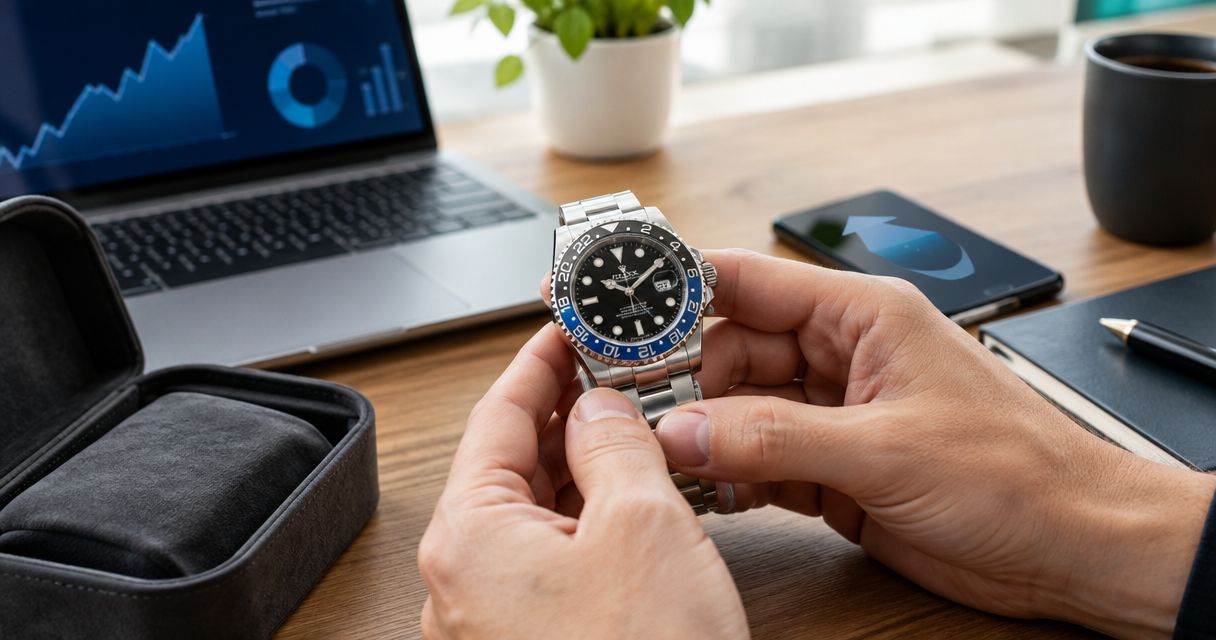
Instead of repeating your watch’s details to every buyer, use one documented workflow to sell your Rolex GMT-Master II: identify the exact configuration, collect comparable written offers, agree on inspection and handover, then verify payment. This 2026 guide puts those decisions in order so you compare the sale you will actually complete—not just the highest opening offer.
- Sell Rolex GMT Master II watches using matching reference details, condition disclosures, and comparable written offers.
- Luxury Time NYC suits GMT-Master II owners seeking a retailer-led luxury watch sale or trade.
- Confirm inspection conditions, transport responsibility, and payment terms before handing over your watch.
- Choose a cash sale for proceeds; choose a trade only when the replacement watch also fits.
Why this matters
The strongest offer is the one whose final terms you understand and accept. An initial estimate, an inspection-dependent offer, and a completed purchase are different stages of a watch sale. Treating them as interchangeable makes comparison unreliable.
Luxury Time NYC buys, sells, and trades luxury watches. Start through the contact page to request the current submission requirements rather than assuming a particular form, shipping arrangement, or payout schedule.
Luxury Time NYC is best for GMT-Master II owners seeking a retailer-led sale or trade. The benefit is a direct conversation about the transaction; the limitation is that your watch still needs an individual assessment. This workflow does not promise a particular result or a highest-offer guarantee.
Before you start
- Watch and records: Gather your GMT-Master II, reference information, purchase documentation, service records, box, warranty card, and spare bracelet links where you have them. List missing items explicitly rather than leaving the buyer to infer what is included.
- Communication and ownership: Have an email account you control, access to your purchase records, and a camera capable of clear close-ups. Ask the buyer which identity and ownership documents are required, and how to submit them securely. Keep full serial numbers and personal documents out of public listings.
- The inspection gotcha: A remote estimate is not automatically a final purchase commitment. Before sending the watch, establish what inspection can change, who authorizes any work, and what happens if you decline a revised offer. Also establish who bears transport responsibility in each direction.
You do not need every original accessory to begin an inquiry. You do need an accurate account of what you own and what will change hands.
Your watch information file
- Identify the reference. Copy the reference from reliable documentation and check that it corresponds to the watch being offered. Use the full reference rather than relying on a collector nickname. If the paperwork and watch appear inconsistent, stop and ask for professional clarification.
- Describe the configuration. Record the case material, dial, bezel colors, and bracelet type. Separate what you can document from what you believe. Do not describe a component as original merely because it was fitted when you acquired the watch.
- Disclose condition and history. Note visible scratches, dents, bracelet wear, known repairs, replacement components, and any known polishing. If the service history is unknown, write that. An honest unknown is better than an unsupported claim of recent service.
- Create an 8-photo starting set. Photograph the dial, bezel, both case sides, case back, bracelet, clasp, and included accessories. Use clear light, retain the original files, and add close-ups of damage. Send identifying details privately through the buyer’s agreed channel.
- Create an inclusion list. Name every accessory being transferred, including loose links and documents. Keep a private copy with your photographs and correspondence.
Expected result: You have one consistent information file for every buyer. Your 2026 sale record should distinguish the watch’s documented history from the date you prepared the file; the preparation date does not establish the watch’s production year.
Your buyer and offer comparison
- Choose the transaction first. Decide whether you want cash proceeds or another watch. A trade proposal answers a different question from an outright purchase offer, so keep those discussions separate.
- Request comparable written offers. As a practical starting target, approach 3 buyers with the same information file. This is a comparison method, not a claim that a particular number of inquiries guarantees a better outcome.
- Ask what the offer depends on. Establish whether the figure is preliminary or inspection-confirmed, what accessories it assumes, and when it expires. Ask the buyer to identify any deductions or transaction obligations before you commit.
- Compare the complete terms. Record inspection requirements, payment method, the event that starts payment processing, and responsibility for transport. Ask what happens if either party declines to proceed after inspection.
- Keep dated versions. Save each offer and revision. For a 2026 comparison, request current written terms rather than treating an old email or an advertised watch listing as an offer for your watch.
Expected result: You can explain why one proposal is preferable without relying solely on its opening figure. If important conditions remain unanswered, the comparison is not finished.
Which selling route fits your goal?
These are transaction routes to evaluate, not a statement that every buyer offers every route. Ask each business which arrangements it actually supports.
| Route | Best for | Main advantage | Main limitation |
|---|---|---|---|
| Direct retailer sale | Owners who want an outright transaction | You negotiate with the intended purchaser | The offer reflects the retailer’s assessment and purchase terms |
| Private sale | Owners prepared to manage the buyer relationship | You control the listing and negotiation | You must manage identity checks, payment risk, and handover arrangements |
| Consignment | Owners comfortable waiting for another buyer | A consignee markets the watch under an agreement | Completion depends on a sale and the consignment contract |
| Trade | Owners who already want a replacement watch | You evaluate the outgoing and incoming watches together | Trade credit is not the same as cash proceeds |
Choose the route before choosing the offer. A private sale is not automatically better because its advertised expectation is higher, and a trade is not automatically better because the credit looks generous. Each route carries a different set of responsibilities.
Your inspection and handover agreement
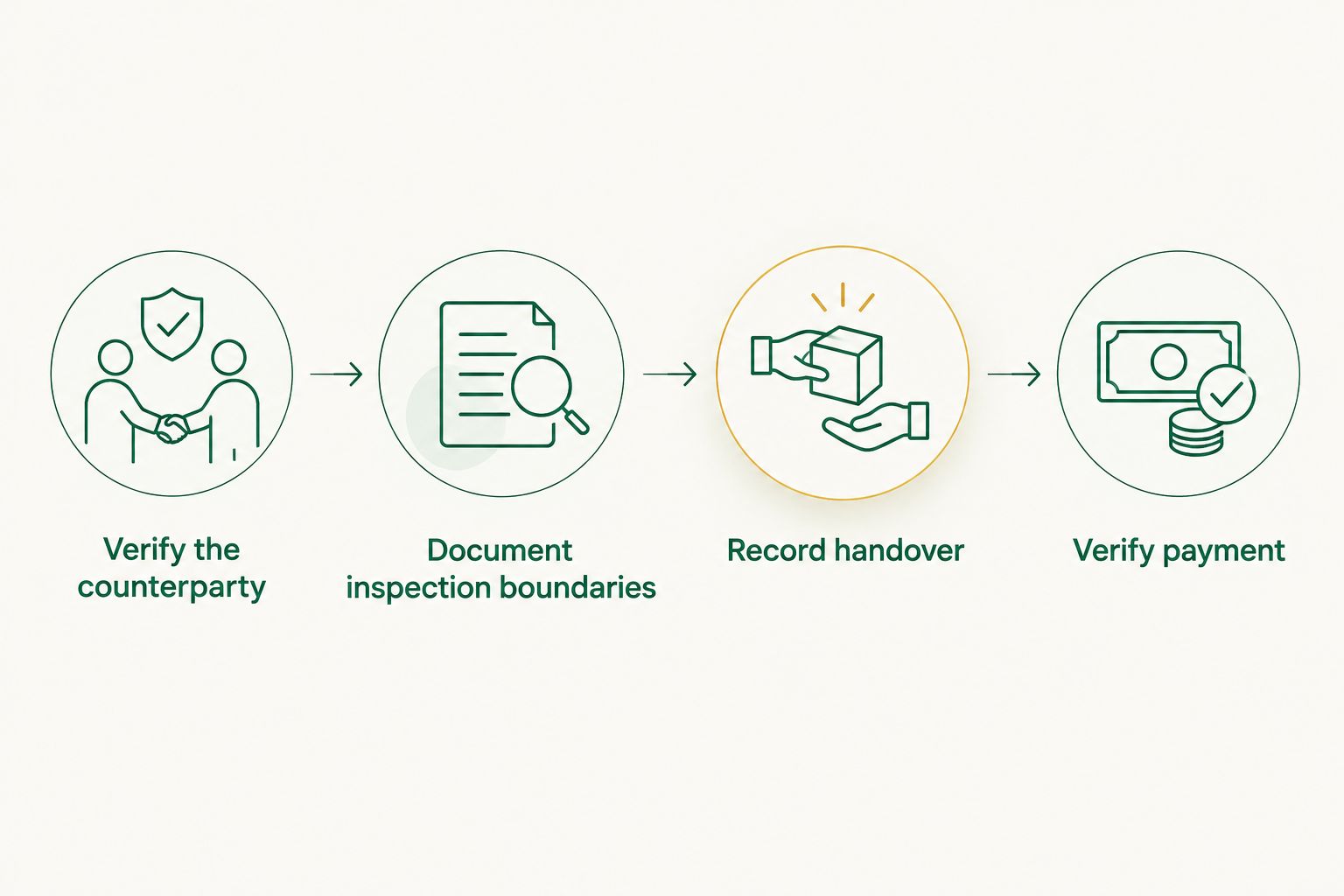
- Verify the counterparty. Confirm the business identity and independently verify the contact details you use. Do not accept a changed delivery address or payment instruction solely because it appears in a new message within an existing conversation.
- Document inspection boundaries. Ask where the watch will be inspected, how findings will be communicated, and whether any work requires separate authorization. Do not authorize polishing, servicing, or component replacement by implication.
- Agree on transport or an appointment. For shipping, confirm the carrier, packaging instructions, coverage terms, declared-value requirements, and who handles a claim. A label alone does not explain coverage. For an in-person handover, confirm the location and required documents beforehand.
- Record what leaves your possession. Photograph the watch and accessories immediately before handover. Match them to the inclusion list, retain the shipment receipt or signed acknowledgment, and keep the tracking information where applicable.
- Resolve the rejection scenario. Establish the return procedure and responsibility for return transport if the inspection produces terms you decline. Get the answer before the watch moves.
Expected result: Both parties have a written account of what is being transferred, why it is being inspected, and what happens next. You have evidence of the watch’s condition and included items at handover.
Your final acceptance and payment record
- Review the inspection outcome. Ask the buyer to explain any difference between the initial estimate and the final offer. Compare the explanation with your original photographs and disclosures rather than accepting an unexplained adjustment.
- Accept the final terms explicitly. Keep a written record identifying the watch, included items, agreed consideration, payment method, and relevant conditions. Make sure the record describes a sale if you agreed to sell—not a consignment or trade.
- Verify payment instructions independently. Confirm account details through a trusted channel. Treat unexpected requests to redirect payment, reimburse an overpayment, or send money to an unrelated party as reasons to pause.
- Check payment through your own institution. A screenshot or emailed confirmation is not your account record. Ask your bank or payment provider how to verify the transaction and understand any applicable reversal or settlement risks.
- Close the file. Retain the final agreement, inspection correspondence, handover evidence, and payment record together. Ask a qualified tax adviser which records apply to your circumstances; do not assume every watch sale receives identical treatment.
Expected result: Your 2026 sale file connects the accepted terms to the watch delivered and the payment received. Keep 2 copies of essential records in separate secure locations as a practical backup.
Trade your GMT-Master II instead of taking cash
A trade is a genuine adjacent workflow because Luxury Time NYC buys and trades luxury watches. Use the same preparation and inspection steps, then add a separate assessment of the replacement watch.
- Identify the exact replacement reference and configuration you want before discussing trade credit.
- Request a written description of the incoming watch’s condition, included accessories, and relevant purchase terms.
- Keep the outgoing watch’s assessment separate from the replacement watch’s terms. Ask how the transaction changes if either watch’s condition differs from its description.
- Confirm the sequence of inspection, acceptance, and exchange, including what happens if the proposed trade does not proceed.
Best for: Owners who already want another specific watch. The advantage is a connected transaction; the drawback is that you must assess both sides rather than judge a cash offer alone.
For a model-specific next step, use the GMT-Master II to Patek Philippe Nautilus trade workflow. Do not choose a replacement simply to make an outgoing offer look more attractive.
Troubleshooting
The buyer reduces the offer after inspection
Request an itemized explanation of the findings and the revised terms. Compare those findings with your original disclosure, then accept or decline under the agreed procedure. Do not let possession of the watch substitute for your written acceptance.
You cannot find the box or warranty card
Describe the watch as lacking those items and provide the records you do have. Ask for an assessment on that basis. Do not present a separately acquired box as evidence of the watch’s original history.
Your watch has replacement or aftermarket components
Disclose what you know and supply supporting service documents. If you cannot establish a component’s origin, say so and request inspection. Avoid an unqualified all-original description when you cannot support it.
Transport coverage is unclear
Pause shipment until responsibility, coverage, and claim handling are clear in writing. Ask the carrier or coverage provider to confirm how its terms apply to the watch and shipment. Do not infer protection from the appearance of a prepaid label.
The buyer says payment is complete, but you cannot verify it
Contact your financial institution through its established channel and check your own records. Preserve the correspondence and follow the agreed transaction terms. Never send a supposed overpayment onward based only on a message or screenshot.
Customize your workflow
Use the information file as a reusable record, not a one-time sales pitch. If you find another bracelet link, receive a service assessment, or discover an error, update the file and send the same correction to every buyer still evaluating the watch.
For a Luxury Time NYC luxury watch sale inquiry, keep your first message focused: exact reference, known condition, included items, and whether you want a sale or trade. Ask for the current process rather than assuming this guide establishes the retailer’s operational policies.
Keep negotiation and documentation together. A verbal improvement is not a completed change until the written terms reflect it.
FAQ
What is the best way to sell my Rolex GMT-Master II?
Choose a selling route that matches your goal, then compare written offers based on the same watch details. Confirm inspection conditions, transport responsibility, and payment terms before committing.
Can I sell a Rolex GMT-Master II without its box and papers?
You can request an assessment without the original box and papers. Disclose exactly what is missing; the buyer must determine whether to proceed and on what terms.
Should I polish my GMT-Master II before selling it?
Do not authorize polishing solely to prepare for a sale before discussing the watch with the buyer. Polishing changes the surface condition, and collectors differ in their preferences; clear photographs and honest disclosure come first.
Does an online estimate guarantee my final payout?
An estimate guarantees a final payout only if the buyer's written terms explicitly make that commitment. Establish whether inspection can change the offer and what happens if you decline revised terms.
Is selling my GMT-Master II better than trading it?
Selling suits owners who want cash proceeds; trading suits owners who already want a specific replacement watch. Compare the complete transaction rather than treating trade credit as equivalent to a cash offer.
Can Luxury Time NYC buy or trade my Rolex GMT-Master II?
Luxury Time NYC buys and trades luxury watches, so you can submit a GMT-Master II inquiry for assessment. Acceptance and transaction terms require direct confirmation for your watch.
How do I know my watch sale payment has arrived?
Verify the payment through your own bank or payment provider, not a buyer's screenshot. Ask your institution about the transaction's status and any applicable settlement or reversal risks.
One last thing
Do not spend money making the watch look easier to sell before you know what the buyer wants. An undocumented repair or cosmetic intervention creates another detail to explain. For your 2026 sale, preserve the watch’s current condition, disclose its history, and obtain an assessment before authorizing work solely for resale.