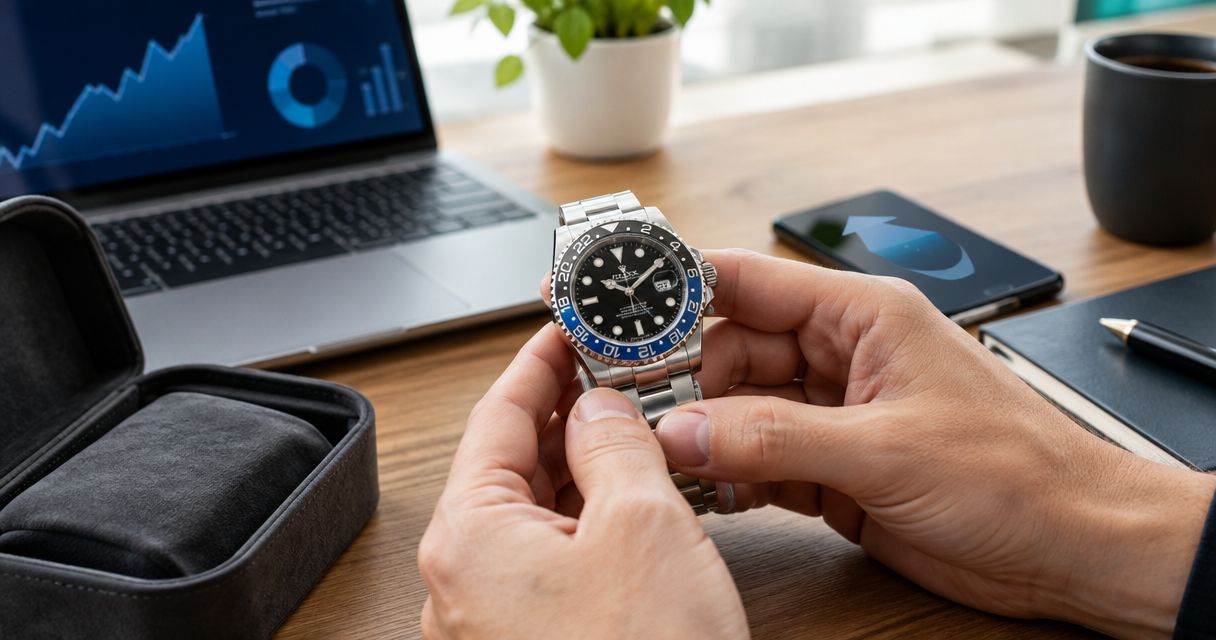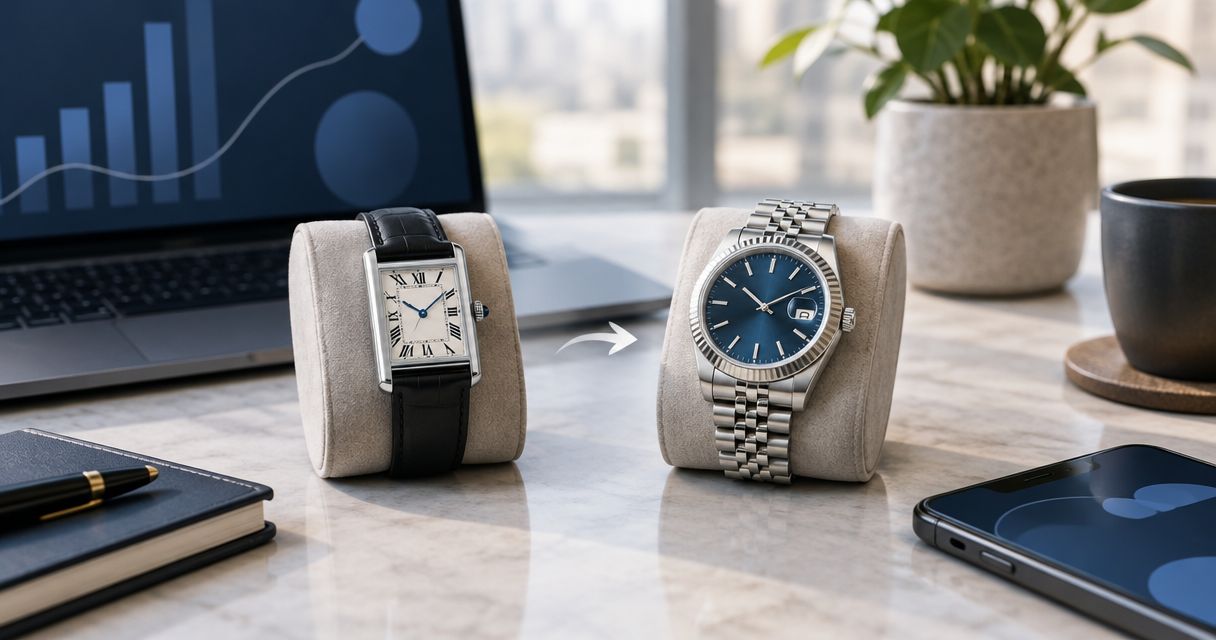
Your Rolex’s value without its original box and papers depends on its exact reference, condition, originality, and comparable watch-only sales—not a fixed deduction. Missing accessories can reduce its appeal, but they do not automatically make the watch counterfeit or unsellable. For a 2026 valuation, assess the watch itself first, then compare examples with the same documentation status.
- How much is my Rolex worth without box and papers? Value depends on reference, condition, originality, and comparable sales.
- Rolex warranty papers support provenance; they do not replace inspection of the watch.
- Compare watch-only Rolex examples before using complete-set listings to judge resale value.
- Luxurytimenyc buys and trades luxury watches; request an assessment rather than applying a blanket deduction.
Why this matters
Missing papers are a valuation factor, not a verdict on your Rolex. Treating every undocumented watch the same ignores differences in the model, its condition, and what remains original. A worn watch with documentation and a well-preserved watch without it are not interchangeable comparisons.
Before you accept an offer, separate authenticity, ownership history, and resale value. Those questions overlap, but each needs different evidence. Start with the guide to getting an appraisal before selling your Rolex so you know what an assessment needs to establish.
How much is my Rolex worth without box and papers?
There is no universal watch-only valuation or standard deduction that applies to every Rolex. Your useful benchmark is a comparable example of the same reference, configuration, condition, and documentation status—not the highest advertised watch in the same collection.
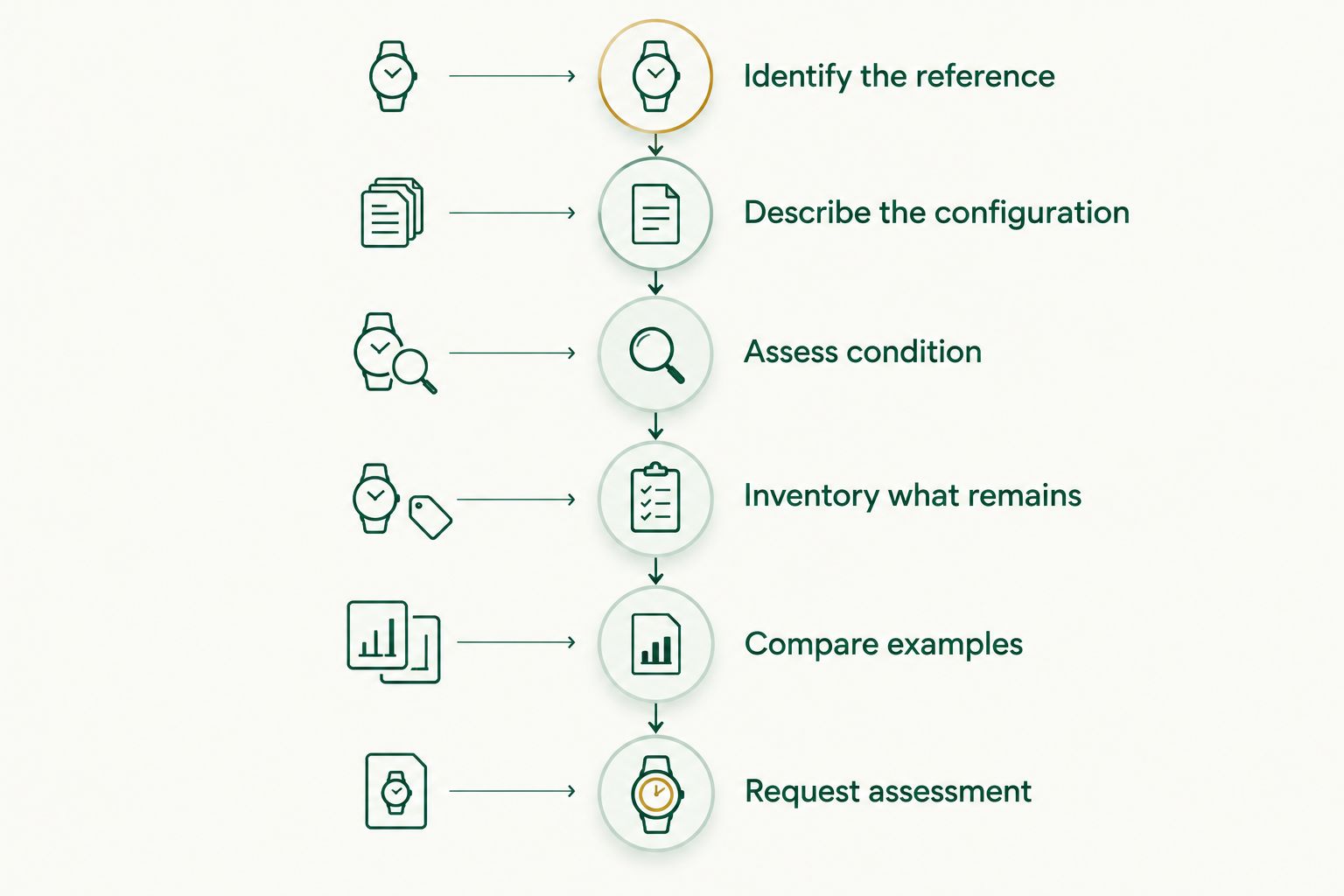
Use this sequence to build a defensible 2026 valuation before discussing a sale or trade.
- Identify the reference. Record the exact model reference from reliable documentation or have a qualified watch professional identify it. A collection name alone does not establish which watch you own.
- Describe the configuration. Note the case material, dial, bezel, bracelet, and any known changes. Similar-looking watches can have different configurations that matter to collectors.
- Assess condition and originality. Include scratches, bracelet wear, signs of polishing, running issues, and known replacement parts. Photographs help with an initial discussion; physical inspection addresses questions photographs cannot resolve.
- Inventory what remains. Gather receipts, service records, tags, removed bracelet links, and any documents tied to the watch. Label each item accurately rather than calling everything original papers.
- Compare like-for-like examples. Prioritize watch-only examples and documented transactions where available. Treat asking figures as sellers’ expectations, not evidence that a transaction occurred.
- Request a written assessment. Ask what the offer assumes about authenticity, condition, included accessories, and further inspection. Establish whether the figure concerns an outright sale, a trade, or another arrangement.
Keep the same description and photographs for every assessment. If one buyer sees service records and another does not, you are comparing different information rather than different opinions about the same watch.
Rolex with neither the original box nor papers
A watch-only Rolex needs an assessment focused on the physical watch and whatever ownership evidence remains. Without the original warranty documentation, a buyer has less accompanying evidence to review. That makes clear disclosure and competent inspection especially important.
The advantage is straightforward: you can assess the watch on its own merits rather than assume that missing packaging settles the question. The limitation is equally clear: a buyer seeking a complete collector’s set will not regard your watch as equivalent.
Best for: owners seeking a watch-based assessment rather than a complete-set comparison. Describe it as watch-only unless you have additional items to include, and list those items individually.
Rolex with the original box but no papers
An original box provides packaging, not proof that the watch is genuine. Boxes can become separated from watches, so the presence of a box does not resolve questions about the case, movement, dial, or bracelet.
Its benefit is presentation and accessory completeness. Its limitation is that it does not substitute for the missing warranty document or establish the watch’s ownership history.
Best for: owners who still have packaging and want it considered accurately. Tell the assessor whether you know that the box accompanied this particular watch, rather than assuming that any Rolex box establishes a matching set.
Rolex with papers but no original box
Warranty documentation linked to the watch gives an assessor material to examine alongside the watch itself. The document’s details must correspond to the timepiece; a paper or card carrying the Rolex name is not sufficient on its own.
The benefit is supporting documentation. The limitation is that papers do not prove the watch’s present condition, identify every later alteration, or eliminate the need for authentication.
Best for: owners who can provide matching warranty documentation but no longer have the packaging. Photograph the documents privately for the assessor, and avoid publishing full serial numbers or personal details in an open listing.
| Documentation status | Useful evidence | Limitation | Best for |
|---|---|---|---|
| Neither box nor papers | Watch inspection and remaining ownership records | No original warranty documentation accompanies the watch | Watch-focused assessment |
| Box without papers | Packaging and any separate records | A box does not authenticate the watch | Accurate accessory disclosure |
| Papers without box | Matching warranty documentation | Documents do not establish current condition | Document-supported assessment |
| Box and papers | Watch, packaging, and matching documentation | Completeness still requires verification | Complete-set comparison |
Why your Rolex’s watch-only value varies
A useful assessment explains the differences between your Rolex and the comparison watches. These factors matter more than applying an unexplained deduction to a complete-set advertisement.
- Exact reference and configuration. Compare the same model reference, metal, dial, bezel, and bracelet. A shared collection name is too broad a benchmark.
- Physical condition. Case wear, bracelet condition, damage, and the effects of polishing belong in the assessment. Describe visible issues instead of relying on an undefined condition label.
- Originality and replacement parts. Distinguish factory configuration, documented service replacements, and aftermarket modifications. Collectors do not necessarily treat those categories alike.
- Remaining documentation. Original warranty papers, a purchase receipt, and a service invoice serve different purposes. Identify what each document establishes and whether it matches the watch.
- Mechanical condition. Running behavior and documented maintenance affect the questions a buyer needs answered. A service record describes work performed at a particular time, not the watch’s condition forever.
- Transaction type. A retail advertisement, an outright purchase offer, a trade proposal, and an insurance appraisal answer different questions. Compare assessments made for the same purpose.
For a 2026 assessment, ask the buyer to identify the main factors behind the offer. A clear explanation helps you distinguish an accessory issue from concerns about condition, originality, or the comparison used.
Why the exact reference matters
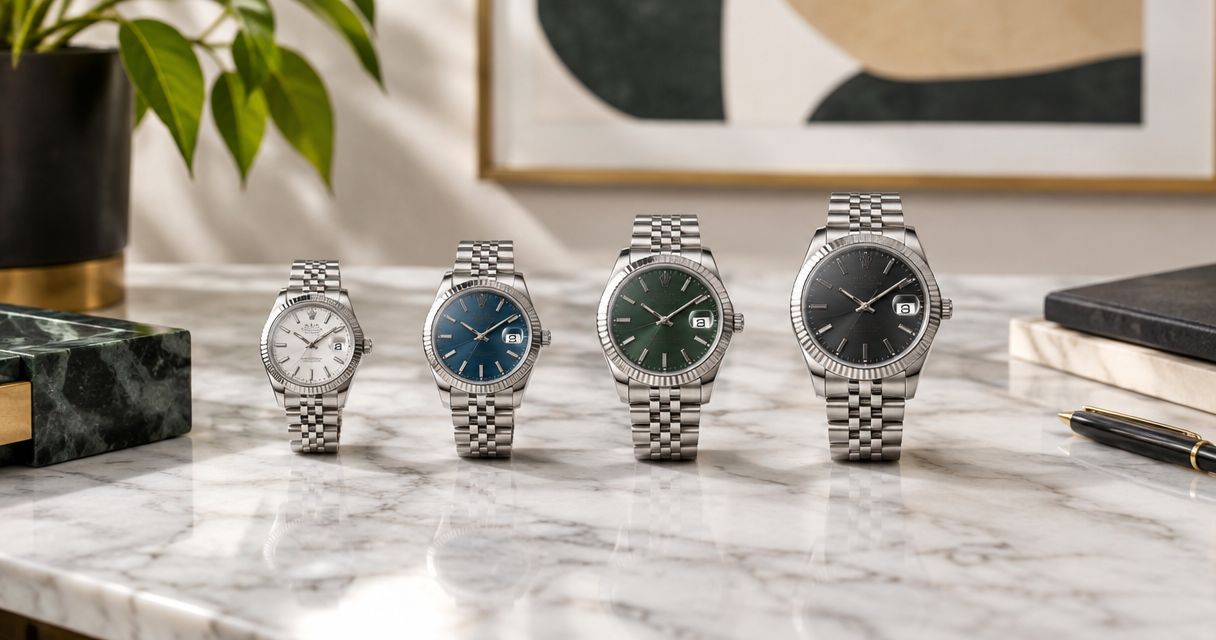
Rolex Datejust examples illustrate why a collection name is insufficient. The supplied catalog identifies a stainless steel Datejust with a 41 mm case as reference 126300, while the white gold/steel Datejust with a 36 mm case is reference 126234. Those references are not interchangeable valuation benchmarks.
Bracelet configuration matters within a reference, too. The catalog includes reference 126234 with both Oyster and Jubilee bracelets. When describing your Rolex, record the bracelet actually fitted rather than assuming that a reference number answers every configuration question.
Use these examples to identify comparison requirements, not to estimate your watch from an unrelated listing. A correct reference narrows the assessment; it does not replace inspection or establish the value of your individual watch.
Can I sell my Rolex without the original papers?
Yes, you can sell a genuine Rolex without its original papers. Disclose the missing documentation before requesting an assessment and provide the records you do have. Acceptance depends on the buyer’s requirements and inspection of the watch.
Prepare clear photographs of the dial, case sides, caseback, bracelet, and clasp. Include visible damage rather than photographing around it. Do not open the case yourself simply to produce movement photographs; leave that work to a qualified professional.
If the Rolex was inherited, distinguish what you know from what you have been told. Family history can provide context, but an assessor still needs to establish the watch’s identity, condition, and authenticity.
Should I buy a replacement Rolex box before selling?
Do not assume that buying a replacement box will improve your net proceeds. A separately acquired box does not restore the watch’s original history or recreate missing warranty documentation. It also needs to be disclosed as separately acquired.
Ask the prospective buyer whether packaging would change the assessment before purchasing it. Keep a replacement box distinct from original accessories in your description, and never describe the watch as a full set simply because you added packaging.
This distinction also applies to service records. An invoice documenting maintenance is useful evidence of that work, but it is not the original warranty paperwork supplied when the watch was first sold.
Which assessment should you request before selling?
Request an outright purchase assessment if your goal is to sell, and a trade assessment if your goal is another watch. An insurance appraisal serves a different purpose. Comparing these documents as though they express the same value creates confusion.
| Assessment | What it helps you decide | Advantage | Limitation | Best for |
|---|---|---|---|---|
| Outright purchase assessment | Whether to sell to that buyer | Connects the assessment to a proposed transaction | Buyer-specific, not a universal market result | Owners seeking a sale |
| Trade assessment | Whether an exchange suits your goals | Considers your watch within a proposed exchange | Requires reviewing both sides of the transaction | Owners changing watches |
| Insurance appraisal | How the watch is described for insurance purposes | Creates documentation for that purpose | Does not establish an executable selling offer | Owners arranging coverage |
Luxurytimenyc is best for Rolex owners seeking a retailer that buys, sells, and trades luxury watches. Those stated activities make Luxurytimenyc relevant to a sale or trade discussion; they do not establish the value of your individual watch.
The benefit of a retailer discussion is that you can frame the assessment around your intended transaction. The limitation is that a retailer’s buying offer is not the same thing as an advertised retail figure. Ask Luxurytimenyc to distinguish the proposed transaction and any inspection conditions before you decide.
What should I prepare for a 2026 assessment?
Create a single factual record of the watch and send the same information with each inquiry. Include the reference if known, configuration, photographs, remaining accessories, service documents, and known modifications. State plainly that the original box and papers are missing.
Keep original records secure and share copies as appropriate. Separate confirmed facts from unknown history, especially if you acquired the watch secondhand. An honest description gives the assessor a clearer starting point than a confident but unverified claim of complete originality.
Do not polish, alter, or replace components just to make the watch look easier to sell. Ask for an assessment first. Cosmetic changes can remove information an assessor needs to evaluate condition and originality.
FAQ
How much is my Rolex worth without box and papers in 2026?
Your Rolex’s worth depends on its exact reference, condition, originality, and comparable watch-only transactions. There is no universal deduction for missing accessories; request an assessment of the individual watch.
Does missing paperwork mean my Rolex is fake?
No, missing paperwork does not establish that a Rolex is fake. Authentication requires examining the watch, and paperwork also needs verification when it is present.
Can I sell an inherited Rolex with no box or papers?
Yes, an inherited Rolex can be offered for sale without its original box and papers. Explain what you know about its history, provide remaining ownership records, and arrange inspection before relying on a valuation.
Is a service invoice the same as original Rolex papers?
No, a service invoice is not the original warranty documentation. It records the work described on the invoice and should be disclosed separately.
Will a replacement box make my Rolex a full set?
No, a separately acquired box does not recreate the original set or replace missing warranty papers. Disclose replacement packaging and identify each accompanying item accurately.
Should I use an insurance appraisal to decide what to accept when selling?
No, an insurance appraisal and an outright purchase offer serve different purposes. Request a selling assessment for the transaction you intend to make.
Should I polish my Rolex before asking for an offer?
Request an assessment before polishing your Rolex. Altering the case can remove information relevant to evaluating condition and originality.
One last thing
The most useful comparison is not the most impressive listing—it is the closest match. In 2026, keep a comparison note beside each example: reference, configuration, condition, documentation, and whether it represents an advertisement or a completed transaction. That small discipline makes mismatches visible before they influence your decision.
When a buyer attributes an assessment to missing papers, ask what else influenced it. The answer should separate documentation from condition and originality. You will then know whether the disagreement concerns the missing set or the watch itself.