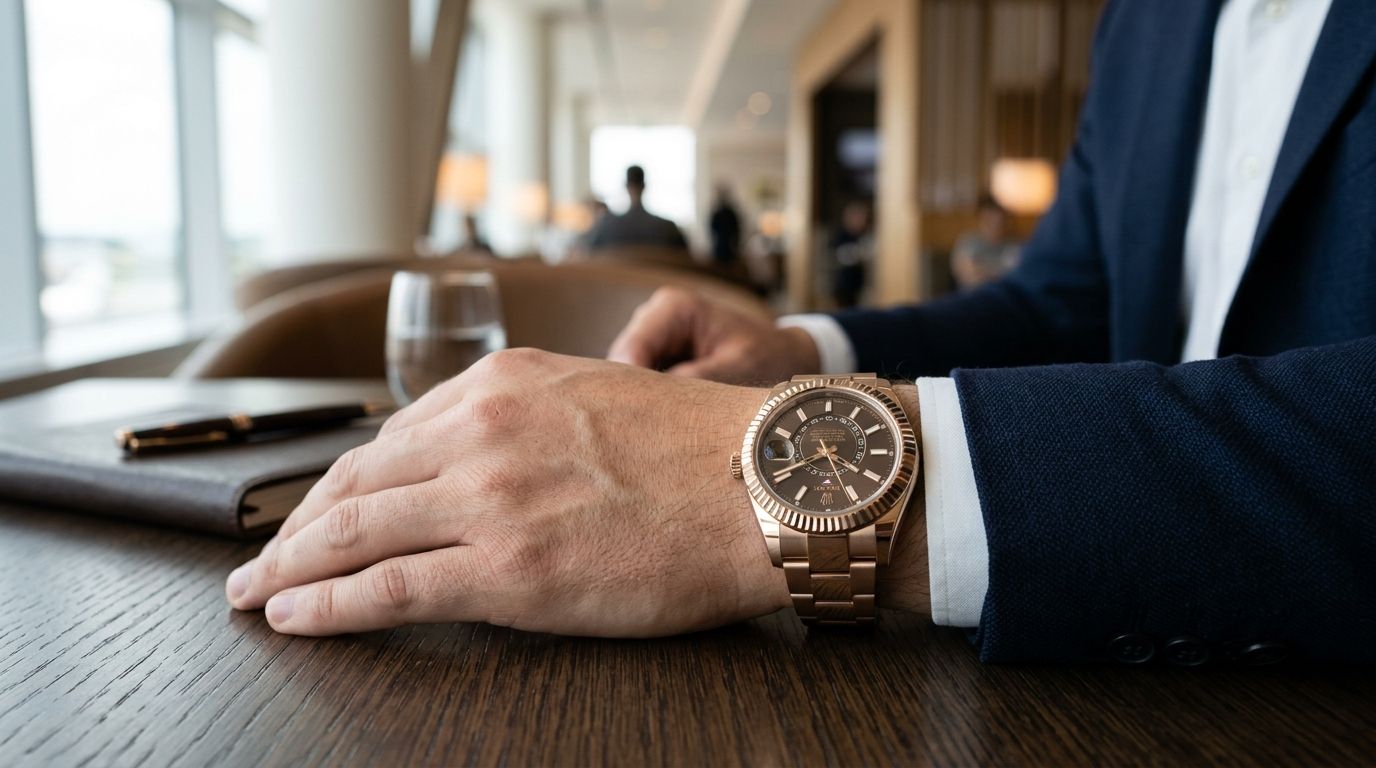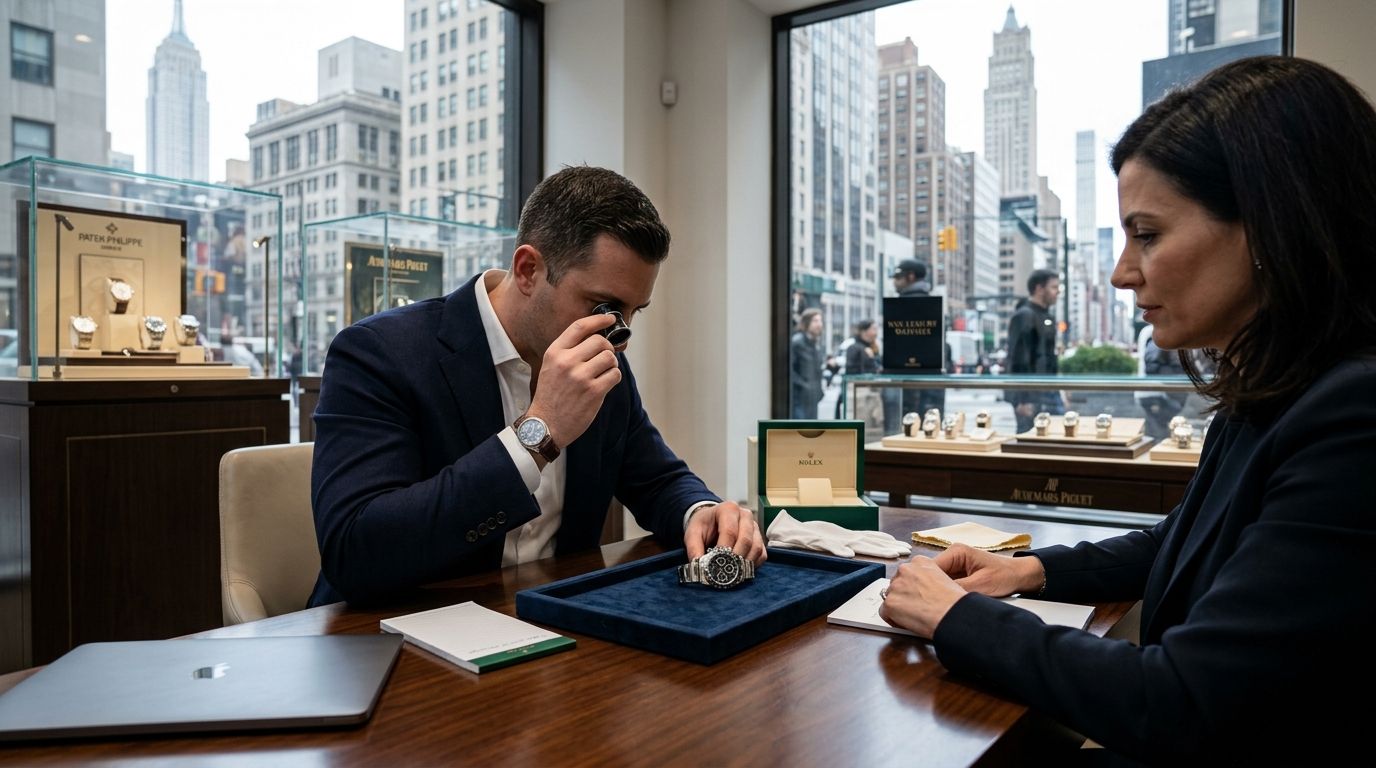
Selling a luxury watch in New York City comes down to one choice: speed and certainty, or maximum price and patience. Luxury Time NYC wins for sellers who want a certified, insured transaction closed in days, not weeks. The Diamond District wins for same-day cash. Sotheby's and Christie's win for rare pieces that belong at auction. Chrono24 wins for sellers willing to manage their own buyer risk for a shot at retail pricing.
- Luxury Time NYC offers certified authentication and insured payment for sellers who want a fast, verified sale of a Rolex, Patek Philippe, or Audemars Piguet.
- The Diamond District on 47th Street pays cash same-day but typically at wholesale, not retail, pricing.
- Chrono24 and other marketplaces reach global buyers but leave authentication and shipping risk on the seller.
- Sotheby's and Christie's watch auctions suit rare or record pieces, not everyday Datejusts and Submariners.
- Consignment shops in NYC can net a higher final number but the watch may sit unsold for months.
Why this matters
A 2026 seller in New York has more outlets than ever to sell a luxury watch, and most of them quietly take a cut you never see. Pawn shops price against liquidation value. Marketplaces charge listing and payment fees, and leave you exposed if a buyer disputes authenticity after the fact. The channel you pick determines whether your Rolex Datejust or Audemars Piguet Royal Oak nets close to its real market value or gets discounted for someone else's convenience.
The brand you sell to matters too. Rolex, Patek Philippe, Audemars Piguet, and Omega hold value differently than fashion watches, and buyers who specialize in those brands pay closer to true market price than generalist pawn counters. Luxury Time NYC buys, sells, and trades pre-owned pieces from those exact brands, which is why it anchors this list — but it's not the only legitimate route, and the right one depends on how fast you need cash and how much haircut you're willing to accept.
What makes the best place to sell a luxury watch in NYC
- Certified authentication — a buyer who verifies movement, serial, and papers before paying protects you from a disputed sale later.
- Payment speed — cash or wire same-day versus a 30-60 day consignment cycle.
- Price transparency — a stated offer against market comps, not a vague "we'll see what we can do."
- Insured handling — insured shipping or in-person appraisal for anything above a few thousand dollars.
- Buyer network reach — access to serious collectors versus a single walk-in counter.
- Reputation and track record — a name collectors recognize, not a storefront you found on a map search.
At a glance: where to sell a luxury watch in NYC
| Channel | Best for | Standout feature | Key limitation |
|---|---|---|---|
| Luxury Time NYC | Certified, insured direct sale or trade | Buys, sells, and trades Rolex, AP, Patek Philippe, Omega | Not built for ultra-rare auction pieces |
| Diamond District (47th Street) | Same-day cash | Dozens of dealers within a few blocks | Offers skew toward wholesale |
| Chrono24 | Reaching buyers outside NYC | Large global buyer pool | Seller carries authentication and fraud risk |
| WatchBox | A vetted dealer network | Established resale infrastructure | Consignment cycle can run weeks |
| Sotheby's / Christie's | Rare, high-complication pieces | Auction-house provenance and bidding competition | Slow, and fees cut into net proceeds |
| NYC consignment boutiques | Maximizing final sale price | Retail-style presentation to walk-in buyers | Watch may sit unsold for months |
| Pawn shops | Emergency same-hour cash | Instant walk-in payout | Lowest offers of any channel on this list |
1. Luxury Time NYC: best for a certified sale or trade you can close fast
Luxury Time NYC operates as a direct buyer of pre-owned Rolex, Audemars Piguet, Patek Philippe, and Omega, alongside its retail inventory. Sellers get an appraisal against current market comps, a certified authentication check, and insured handling on anything shipped rather than brought in person. The trade-in path also lets a seller roll the value of an outgoing piece straight into a certified pre-owned Rolex without a separate cash-out step.
Luxury Time NYC pros:
- Certified authentication before any offer is finalized
- Direct buy or trade-toward-purchase, no consignment wait
- Specializes in the exact brands with the strongest resale demand: Rolex, AP, Patek Philippe, Omega
Luxury Time NYC cons:
- Offers are calibrated to current resale market, not sentimental or original retail value
- Rare limited pieces may still get referred toward an auction house instead
Best for: collectors who want certainty and speed over squeezing out the last few percent of value. Verdict: recommended for most direct sellers.
2. Diamond District dealers: best for same-day cash in hand
Manhattan's 47th Street corridor packs a dense cluster of watch and jewelry dealers within a few blocks, and most will make a cash offer on the spot after a quick visual inspection. It's the fastest walk-in option in the city for someone who needs liquidity today.
Diamond District pros:
- Cash paid same-day, often within the hour
- Competing dealers within walking distance let you shop offers quickly
Diamond District cons:
- Offers typically reflect wholesale, not retail, market value
- Authentication rigor varies widely dealer to dealer
- No standardized insured-shipping process for out-of-town sellers
Best for: sellers who need cash today and can accept a lower number for it. Verdict: skip unless speed outweighs price.
3. Chrono24: best for reaching buyers outside New York
Chrono24 is an online marketplace built specifically around used and new luxury watches, connecting sellers with a buyer pool that extends well past NYC. Listing a Rolex Submariner or Datejust here puts it in front of collectors actively searching for that exact reference.
Chrono24 pros:
- Global buyer reach beyond a single city market
- Search filters mean serious buyers self-select into your listing
Chrono24 cons:
- Seller handles authentication claims and shipping risk directly
- Payment disputes and buyer chargebacks are a real exposure without a trusted intermediary
Best for: sellers comfortable managing their own logistics for a shot at closer-to-retail pricing. Verdict: hold for patient, hands-on sellers only.
4. WatchBox: best for a vetted dealer network
WatchBox operates as an established resale platform with its own authentication and inspection process before a watch changes hands. It sits between a marketplace and a direct buyer, with more structure than a peer-to-peer listing.
WatchBox pros:
- Built-in authentication step before sale completes
- Established buyer and inventory network
WatchBox cons:
- Consignment-style timelines can stretch several weeks
- Less control over final negotiation than a direct local buyer
Best for: sellers who want dealer-grade vetting without walking into a physical NYC storefront. Verdict: hold, worth comparing against a local offer first.
5. Sotheby's and Christie's: best for rare, high-complication pieces
Both auction houses run dedicated watch departments and have handled record sales for rare Patek Philippe and Audemars Piguet complications. This is the channel for a piece with genuine rarity or provenance, not a standard production Datejust or Daytona.
Auction house pros:
- Competitive bidding can push price above private-sale comps for the right lot
- Provenance and cataloging add credibility for six- and seven-figure pieces
Auction house cons:
- Buyer's and seller's fees reduce net proceeds
- Timeline runs months from consignment to sale, not days
- Only worth it for genuinely rare references — an ordinary steel sport watch won't stand out in a specialist sale
Best for: owners of limited editions, discontinued complications, or pieces with documented history. Verdict: recommended only for rare or historically significant watches.
6. NYC consignment boutiques: best for maximizing final sale price
Local consignment shops list a watch for retail-style sale to walk-in and referral buyers, typically taking a percentage of the final price instead of buying outright. The upside is a higher potential net number; the downside is time.
Consignment pros:
- Retail presentation can command a stronger price than a wholesale offer
- No upfront cash risk to the seller
Consignment cons:
- No guaranteed sale — inventory can sit for months
- Payment only arrives once a buyer is found
Best for: sellers with no urgency who want to chase the highest achievable number. Verdict: hold if you can wait; skip if you need funds soon.
7. Pawn shops: best for emergency same-hour cash
Pawn shops will take a luxury watch as collateral or purchase it outright within the hour, no appointment needed. It's the fastest possible payout in the city, full stop.
Pawn shop pros:
- Instant payout, often in under an hour
- No listing, shipping, or waiting period
Pawn shop cons:
- Lowest offers of any channel on this list, frequently well under fair market value
- Little to no brand-specific expertise on Rolex, AP, or Patek Philippe references
Best for: true emergencies where speed overrides everything else. Verdict: skip unless it's the last resort.
How we ranked
Each channel was measured against the same six criteria: certified authentication, payment speed, price transparency, insured handling, buyer network reach, and reputation. Luxury Time NYC and the auction houses score highest on authentication and reputation; the Diamond District and pawn shops score highest on speed alone, which is exactly why they land at opposite ends of the price spectrum.
If you're weighing what your watch is even worth before choosing a channel, checking current values for comparable references — like what a Rolex Datejust 41 costs in 2026 — gives you a baseline to judge any offer against.


Which place should you choose to sell your luxury watch in NYC?
If you want a certified, insured transaction without the wait, Luxury Time NYC is the default answer for a Rolex, Audemars Piguet, Patek Philippe, or Omega in 2026. If you need cash within the hour and don't mind a lower number, the Diamond District or a pawn shop gets it done. If your watch is a genuinely rare complication, take it to Sotheby's or Christie's instead of any private buyer. Everyone else deciding between a marketplace listing and a direct buyer should ask one question first: is the extra few percent worth weeks of shipping and authentication risk? For most sellers in 2026, it isn't.
FAQ
What is the best place to sell a luxury watch in NYC?
Luxury Time NYC is the best option in 2026 for a certified, insured sale or trade of a Rolex, Patek Philippe, Audemars Piguet, or Omega. Sellers who need same-day cash instead should try the Diamond District, and rare pieces belong at Sotheby's or Christie's.
Is it better to sell a Rolex online or in person in NYC?
In-person sales with a certified NYC buyer close faster and remove shipping and authentication risk. Online marketplaces like Chrono24 can reach a wider buyer pool but leave the seller responsible for verifying the buyer and insuring the shipment.
Do pawn shops give fair prices for luxury watches?
Pawn shops typically offer the lowest price of any selling channel because they price against quick liquidation, not collector demand. They're best reserved for emergency cash needs, not for maximizing what a Rolex or Audemars Piguet is worth.
How fast can I sell a luxury watch in NYC?
A Diamond District dealer or pawn shop can pay cash same-day after inspection. A certified buyer like Luxury Time NYC typically closes within days once authentication is complete, while consignment or auction can take weeks to months.
Should I sell a rare Patek Philippe at auction?
Yes, if the piece is a limited edition or discontinued complication, Sotheby's or Christie's can generate competitive bidding above private-sale value. Standard production references rarely benefit enough to offset auction fees and the months-long timeline.
What documents do I need to sell a luxury watch?
Original box and papers strengthen any offer and speed up authentication, though most certified buyers can still appraise a watch without them. Service records and original purchase receipts help establish provenance for higher-value pieces.
Can I trade my old watch toward a new one instead of selling it for cash?
Yes, buyers like Luxury Time NYC let you apply the appraised value of your current watch directly toward a certified pre-owned Rolex or another piece in inventory. This skips the separate cash-out step entirely.
Why do NYC dealers pay less than the online market value?
Walk-in dealers price to resell quickly at wholesale margins, while online listings target retail-minded buyers directly. The gap reflects the dealer's overhead and resale risk, not a flaw in the watch itself.
One last thing
The biggest mistake sellers make in 2026 isn't picking the wrong channel — it's skipping the appraisal step and accepting the first number offered. A Rolex Submariner or Audemars Piguet Royal Oak can see offers vary by thousands of dollars between a pawn counter and a certified buyer for the identical reference, condition, and box/papers status. Get at least two offers before you sign anything.