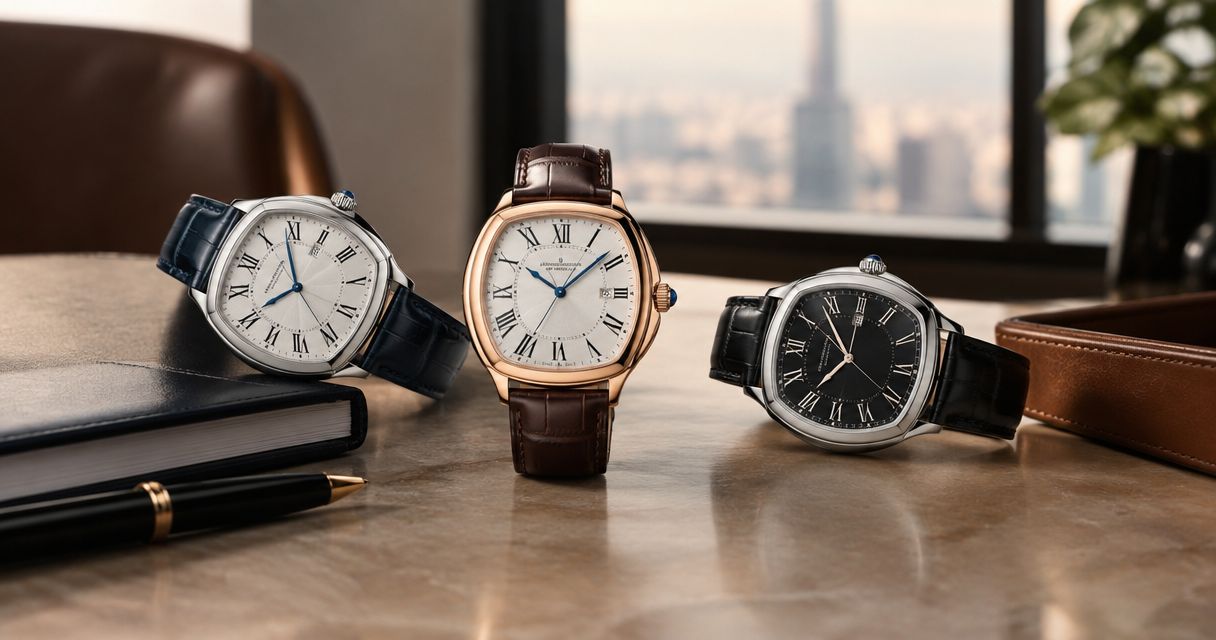
Best overall: the steel Cartier Drive de Cartier with small seconds and date. Best for formal wear: the Drive de Cartier Extra-Flat. Best for dial detail: the Moon Phases. Best for tracking another time zone: the Second Time Zone. This 2026 guide compares their strengths, compromises, and the checks that matter before you buy.
- The steel Cartier Drive de Cartier with small seconds and date is the best default for everyday dress wear.
- Choose the Drive de Cartier Extra-Flat for a thinner case and a cleaner, hand-wound dress watch.
- Choose the Moon Phases for its lunar display, not additional everyday utility.
- Choose the Second Time Zone only if you will use its extra information.
Why this matters
The Drive collection gives you Cartier's Roman numerals, shaped case, and dress-watch character without choosing a rectangular design. But the versions serve different purposes. A cleaner dial, a thinner case, and more complications are separate benefits—not interchangeable upgrades.
Luxurytimenyc's Cartier Drive de Cartier recommendation for a first-time buyer is the steel small-seconds-and-date version. It keeps the collection's defining shape while adding useful calendar information. Luxurytimenyc buys, sells, and trades luxury watches; use this guide to establish which configuration belongs on your shortlist before discussing a specific watch.
What makes the best Cartier Drive de Cartier?
For a 2026 purchase, judge the watch against these criteria rather than choosing the busiest dial:
- Wrist fit: The cushion-shaped case needs an on-wrist assessment, not just a width comparison.
- Useful functions: A date, moon-phase display, and second time zone solve different needs.
- Winding preference: Decide whether you want automatic winding or the deliberate routine of a hand-wound watch.
- Dial balance: Choose between a restrained display and additional information you will actually read.
- Condition: Inspect case contours, dial condition, crown operation, and the strap and buckle.
- Purchase evidence: Match the watch to its reference and request written details about condition, service, and included accessories.
Choose the function first, then the individual example. A well-chosen model still needs a careful condition assessment.
Cartier Drive de Cartier at a glance
| Model | Best for | Standout feature | Key limitation |
|---|---|---|---|
| Steel small seconds and date | A first Drive purchase | Automatic winding with date and separate seconds display | Less restrained than the Extra-Flat |
| Extra-Flat | Formal wear and a cleaner dial | Thin case with a hand-wound movement | No date or seconds display |
| Moon Phases | Collectors who want a lunar display | Moon-phase indication integrated into the dial | No date; lunar display adds setting responsibility |
| Second Time Zone | Following home time while traveling | Additional time-zone information alongside calendar and reserve displays | More crowded dial and more controls to understand |
These are configuration recommendations, not a claim about any retailer's current inventory. Confirm the exact reference, metal, dial, and movement before treating a listing as the version described here.
1. Steel small seconds and date: best for a first Drive purchase
The automatic Drive de Cartier with small seconds and date is the most straightforward starting point. Its separate seconds display adds movement to the dial, while the date provides information you can use without changing how you wear the watch.
The standard model's case measures approximately 40 mm wide by 41 mm long. Those dimensions describe a shaped case, so they do not translate directly into the feel of a round watch with the same stated width. Check the way the corners and lugs sit on your wrist.
Small-seconds-and-date pros:
- Automatic winding suits regular wear.
- The date adds a practical everyday function.
- The small-seconds display preserves a traditional dress-watch layout.
- The steel configuration gives you a neutral metal to pair with different clothes.
Small-seconds-and-date cons:
- The date interrupts the dial's symmetry.
- It does not offer the Extra-Flat's thin profile.
- You still need to assess the strap's condition and fit separately.
Best for: Your first Drive, especially if you want a watch for office clothes, dinners, and regular dress wear rather than strictly formal occasions.
For a 2026 shortlist, this is the default—not because it has the most features, but because its features ask the least of the wearer. Verdict: Buy for the best balance of recognizable design and everyday usefulness.
2. Drive de Cartier Extra-Flat: best for formal wear
The Drive de Cartier Extra-Flat removes the date and seconds display in favor of a simpler two-hand dial. Its hand-wound movement also changes your relationship with the watch: winding becomes part of wearing it rather than something wrist movement handles automatically.
The Extra-Flat case measures approximately 38 mm wide by 39 mm long and 6.6 mm thick. That thinner profile is the main reason to choose it. Check it with your actual shirt cuff instead of assuming a smaller measurement guarantees a comfortable fit.
Extra-Flat pros:
- The thin case suits close-fitting cuffs.
- A two-hand display keeps attention on the case shape and dial.
- No calendar means no date to reset after the watch stops.
- Manual winding suits collectors who enjoy a hands-on routine.
Extra-Flat cons:
- You must wind it by hand.
- There is no date for everyday reference.
- Without a seconds hand, you cannot confirm operation at a glance in the usual way.
Best for: A dedicated dress watch, particularly when you already own something more practical for everyday use.
Do not choose the Extra-Flat simply because thinness sounds like an automatic upgrade. Choose it because you prefer a cleaner dial and accept manual winding. Verdict: Buy for formal wear; skip if you want automatic convenience and a date.
3. Drive de Cartier Moon Phases: best for a lunar display
The Drive de Cartier Moon Phases puts a lunar display into the collection's cushion-shaped design. It is an aesthetic and mechanical choice rather than an everyday calendar replacement: the moon-phase display does not tell you the date.
This version makes sense when the dial itself is the attraction. You should enjoy looking at the lunar indication even when you have no practical reason to consult it.
Moon Phases pros:
- The lunar display gives the dial a distinct focal point.
- Automatic winding supports regular wear.
- It adds a traditional watchmaking complication without a travel-focused layout.
- It offers a different character from the standard small-seconds-and-date version.
Moon Phases cons:
- It does not provide a date display.
- The lunar indication needs correct setting after an extended stop.
- Its extra function is less useful than a date for routine daily reference.
Best for: A collector who already has everyday timekeeping covered and wants a dress watch with a moon-phase display.
Ask for the operating instructions and learn the correct setting procedure before adjusting a pre-owned example. A display that looks attractive in a photograph still needs to fit your ownership habits. Verdict: Buy for the lunar display; skip if practical calendar information is your priority.
4. Drive de Cartier Second Time Zone: best for following home time
The Drive de Cartier Second Time Zone adds another time-zone display to a more information-rich dial. The configuration also incorporates a large date, day/night indication, and power-reserve display, giving you more to read than the simpler Drive models.
The benefit is specific: you can follow another time zone without doing the conversion mentally. The trade-off is equally clear. More displays compete for your attention, so legibility deserves a longer look than it does with the Extra-Flat.
Second Time Zone pros:
- A second time-zone display serves a clear travel or overseas-contact need.
- Day/night information helps distinguish the other zone's morning from evening.
- The large date adds calendar usefulness.
- The power-reserve display shows the movement's remaining running reserve.
Second Time Zone cons:
- The dial is more crowded than the simpler Drive versions.
- Setting and using the functions requires more familiarity.
- The extra information adds little if you rarely follow another time zone.
Best for: A buyer who regularly tracks home time while away or coordinates with people in another time zone.
For travel in 2026, choose this version only after reading both time displays comfortably at normal wrist distance. A useful complication should reduce effort, not create it. Verdict: Buy for a genuine second-time-zone need; skip for occasional novelty.
How we ranked these watches
The ranking puts everyday usefulness first, followed by a clearly defined specialist purpose. That makes the steel small-seconds-and-date version the default, the Extra-Flat the formal-wear choice, the Moon Phases the decorative-complication choice, and the Second Time Zone the travel choice.
Luxurytimenyc's Cartier Drive de Cartier ranking is a buying framework, not a claim of hands-on testing. It does not rank individual watches by condition, service history, or future resale performance. Those require evidence about the particular example.
Before you buy a pre-owned Drive in 2026
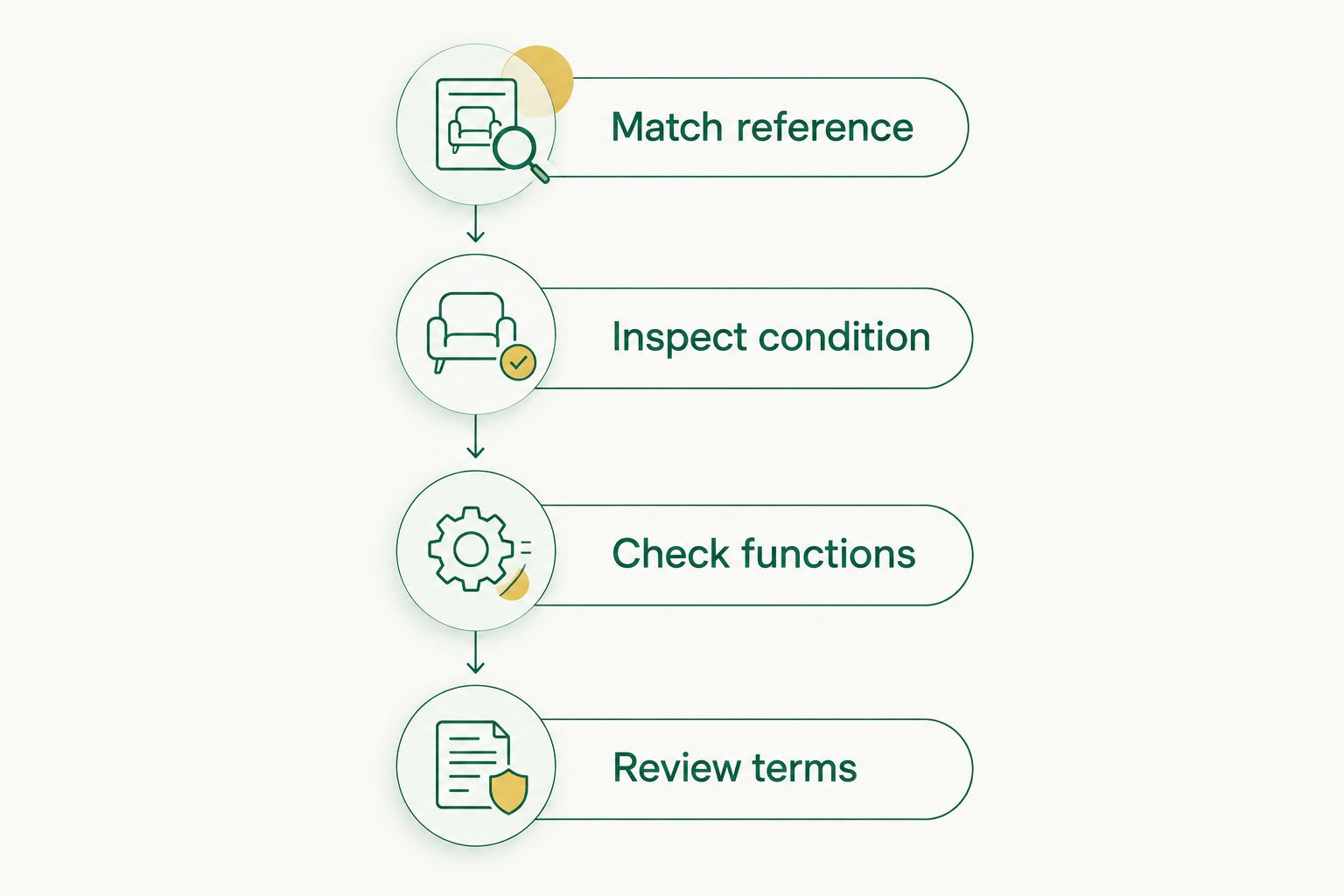
A model name identifies the family, not everything you need to know about the watch. Follow this sequence before committing to a purchase.
- Match reference: Compare the stated reference with the case metal, dial, functions, and documents. Do not rely on a listing title alone.
- Inspect condition: Request clear photographs of the case corners, bezel, dial, crown, caseback, buckle, and strap. Ask about polishing and replaced components.
- Check functions: Confirm winding, hand setting, and every complication work correctly. Ask for any timing or pressure-test documentation that accompanies the watch.
- Review terms: Get the included accessories, service information, return conditions, and any warranty coverage in writing.
Box and papers do not replace inspection. Documents help establish what accompanies the watch, but they do not demonstrate its current mechanical condition. Likewise, a clean strap does not tell you whether the movement needs attention.
Ask about water resistance separately from appearance. A historical specification is not proof that a particular pre-owned watch currently meets it; request a suitable current assessment before exposing the watch to water.
Which Cartier Drive de Cartier should you choose?
Choose the steel small-seconds-and-date version if you are undecided. It gives you automatic winding, a useful calendar display, and the collection's distinctive case without requiring a specialized reason to own it.
Choose the Extra-Flat when a thin, quiet dress watch is the point. Choose the Moon Phases when the lunar display is what attracts you. Choose the Second Time Zone when you will use another time display regularly.
Luxurytimenyc's recommendation for 2026 is simple: buy the configuration that fits your routine, then insist on evidence about the example. Do not let a complication distract you from condition.
FAQ
What's the best Cartier Drive de Cartier for a first-time buyer?
The steel Cartier Drive de Cartier with small seconds and date is the best default for a first-time buyer. Automatic winding and a date make it a practical starting point, provided the individual watch fits your wrist and passes inspection.
Is the Drive de Cartier Extra-Flat better than the automatic model?
The Drive de Cartier Extra-Flat is better for a thin profile and a cleaner dress-watch dial. The standard automatic model is better if you want a date and prefer not to wind the watch manually.
How big is the standard Cartier Drive de Cartier?
The standard Drive de Cartier case measures approximately 40 mm wide by 41 mm long. Its cushion shape means you should assess the corners, lugs, and overall wrist coverage rather than comparing width alone with a round watch.
Does the Drive de Cartier Moon Phases show the date?
The Drive de Cartier Moon Phases does not show the date. Choose it for its lunar indication, and choose the small-seconds-and-date version if calendar information matters more to you.
Which Cartier Drive de Cartier is best for travel?
The Drive de Cartier Second Time Zone is the best choice for following another time zone. Its additional displays are useful only if you can read them comfortably and are willing to learn the setting procedure.
What should I check before buying a pre-owned Drive de Cartier?
Check the exact reference, physical condition, operation, service information, and written purchase terms. Request clear photographs and supporting documents rather than treating box and papers as proof of current condition.
One last thing
Try fastening the watch before judging the case size. A poorly fitting strap can let the case rotate or sit awkwardly, making the watch feel wrong even when its dimensions suit you. Separate strap fit from case fit before rejecting—or buying—a Drive.