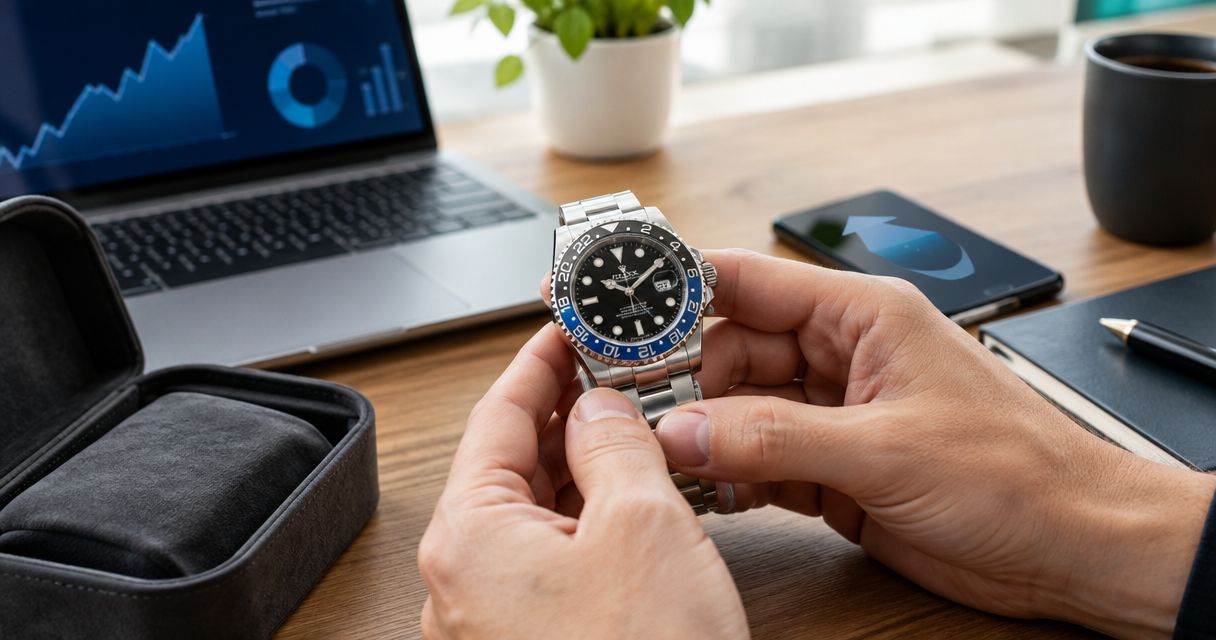
Luxury watch servicing requires a watch-specific written estimate; there is no single amount that applies across Rolex, Omega, Audemars Piguet, and Patek Philippe. In 2026, compare what the estimate includes before you approve it, because replacement parts, cosmetic refinishing, and transport can sit outside the quoted movement service.
- How much does it cost to service a luxury watch? Get a written estimate for the exact reference and condition.
- Compare luxury watch servicing by included work, replacement parts, testing, and service coverage—not the headline alone.
- Approve polishing separately, especially when preserving a collectible watch’s existing finish matters.
- Luxurytimenyc suits buyers seeking new or pre-owned luxury watches, with buying, selling, and trading options.
Why this matters
A service estimate is a scope of work, not simply a bill for making your watch run again. A movement overhaul, a battery replacement, and exterior restoration describe different jobs; treating them as interchangeable makes comparisons misleading.
If you are considering a pre-owned purchase from Luxurytimenyc, ask for the individual watch’s service records before deciding what maintenance to arrange. A recent service claim is useful only when you know who performed the work and what they completed.
How much does it cost to service a luxury watch?
The amount depends on the exact watch and the work identified during assessment. Request an itemized estimate for your reference rather than applying a brand-wide average to your watch. A Rolex time-only watch and a Patek Philippe perpetual calendar chronograph do not present the same servicing task.
For a 2026 service request, ask the workshop to separate these items:
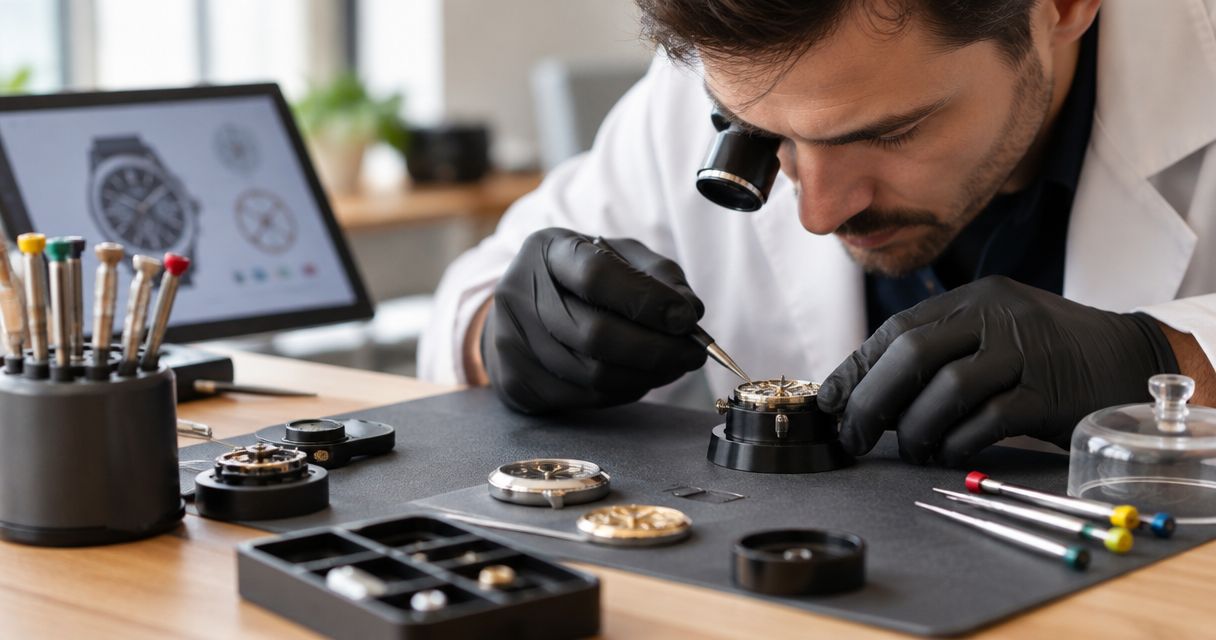
- Movement work: Disassembly, cleaning, inspection, lubrication, assembly, and adjustment where required.
- Replacement parts: Identify worn or damaged components and explain whether they are included or require separate approval.
- Sealing and testing: State which seals are replaced and what water-resistance testing is performed.
- Exterior work: Separate cleaning from polishing, refinishing, bracelet repair, and cosmetic component replacement.
- Administration and transport: Clarify assessment terms, shipping arrangements, insurance responsibility, and applicable taxes.
Not every watch needs every item. The point is to establish exactly what you are authorizing, including what happens if inspection reveals additional work.
A useful estimate also identifies the watch, records its condition, describes exclusions, and explains whether the workshop must contact you before changing the agreed scope. Keep that document with the final invoice.
Compare service needs by movement and function
Brand recognition does not tell you everything about maintenance. Movement type and complications—the functions beyond basic timekeeping—help identify which questions to ask.
The following examples illustrate different servicing considerations, not service quotations or recommendations to replace your watch.
| Watch type and example | Best for | Maintenance advantage | Limitation to consider |
|---|---|---|---|
| Quartz: Audemars Piguet Royal Oak Quartz 67650ST.OO.1261ST.01 | Buyers who prefer battery-powered timekeeping | Battery-related work is distinct from a mechanical overhaul | A battery change does not resolve every movement fault or establish water resistance |
| Automatic with date: Rolex Datejust 41 reference 126300 | Buyers who want automatic timekeeping and a date display | The required functions are straightforward to identify when requesting an estimate | A running movement still needs assessment for wear, lubrication, and sealing |
| Chronograph with date: Patek Philippe Nautilus 5980/1A-019 | Collectors who use an elapsed-time function | You can specify chronograph operation as part of the acceptance checks | Servicing must address the chronograph as well as ordinary timekeeping |
| Grand complication: Audemars Piguet Royal Oak Grande Complication 26605CB.OO.1248CB.01 | Collectors who want complicated watchmaking | A specialist assessment can define the work around the individual movement | Workshop capability and access to suitable parts require particular attention |
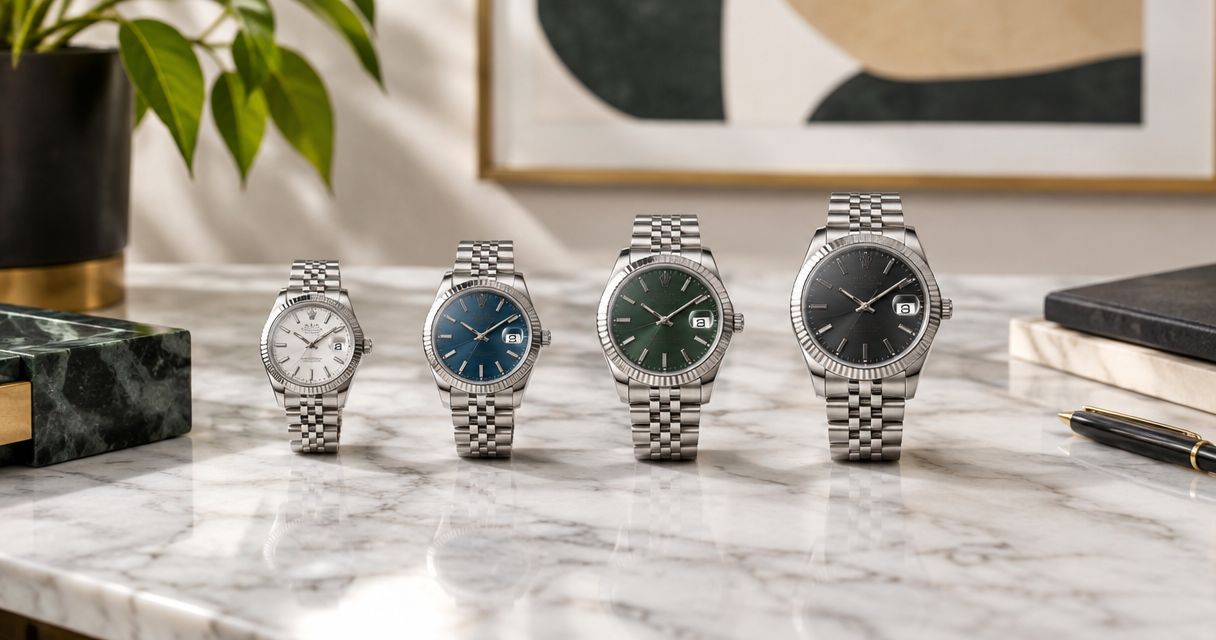
The Royal Oak Quartz example has a 33 mm case, the Datejust example has a 41 mm case, and the Royal Oak Grande Complication example has a 44 mm case. Those dimensions describe fit, not a servicing formula. Do not use case size as a shortcut for estimating workshop work.
When comparing watches through Luxurytimenyc, make service documentation part of the purchase discussion. Product specifications identify the reference and functions; they do not, by themselves, establish the condition of the movement inside a particular watch.
Why luxury watch service estimates vary
The useful question is not simply which brand you own. Ask what the workshop must do to return your particular watch in the condition you have agreed.
- Movement type and complications: Quartz, automatic, chronograph, and perpetual calendar mechanisms require different procedures and expertise.
- Observed condition: Worn components, impact damage, and moisture intrusion change the work beyond routine maintenance.
- Parts requirements: Ask which components need replacement, how they will be sourced, and whether replacement is mandatory for the proposed service.
- Cosmetic instructions: Cleaning, polishing, refinishing, and replacing visible components are separate decisions from restoring movement function.
- Service route: Manufacturer service and independent specialist work differ in workshop arrangements, parts access, and stated service terms.
- Testing and delivery scope: Confirm the performance checks, written coverage, transport responsibilities, and exclusions attached to the estimate.
For your 2026 comparison, send each workshop the same description and instructions. Otherwise, an estimate excluding refinishing or replacement parts can appear more attractive than one covering work you actually need.
Manufacturer service or an independent watchmaker?
Choose the service route by capability, parts access, and written scope—not by an assumption that either route always wins. Ask both routes the same questions about your exact reference.
| Service route | Best for | Main advantage | Main limitation |
|---|---|---|---|
| Manufacturer service | Owners who want the brand’s service process for an eligible watch | Provides a direct route to the manufacturer’s assessment and service procedures | You must establish whether required component replacement or refinishing fits your preservation preferences |
| Independent specialist | Owners seeking a watchmaker with documented experience on their reference | Lets you discuss the proposed work directly with the chosen specialist | Experience, equipment, parts access, and coverage vary between workshops |
For manufacturer service, ask whether the proposed work is conditional on replacing particular components. Do not assume you can decline every cosmetic or functional replacement while retaining the rest of the proposed service.
For an independent specialist, ask about experience with the movement, not just the brand. Familiarity with a simple automatic model does not establish competence with every complicated reference carrying the same name.
Neither route removes the need for written approval. Confirm who will perform the work and whether the watch will be forwarded elsewhere.
How to get a service estimate you can actually compare
Give the workshop useful information before sending your watch. Clear instructions help distinguish a routine maintenance request from a fault investigation or a restoration project.
- Identify the watch. Provide the brand, reference, movement type if known, and available service documents. Share identifying information privately with the workshop.
- Describe the symptoms. Explain stopping, irregular timekeeping, winding problems, date issues, chronograph faults, or suspected moisture exposure without diagnosing the cause yourself.
- State your priorities. Specify functional repair, routine maintenance, preservation of the existing finish, or cosmetic restoration. These are different briefs.
- Request written scope. Ask for included work, exclusions, proposed replacement parts, testing, service coverage, and the process for approving changes.
- Confirm handover terms. Establish packing instructions, transport responsibility, insurance arrangements, and how the watch’s condition will be recorded.
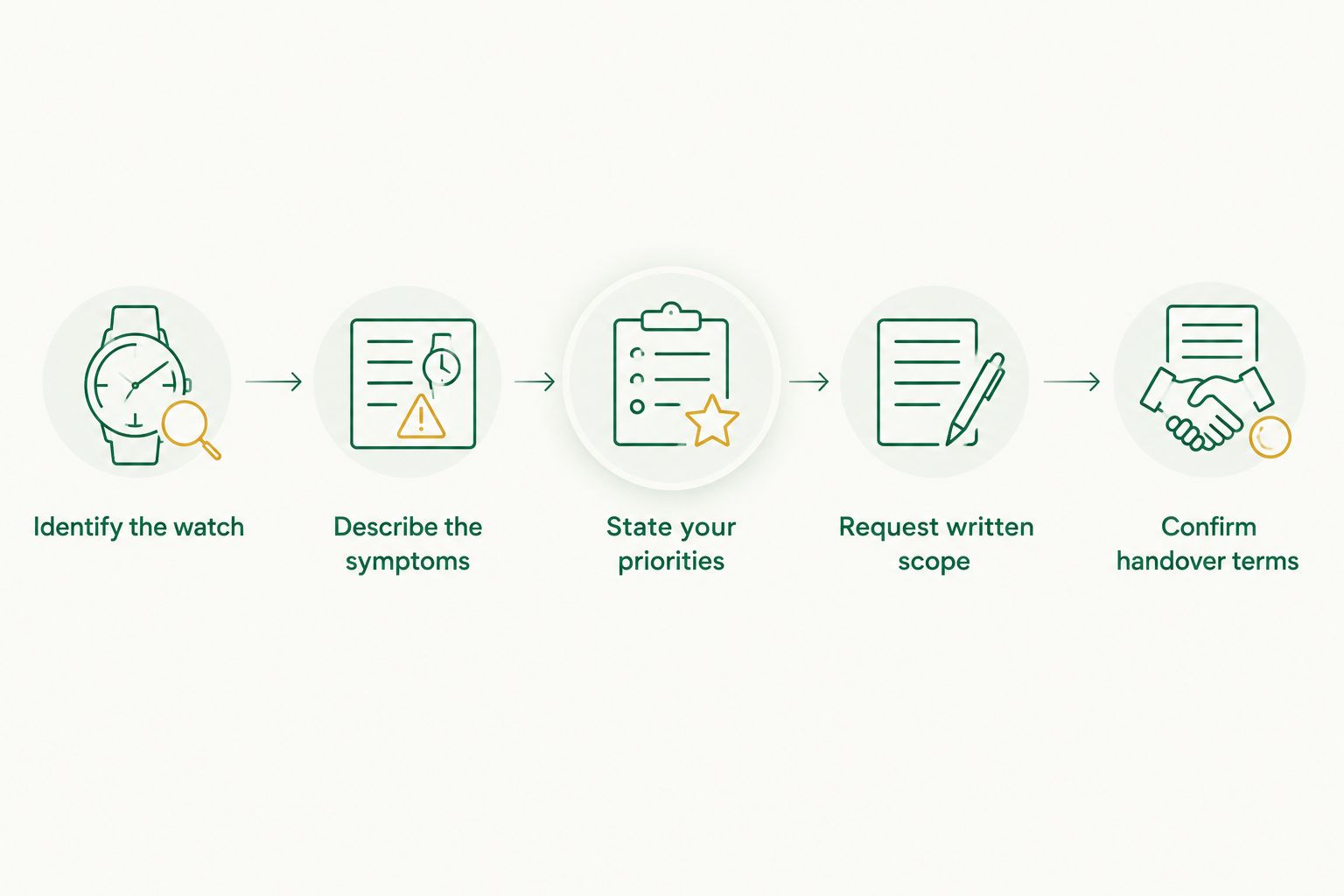
Photograph the watch before handover, including the case, bracelet, clasp, and visible marks. Keep copies of correspondence and the intake receipt so the agreed condition and instructions remain clear.
At collection, compare the completed work with the approved estimate. Ask for the final service document and an explanation of any tests reported on it.
Should you approve polishing during a service?
Approve polishing separately from mechanical work. Polishing removes material, so it is not the same as cleaning a watch or replacing worn movement components.
The benefit is cosmetic: refinishing can address visible wear. The trade-off is that repeated or unsuitable work can alter edges, surface transitions, and the appearance collectors value.
If preservation matters, write your instructions explicitly: no polishing, no refinishing, and no cosmetic component replacement without approval. Ask the workshop to acknowledge those instructions before work begins.
For a watch with unusual finishes or collector significance, discuss the proposed method before agreeing. A general promise to make the watch look newer does not explain which surfaces will change.
Does a service warranty cover everything?
A service warranty covers only what its written terms say it covers. Do not assume movement coverage also includes accidental damage, cosmetic wear, water exposure, or unrelated components.
Distinguish the workshop’s service coverage from any warranty supplied with a pre-owned purchase. They are separate commitments, potentially issued by different businesses and subject to different conditions.
Before buying through Luxurytimenyc, establish the terms attached to the individual watch rather than assuming a retailer-wide promise. The guide to buying a pre-owned watch with a warranty explains the questions to take into that discussion.
For work approved in 2026, retain the dated invoice and coverage terms together. Ask when coverage begins, who handles a claim, and what documentation you must supply.
Should you service a watch before selling or trading it?
Get an assessment before commissioning work solely to prepare a sale. Servicing and selling are separate decisions; a service invoice does not guarantee that a buyer will increase an offer by the same amount.
Disclose known faults and share existing records with the prospective buyer or trade partner. Ask whether they prefer to assess the watch before you authorize repairs, polishing, or component replacement.
Luxurytimenyc buys, sells, and trades luxury watches, making the repair-versus-trade decision relevant to owners considering a change. That does not establish a servicing offer or a guaranteed valuation outcome; discuss the watch’s condition and proposed work as part of the transaction.
If you intend to keep wearing the watch, prioritize its functional needs. Do not postpone assessment of a suspected fault merely because a future sale is possible.
FAQ
How much does it cost to service a luxury watch in 2026?
Luxury watch servicing requires a written estimate for the exact reference, condition, and proposed work. Compare movement service, parts, cosmetic work, testing, and transport terms rather than assuming a single amount applies to every watch.
Is a battery replacement the same as a full watch service?
No, a battery replacement is not the same as a full watch service. Ask whether the work also includes seal inspection, appropriate testing, or investigation of an underlying fault.
Should I choose manufacturer service or an independent watchmaker?
Choose the workshop that can document suitable experience, parts access, testing, and clear service terms for your reference. Manufacturer service and independent specialist work each require a watch-specific assessment.
Does luxury watch servicing always include polishing?
Do not assume polishing is included or required. Approve it separately and put preservation instructions in writing before the workshop starts.
Can I swim with my watch after it has been serviced?
Do not treat servicing alone as permission to swim with your watch. Confirm the completed water-resistance testing and follow the manufacturer’s instructions for the exact reference and its current condition.
Should I service a pre-owned watch immediately after buying it?
Base the decision on documented service history, current condition, symptoms, and the manufacturer’s guidance. A pre-owned label alone does not establish that immediate servicing is necessary.
Will servicing increase my watch’s resale value?
Do not assume servicing will increase an offer by the amount you spend. Ask the intended buyer or trade partner to assess the watch before authorizing work solely for resale.
One last thing
Put your cosmetic instructions on the service authorization, not just in a conversation. A mechanically successful service can still disappoint if you expected the existing finish or visible components to remain untouched.
Before approving a 2026 estimate, read it as a set of permissions: what the workshop can repair, replace, refinish, and return. Clear boundaries protect the watch you want to keep—not simply a watch that runs.