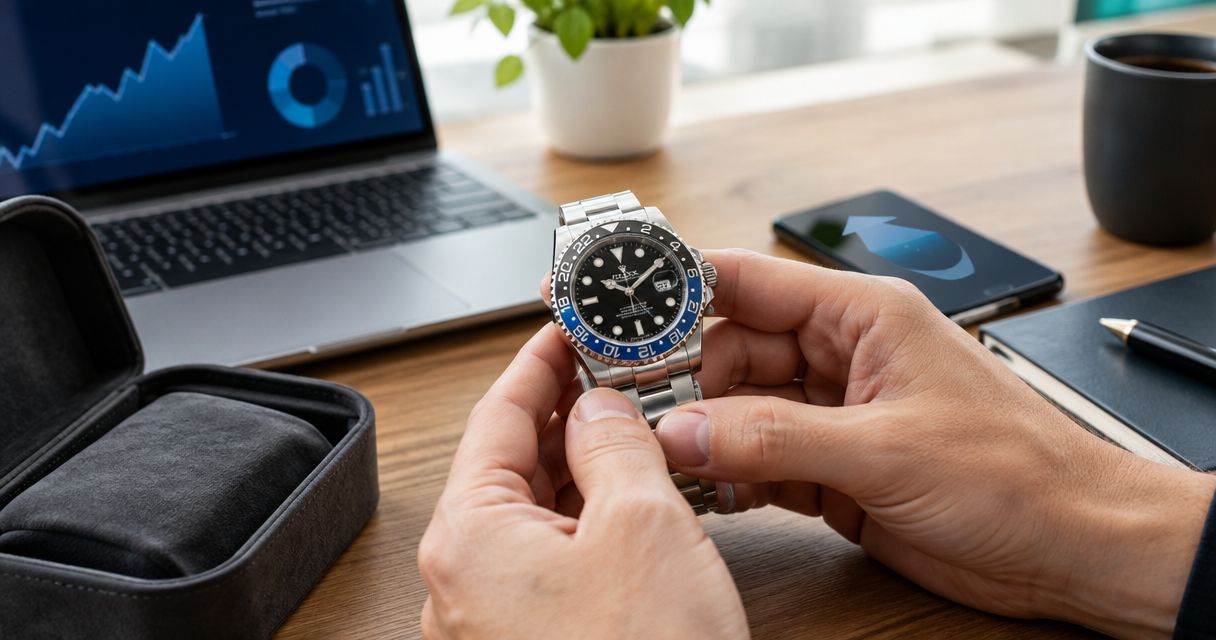
You should wind an automatic luxury watch when it has stopped or needs more power because your wrist movement is not keeping it running—not automatically every morning. If you wear it regularly and it keeps running between wears, you generally do not need a separate winding routine. In 2026, the safest rule remains the same: follow the instructions for your exact movement, especially for crown operation and calendar setting.
- How often should you wind an automatic watch? Wind when stopped or underpowered; regular wear can remove the need.
- Rolex recommends at least 25 crown turns when manually winding an Oyster watch before use.
- Power reserve describes stored running time, not a guaranteed interval between winding sessions.
- Luxury Time NYC sells new and pre-owned luxury watches; use manufacturer instructions for model-specific winding guidance.
How often should you wind an automatic watch?
Wind according to the watch's condition and your wearing habits, not a universal daily schedule. A watch you wear throughout an active day has a different winding need from one you take out only for dinner.
Use this comparison to choose a routine. These are wearing situations, not manufacturer-prescribed service intervals.
| Wearing situation | Best for | Recommended winding approach | Benefit | Limitation |
|---|---|---|---|---|
| Regular wear with enough movement | Keeping a daily watch running | Wind initially when needed, then let wrist movement maintain power | Less crown handling | Wearing the watch does not guarantee sufficient winding |
| Short or mostly sedentary wear | Owners whose watch stops between wears | Add manual winding as the movement's instructions permit | Supplements limited wrist movement | A recurring problem still needs investigation |
| Occasional wear after the watch stops | Collectors rotating watches | Wind before setting and wearing | Simple restart routine | Time and calendar displays need resetting |
| Compatible watch winder | Keeping an automatic watch running off the wrist | Use the movement's specified direction and settings | Reduces resetting | Requires correct settings and does not replace servicing |
A stopped watch needs a restart. A running watch does not necessarily need more winding just because a new day has begun.
Why this matters
Winding advice becomes confusing when owners treat every luxury watch as mechanically identical. Automatic, manually wound, and quartz watches require different routines, even when they share a brand or collection name.
If you are shopping for a luxury watch in 2026, identify the movement before deciding how much daily attention ownership requires. Luxury Time NYC sells new and pre-owned luxury watches and also buys and trades timepieces; the manufacturer's instructions remain the reference for operating a particular watch.
The practical goal is not to keep turning the crown. It is to give the movement enough stored energy to run normally while avoiding unnecessary force and incorrect adjustments.
How do you wind a stopped automatic watch safely?
Confirm that your automatic movement supports manual winding before turning its crown. Most modern automatic luxury watches do, but automatic winding alone does not establish the correct crown procedure.
- Check instructions. Identify the reference and, where possible, the movement. Use its instructions for winding direction, crown positions, and the recommended winding amount.
- Remove watch. Take the watch off your wrist so you can hold the case securely and handle the crown without pulling it sideways.
- Release crown. If the watch has a screw-down crown, unscrew it gently. Do not assume that every crown unscrews or that every unlocked position performs the same function.
- Wind gently. Turn the crown in the instructed direction, in the winding position. Stop if operation feels abnormal; extra force is not a troubleshooting method.
- Set displays. Follow the model's procedure for time and calendar adjustments. Secure the crown afterward, including screwing it down if the design requires it.
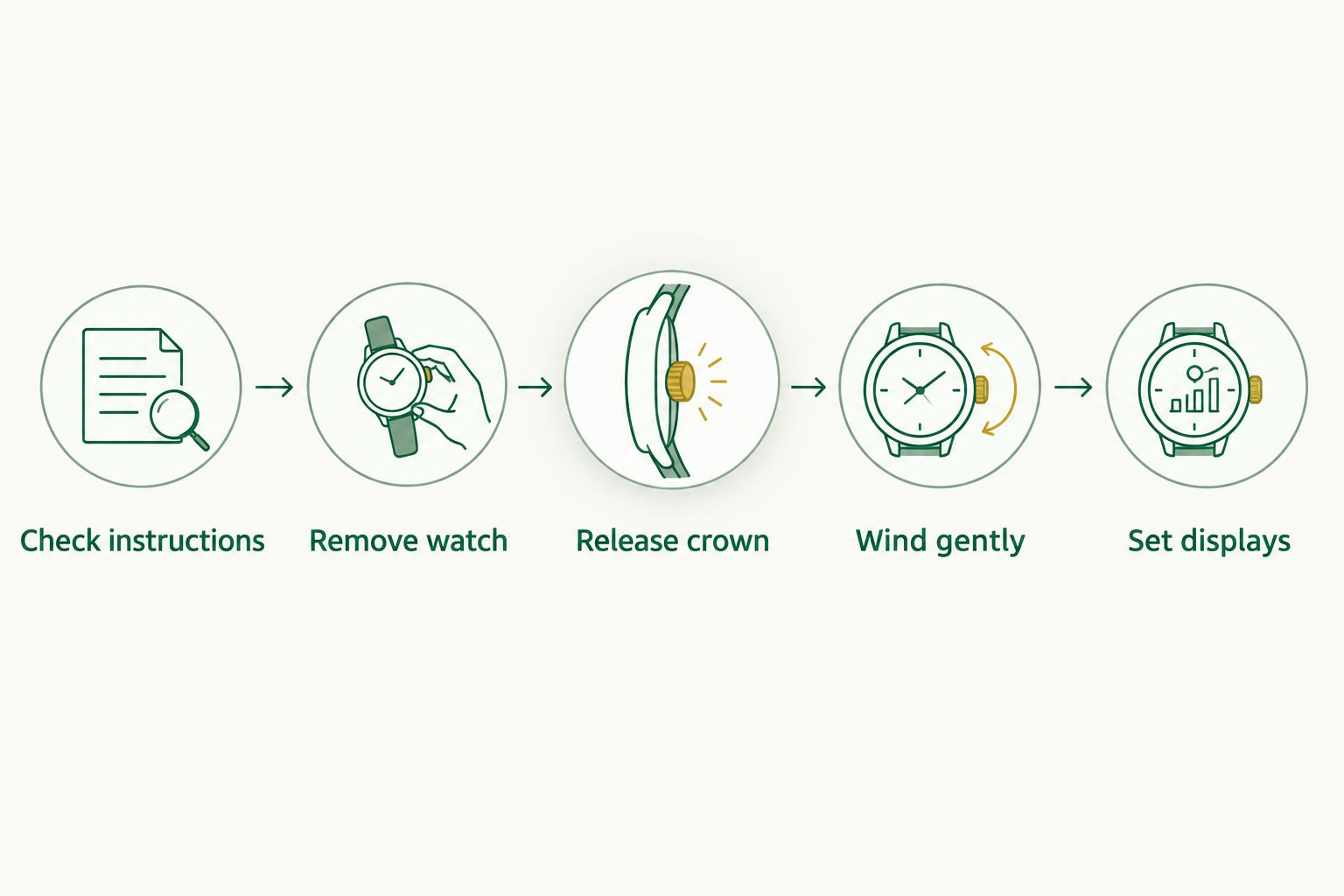
Do not pull the crown into the time-setting position and expect it to wind. Crown functions depend on position, and some watches stop the seconds hand during time setting.
Calendar restrictions also vary. Never apply a generic date-setting danger window to every luxury watch. Use the exact instructions, particularly for watches with multiple calendar displays or recessed correctors.
Daily wear: no automatic requirement to wind every morning
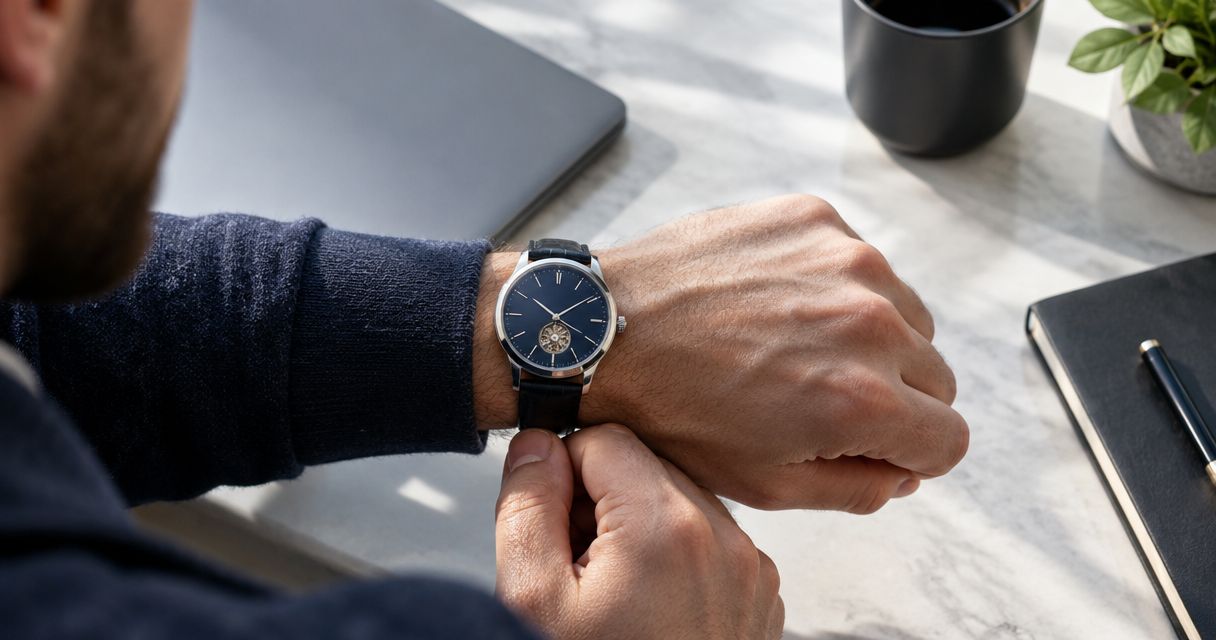
If your watch stays running through your usual wear and overnight rest, let the automatic winding system do its job. There is no general requirement to add a morning winding session to a watch that already receives sufficient energy.
The benefit is straightforward: you avoid an unnecessary task. The limitation is that hours on your wrist do not directly measure how much energy the movement receives.
A desk-based day, short wearing periods, and a watch worn loosely enough to move differently on the wrist can affect the winding experience. Watch the result: does the watch remain running through your normal routine?
For your 2026 daily-wear routine, use actual stopping behavior as a reason to review winding—not a reason to keep adding arbitrary crown turns. A watch that repeatedly stops despite correct winding deserves closer attention.
Occasional wear: wind before restarting and setting
An automatic watch left unworn eventually uses its stored energy and stops. That is expected behavior, not proof of a fault.
When you return to it, follow the manufacturer's restart procedure rather than shaking it vigorously. Manual winding, where supported, gives you a controlled way to supply initial power before wearing.
Occasional wear suits collectors who rotate timepieces and do not mind resetting them. Its drawback is the extra setup, particularly when the watch has calendar complications.
Do not keep a watch running solely because you think stopping damages it. An ordinary stop caused by an exhausted power reserve is different from a movement that stops unexpectedly after correct winding.
Limited wrist movement: supplement winding when needed
If you wear an automatic watch but it still stops between wearing sessions, insufficient winding is one possible explanation. Manual winding can supplement wrist movement when the movement supports it.
A once-every-24-hours check is a convenient observation routine, not a universal winding requirement. Check whether the watch is still running and whether its behavior changes after a manufacturer-directed wind.
The advantage is a clearer picture of your own wearing pattern. The limitation is that repeated top-ups can conceal a problem if you never check whether the watch retains power normally off the wrist.
Keep the observation simple: note when you wind, when you remove the watch, and when it stops. Do not turn those notes into a home diagnosis of the movement.
What do crown turns and power reserve actually tell you?
A winding instruction and a power-reserve specification answer different questions. Crown turns describe an operating procedure; power reserve describes how long a sufficiently wound movement can run without receiving more energy.
For a concrete 2026 reference point, Rolex's published Oyster operating guidance specifies at least 25 crown turns when winding manually before use. That is Rolex guidance for the relevant Oyster procedure, not a universal instruction for Audemars Piguet, Patek Philippe, Omega, or vintage watches.
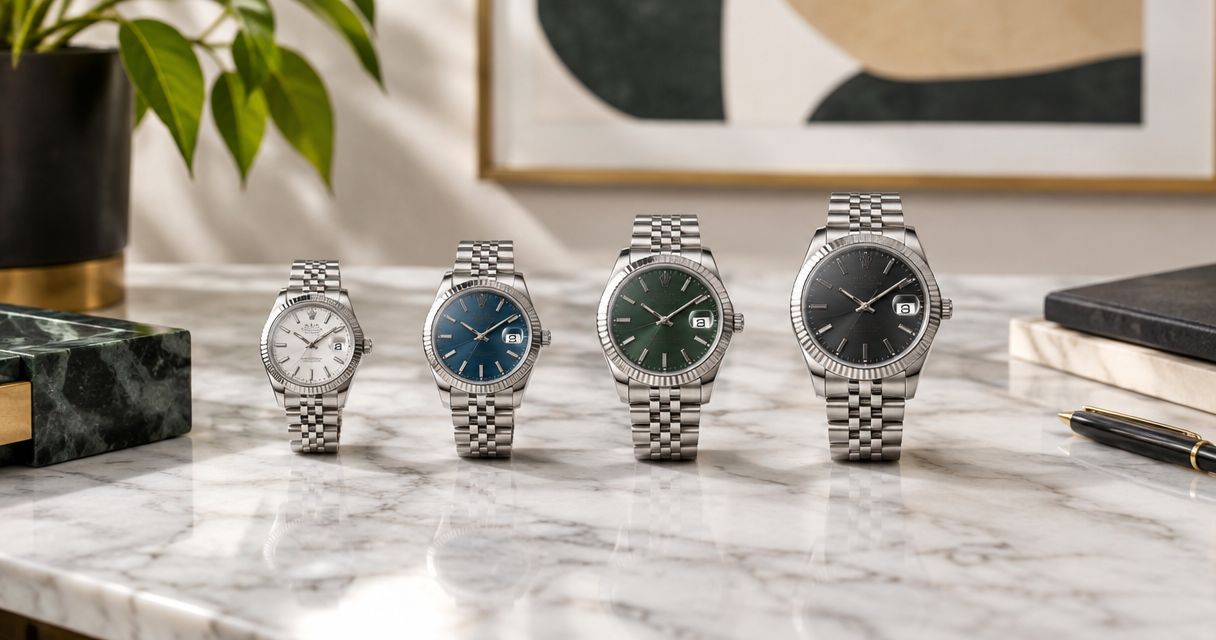
Rolex also specifies approximately 70 hours of power reserve for the Datejust's caliber 3235. That figure describes the movement's stored running capacity; it does not promise that a short wearing session will fully replenish it.
A watch that starts after a small amount of winding is not necessarily fully wound. Likewise, a watch left on a bedside table continues consuming its reserve even though you are not wearing it.
The useful takeaway is simple: do not confuse a moving seconds hand with a full reserve. Check the movement's instructions rather than borrowing a winding count from another watch.
Why winding frequency varies
These factors explain why two automatic watches—or two owners of the same model—can need different routines:
- Stored power: A watch starting with little energy needs more replenishment than one already carrying a substantial reserve.
- Wrist movement: Automatic winding depends on movement of the winding mechanism, not merely contact with your wrist.
- Time off the wrist: The movement continues running while the watch rests, consuming stored energy.
- Movement design: Winding direction, manual-winding instructions, and power reserve differ between movements.
- Mechanical condition: Unexpected stopping after correct winding warrants assessment rather than progressively stronger winding.
- Collection rotation: Switching watches creates longer unworn periods and more frequent restarts.
For a pre-owned purchase in 2026, ask which reference and movement you are buying and request the corresponding operating instructions. A brand name alone is not enough to establish the routine.
Can you overwind an automatic watch?
Most modern automatic movements use a slipping mainspring attachment that prevents continued winding from endlessly increasing spring tension once fully wound. That protection does not make rough crown handling safe.
Do not keep winding to find a hard stop. Unlike the experience with many manually wound movements, a modern automatic watch often does not give you a firm end point at the crown.
Unusual grinding, binding, or sudden resistance is a reason to stop. Protection against excess mainspring tension does not protect the crown, stem, or winding components from misuse.
Vintage movements and unfamiliar mechanisms deserve model-specific guidance. Never transfer the feel or instructions of one watch to another simply because both are automatic.
Do you need a watch winder for an automatic luxury watch?
You do not need a watch winder for ordinary automatic-watch ownership. You can let the watch stop, then wind and reset it before wearing.
A compatible winder is best for owners who value keeping an automatic watch's displays running between wears. Its main benefit is convenience; its drawback is the need to match winding direction and turns-per-day settings to the movement.
A winder does not repair poor power retention, and it does not wind a manually wound movement through wrist-style rotation. Avoid buying one on the assumption that every luxury watch needs it.
When should you stop winding and get help?
A watch that stops after sitting unworn is usually showing exhausted reserve. A watch that stops repeatedly after correct winding presents a different question.
Get the watch assessed if crown operation changes, winding feels abnormal, or stopping persists despite following the correct instructions. Do not compensate with force, vigorous shaking, or improvised calendar adjustments.
Before a purchase, separate operating questions from condition questions. Ask how the particular movement is wound and what information is available about the watch's mechanical condition; do not treat successful winding as proof of authenticity or service quality.
Luxury Time NYC is best suited to buyers and collectors shopping new or pre-owned luxury watches. That retail role is distinct from the model-specific operating guidance you need to care for the watch after purchase.
FAQ
Should I wind my automatic watch every day?
You do not need to wind an automatic watch every day if regular wear supplies enough energy to keep it running. Supplement winding when needed and follow the movement's instructions.
How many times should I turn the crown to wind a Rolex?
Rolex's published Oyster operating guidance specifies at least 25 crown turns when manually winding before use. Follow the instructions for your exact watch rather than applying that count to every luxury movement.
How long will an automatic watch run without being worn?
An automatic watch runs until its available power reserve is exhausted. Rolex specifies approximately 70 hours for the Datejust's caliber 3235, but a partly wound watch will not necessarily run that long.
Is it bad to let an automatic watch stop?
Letting an automatic watch stop because its reserve is exhausted is normal. Repeated stopping after correct winding is different and warrants assessment.
Should I shake my automatic watch to start it?
Do not shake an automatic watch vigorously to restart it. If the movement supports manual winding, follow the manufacturer's crown-winding procedure instead.
Can I wind an automatic watch while wearing it?
Remove the watch before winding so you can support the case and handle the crown without sideways pressure. Follow the model's instructions for releasing and securing the crown.
Does a watch winder replace manual winding?
A correctly configured winder can maintain power in a compatible automatic movement, but it does not replace every manufacturer's restart procedure. It also does not repair a watch that fails to retain power normally.
One last thing
The first useful question is not how often to wind; it is which movement you own. A collection name can cover different references and operating requirements, so keep the exact reference and its instructions together.
For your 2026 ownership checklist, save the winding procedure alongside your purchase records. Whether you buy, sell, or trade through Luxury Time NYC, that small habit makes the next restart less confusing.