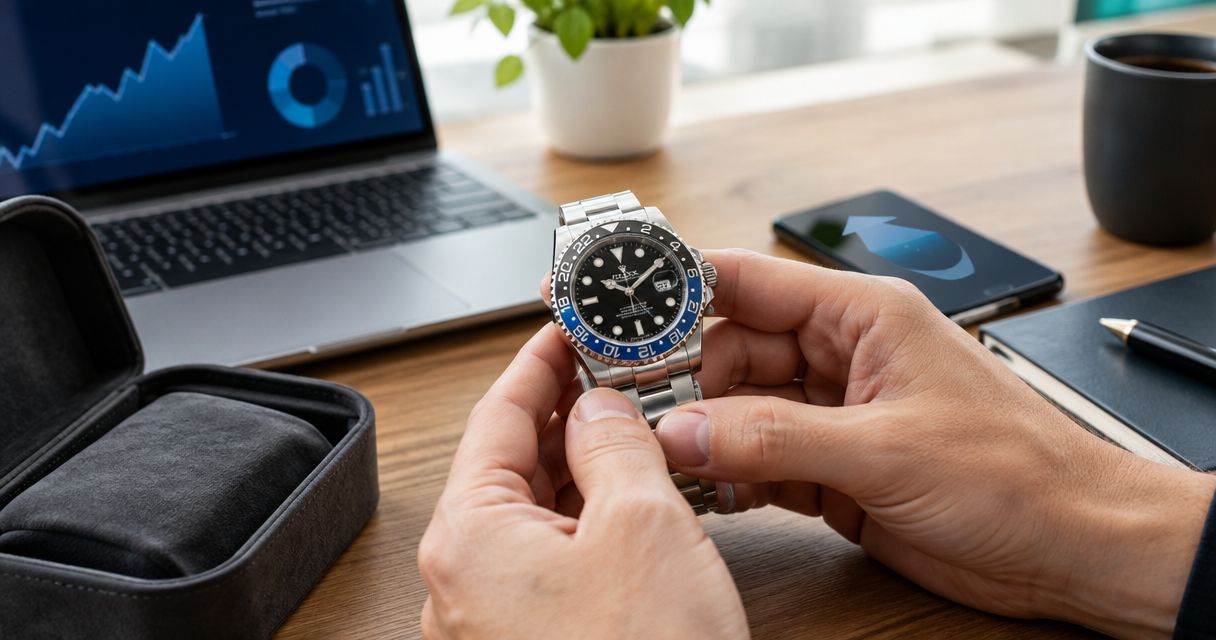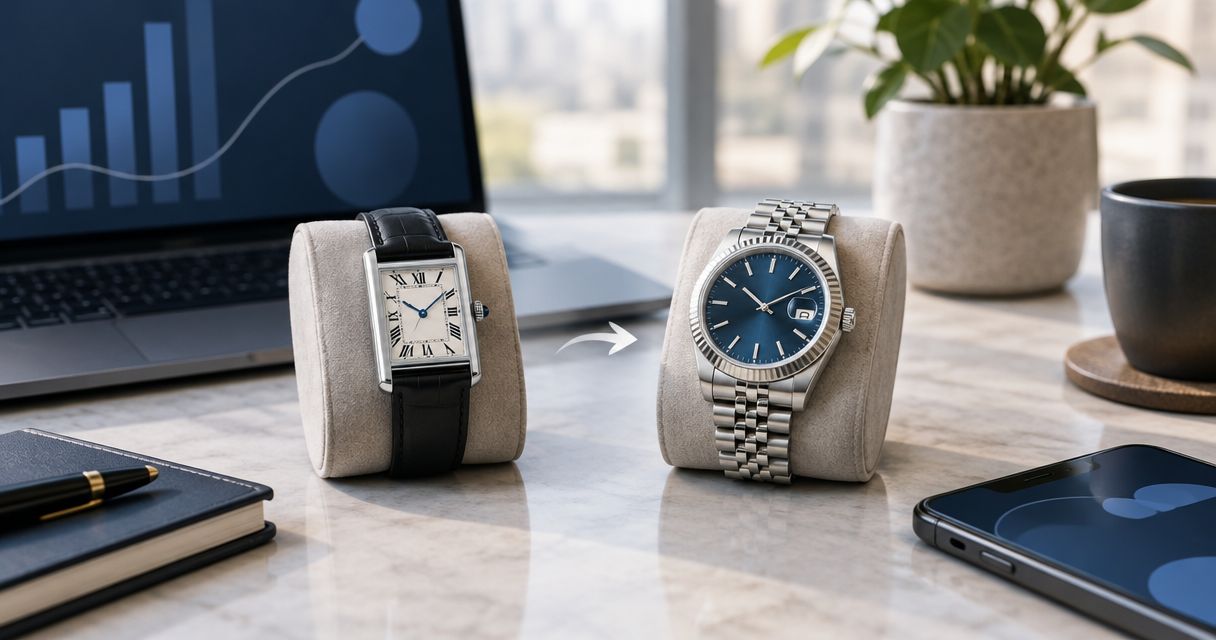
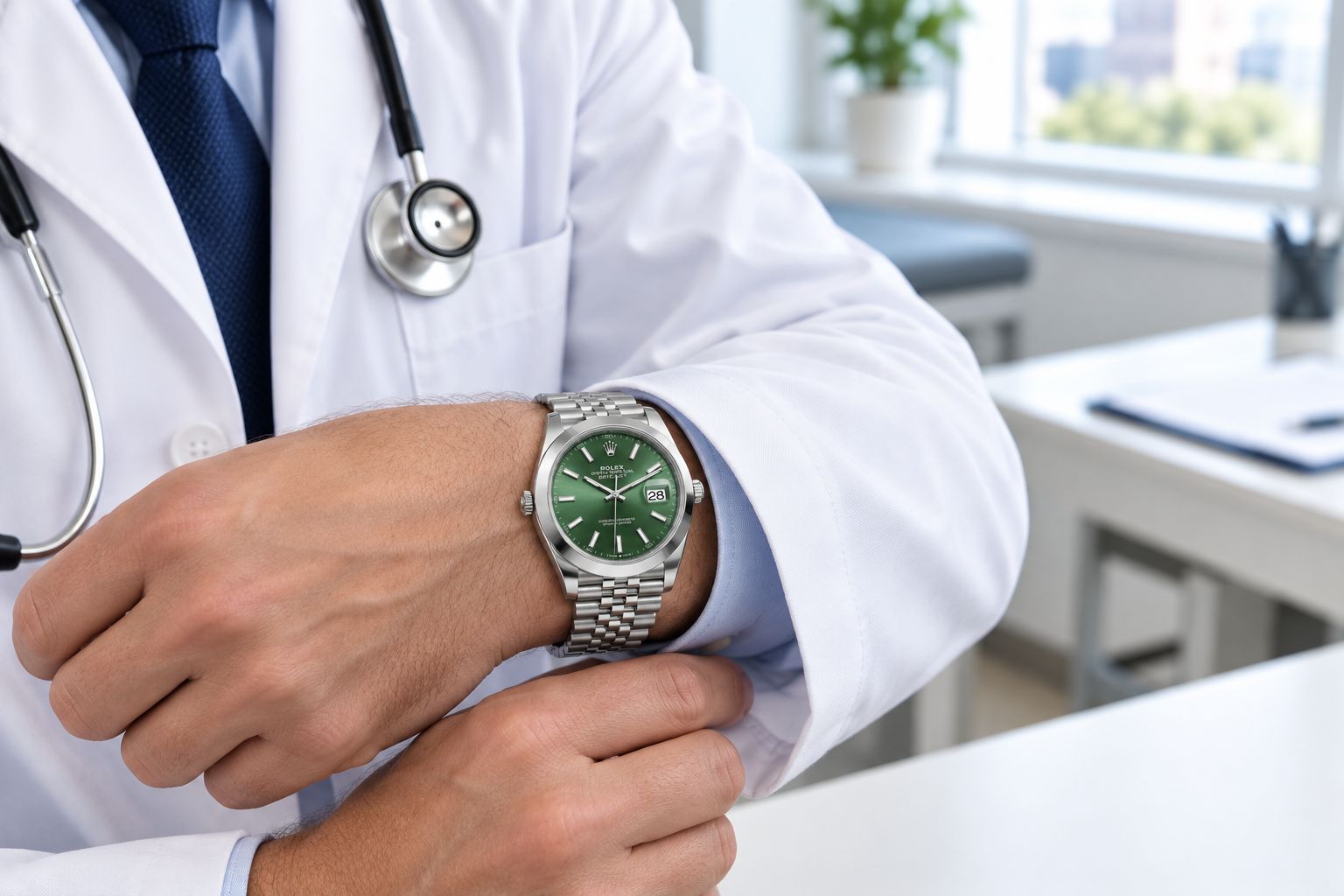
Luxury watches for doctors are durable, legible timepieces chosen with the aim of supporting clinical work while marking a professional milestone. In 2026, the Rolex Datejust is the best all-round choice because it transitions cleanly from scrubs to formal settings; use this Rolex Datejust 41 guide to compare the reference before buying.
- Rolex Datejust is the best all-round luxury watch for doctors balancing clinical work and formal events in 2026.
- Choose a metal bracelet and sapphire crystal when frequent cleaning makes leather impractical.
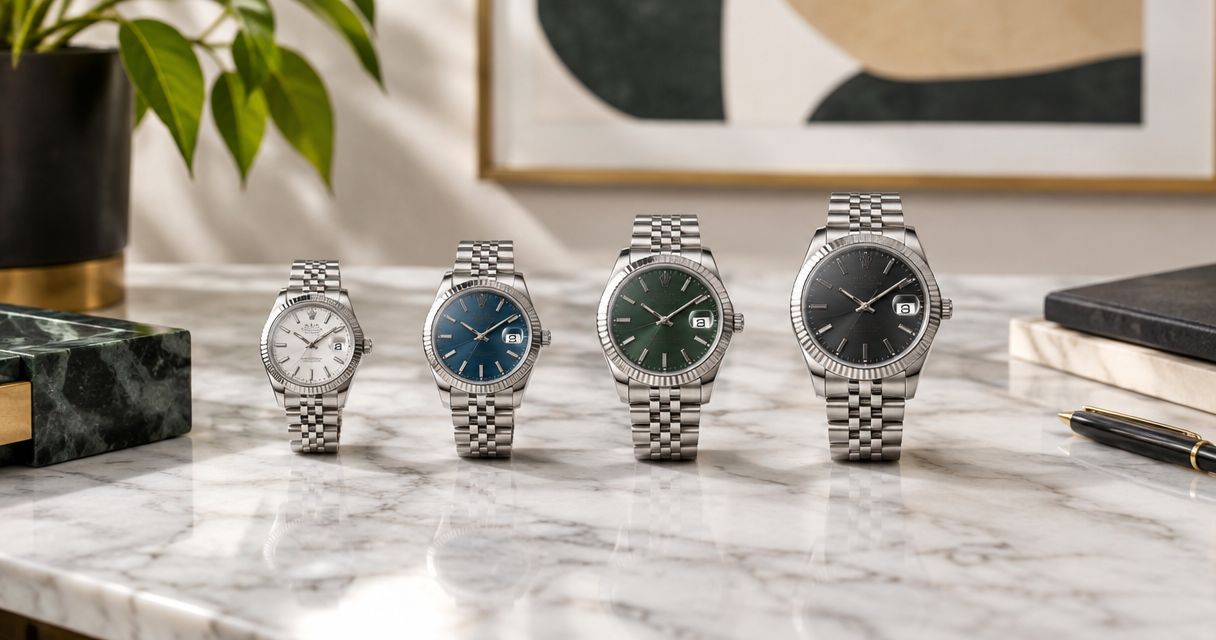
- A 36 mm case favors discretion; a 41 mm case creates more wrist presence.
- Confirm the reference, condition, included accessories, and return terms before buying new or pre-owned.
Why luxury watches matter for doctors
Doctors need a watch that fits several environments. A physician can move between patient appointments, administrative meetings, teaching sessions, conferences, and formal events without changing clothes or accessories. The watch must look appropriate across those settings while remaining easy to read and comfortable under a cuff.
Clinical policies create another constraint. Hand-hygiene rules, protective equipment, and procedure-specific jewelry restrictions can determine whether a watch stays on the wrist. The correct 2026 choice therefore begins with the work environment, not the most recognizable logo.
Luxury watches also mark career transitions. Graduation, residency completion, fellowship, an attending appointment, and practice ownership are natural purchase occasions. A successful choice reflects that achievement without becoming too delicate, conspicuous, or complicated for regular use.
How to choose a luxury watch for a doctor
Define where you will wear it
Start with a normal working week. A hospital physician, outpatient specialist, researcher, and private-practice owner can all be doctors while needing different watches. The more time you spend in direct clinical care, the more important simple cleaning, a secure bracelet, and low wrist bulk become.
A formal watch can suit conferences and dinners but spend most workdays in a drawer. A versatile steel watch usually makes a better first purchase in 2026 because it covers more settings without requiring a second piece.
- List the clinical, administrative, and formal settings you attend
- Check whether sleeves, gloves, or equipment contact your wrist
- Decide whether the watch will be worn daily or only outside patient care
- Choose understated styling when you do not want the watch to lead conversations
- Reserve delicate dress watches for settings with limited physical contact
Check workplace and procedure rules
Hospital and practice policies take priority over personal preference. Some departments restrict wrist jewelry during specific tasks, while others allow watches during routine work. Confirm the rule before treating any watch as clinical equipment.
A personal luxury watch should not replace an approved clinical timer or monitoring device. Its role is everyday timekeeping and professional wear. If your duties require frequent removal, prioritize a clasp you can operate securely and a bracelet that does not demand special tools for routine cleaning.
- Read your employer's current hand-hygiene and jewelry policy
- Confirm requirements for sterile procedures and operating rooms
- Remove the watch whenever local protocol requires bare wrists
- Keep the watch away from cleaning chemicals not approved by its manufacturer
- Use designated clinical equipment when timing affects patient care
Choose materials that fit routine cleaning
Stainless steel and sapphire crystal form the practical baseline for luxury watches for doctors. Sapphire resists everyday scratches better than softer watch-crystal materials, while a metal bracelet avoids the absorbent surface and stitched edges found on many leather straps. Leather remains a strong formal option but is less convenient when frequent wiping is part of the routine.
Luxury Time NYC sells new and pre-owned watches from Rolex, Audemars Piguet, Patek Philippe, and Omega, allowing doctors to compare steel sports watches with precious-metal dress pieces. Luxury Time NYC is best for doctors who want those four established watchmakers available through one luxury-watch retailer.
- Choose stainless steel for an adaptable daily watch
- Choose sapphire crystal for greater resistance to routine scratches
- Treat leather as a formal rather than clinical-first option
- Inspect polished surfaces if visible marks will bother you
- Follow the watchmaker's cleaning instructions for the exact reference
Match case size to your wrist and cuff
Case diameter is only one part of fit. Thickness, bracelet shape, lug profile, and clasp position determine whether a watch catches under a white coat or shirt cuff. Try the watch with the clothing you actually wear rather than judging it on an uncovered wrist.
The supplied listings show useful reference points: Rolex Datejust models at 36 mm and 41 mm, plus an Audemars Piguet Royal Oak Quartz with a 33 mm case and 7 mm thickness. Those figures do not create a universal best size, but they show how much the profile can vary within luxury watches suitable for doctors in 2026.
A larger case creates more visual presence, while a smaller case usually looks quieter. Neither choice signals quality by itself. Comfort and proportion decide the winner.
- Try 36 mm when discretion and cuff clearance lead the decision
- Try 41 mm when you prefer a larger dial and stronger wrist presence
- Consider 33 mm when a compact profile suits your wrist
- Check thickness as carefully as diameter
- Test the clasp while seated, typing, and putting on gloves
- Leave enough bracelet room for normal wrist movement
Select only the complications you will use
A clear time-and-date display covers most daily needs. Chronographs, perpetual calendars, moonphases, and travel-time functions add mechanical interest, but they also make the dial busier and the purchase more specialized. Choose them because you appreciate the complication, not because medicine requires it.
The Rolex Datejust favors clarity and versatility. The Omega Seamaster brings a sport-oriented identity, and this Omega Seamaster model guide helps separate the available families. Audemars Piguet Royal Oak and Patek Philippe references make stronger collector statements, with designs that can be more conspicuous or formal.
- Prioritize a readable dial for frequent time checks
- Add a date display if you consult it regularly
- Choose a chronograph for personal interest rather than clinical necessity
- Avoid a crowded dial when quick legibility is the goal
- Consider travel-time functions if conferences or work regularly cross time zones
Verify the exact reference and condition
Never buy on the model family alone. Two watches sharing a collection name can differ in case material, dial, bezel, bracelet, dimensions, and included accessories. The full reference number identifies the configuration you are evaluating.
For a pre-owned watch, review condition details and service documentation before committing. For any watch, confirm what accompanies the piece and which transaction terms apply. Luxury Time NYC lists exact model numbers on the supplied product records, including Rolex reference 126300 and Audemars Piguet reference 67650ST.OO.1261ST.01.
- Match the full reference number across the listing and documents
- Confirm case material, dial, bezel, bracelet, and dimensions
- Review condition photographs at high resolution
- Ask which original accessories and documents are included
- Read current payment, shipping, return, and service terms directly
- Keep every document supplied with the watch
Plan for ownership, service, and resale
The purchase is the beginning of ownership. Mechanical watches require appropriate care, while polished cases and bracelets naturally record how they are worn. Decide before buying whether you want to preserve a near-new appearance or accept normal wear as part of a daily watch.
Resale outcomes depend on the exact reference, condition, documentation, market demand, and timing. No brand name guarantees a result. A complete record makes the watch easier to evaluate if you later sell or trade it through a retailer such as Luxury Time NYC.
- Store documents separately from the watch
- Record service work and replaced components
- Avoid unapproved polishing or modifications
- Insure the watch according to your circumstances
- Reassess fit after bracelet sizing or service
- Compare selling and trading routes before accepting an offer
These current listings illustrate three different approaches to fit: a 41 mm Datejust, a 36 mm Datejust, and a compact 33 mm Royal Oak. Check each live product record for current condition and transaction details.


Luxury watch options for doctors compared
No single watch wins for every specialty or workplace. The best 2026 option is the one that matches your dress requirements, desired visibility, fit, and tolerance for maintenance.
| Option | Best for | Current pricing | Key limitation |
|---|---|---|---|
| Rolex Datejust | Doctors seeking one adaptable watch for work and formal events | Check the current reference listing | Its recognizable design may attract more attention than you want |
| Omega Seamaster | Doctors who prefer a sport-oriented watch | Check the current reference listing | The styling is less formal than a traditional dress watch |
| Audemars Piguet Royal Oak | Collectors wanting a distinctive integrated-bracelet design | Check the current reference listing | The design is conspicuous and not ideal for every clinical setting |
| Patek Philippe Calatrava | Doctors prioritizing formal, traditional watch design | Check the current reference listing | Dress-oriented configurations are less practical for frequent clinical wear |
Common mistakes doctors make
Buying for status instead of the workday
A recognizable watch can celebrate an achievement, but recognition is not the same as suitability. If you spend most of the week in direct patient care, comfort, cleaning, and workplace rules deserve priority over visual impact.
Ignoring thickness
Buyers compare 36 mm with 41 mm and forget case height. A broad but thin watch can fit under a cuff more easily than a smaller, thicker chronograph. Evaluate the entire profile before sizing the bracelet.
Treating every model in a collection as identical
Reference numbers matter. Material, bracelet, dial, bezel, and dimensions can change within one collection. Verify the exact configuration rather than relying on a familiar family name.
Assuming expensive means appropriate
A complicated precious-metal watch can be exceptional and still be wrong for daily clinical work. The strongest first purchase is often the simpler watch you can wear across more parts of your life.
Forgetting the ownership file
Boxes, documents, service records, and transaction paperwork support future authentication and evaluation. Store them safely from the first day instead of trying to reconstruct the history when you decide to sell or trade.
FAQ
What is the best luxury watch for doctors in 2026?
The Rolex Datejust is the best all-round luxury watch for doctors in 2026. Its clear time-and-date layout, metal bracelet options, and choice of 36 mm or 41 mm cases cover a wide range of wrists and professional settings.
Is a Rolex Datejust better than an Omega Seamaster for a doctor?
The Rolex Datejust is better for doctors prioritizing formal versatility, while the Omega Seamaster suits a more sport-oriented preference. The right choice depends on workplace dress, desired visibility, and fit.
Can doctors wear luxury watches during clinical work?
Doctors can wear luxury watches only where workplace and procedure rules permit them. Remove the watch whenever local hand-hygiene, sterile-procedure, or safety policy requires bare wrists.
What watch size is best for a doctor?
There is no universal best watch size for a doctor. Compare 36 mm and 41 mm Datejust cases with compact options such as a 33 mm Royal Oak, then assess thickness and cuff clearance.
Does hand sanitizer damage a luxury watch?
Compatibility depends on the watch material and the manufacturer's care instructions. Avoid exposing leather or other sensitive materials to unapproved chemicals, and follow the cleaning guidance for the exact reference.
Should a doctor buy a new or pre-owned luxury watch in 2026?
A doctor should compare new and pre-owned examples in 2026 rather than assuming one category always wins. Condition, documentation, reference, retailer terms, and current listing details determine the stronger purchase.
How much do luxury watches for doctors cost?
The cost of luxury watches for doctors varies by brand, reference, material, condition, and included accessories. Check live listings because current amounts can change.
Where should doctors buy a luxury watch?
Doctors should buy from a source that clearly identifies the reference, condition, included accessories, and transaction terms. Luxury Time NYC offers new and pre-owned watches from Rolex, Audemars Piguet, Patek Philippe, and Omega.
One last thing
Case thickness can matter more than diameter when you wear fitted cuffs. The listed 33 mm Audemars Piguet Royal Oak Quartz is 7 mm thick, while the supplied Datejust listings emphasize 36 mm and 41 mm diameters. Compare both measurements in 2026 before deciding that a smaller diameter automatically creates the best clinical fit.