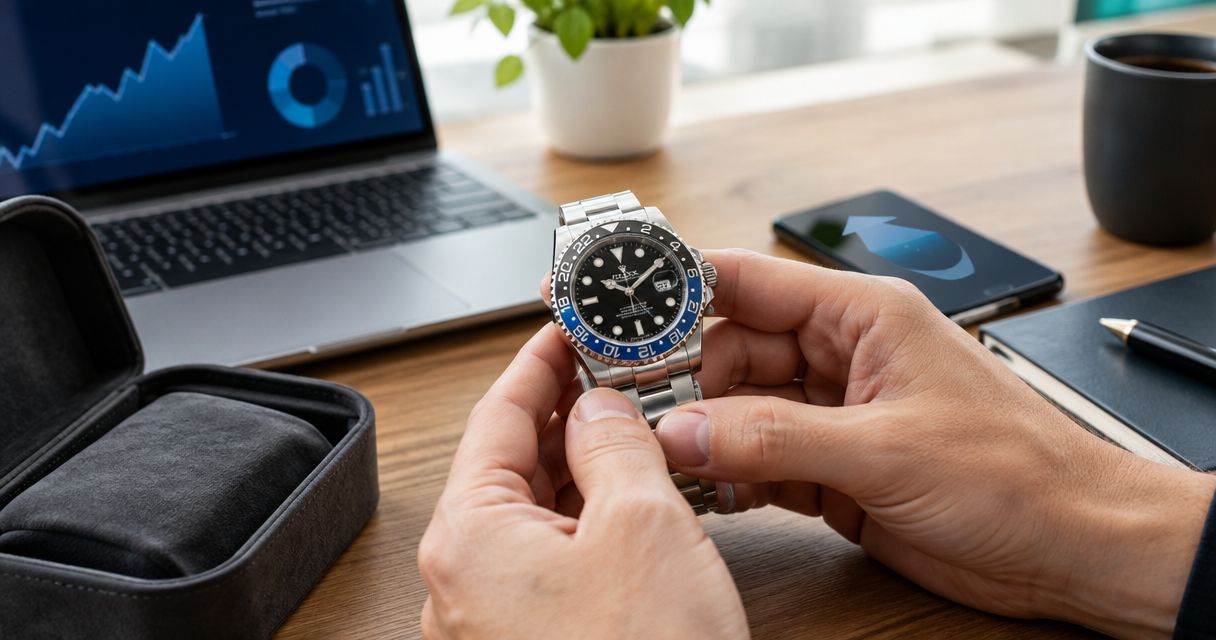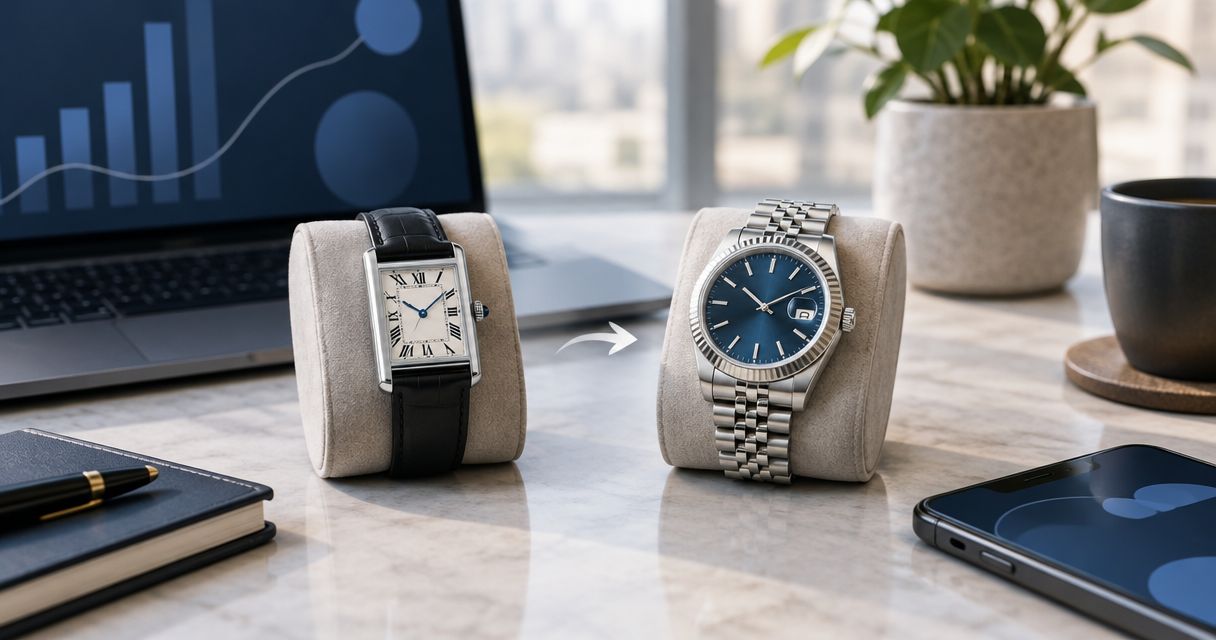
Luxury watches for lawyers are timepieces chosen for courtroom-appropriate proportions, steady resale value, and a brand signal that reads as competence rather than showiness. A litigator standing in front of a jury for twelve hours needs a case that survives a trial day without catching on a legal pad; a partner across a conference table from a client needs a watch that reads well without shouting money. The needs of this segment sit closer to a tailor's fitting than a collector's wish list.
- Luxury watches for lawyers should stay in the 36mm-41mm range for courtroom and client-meeting comfort.
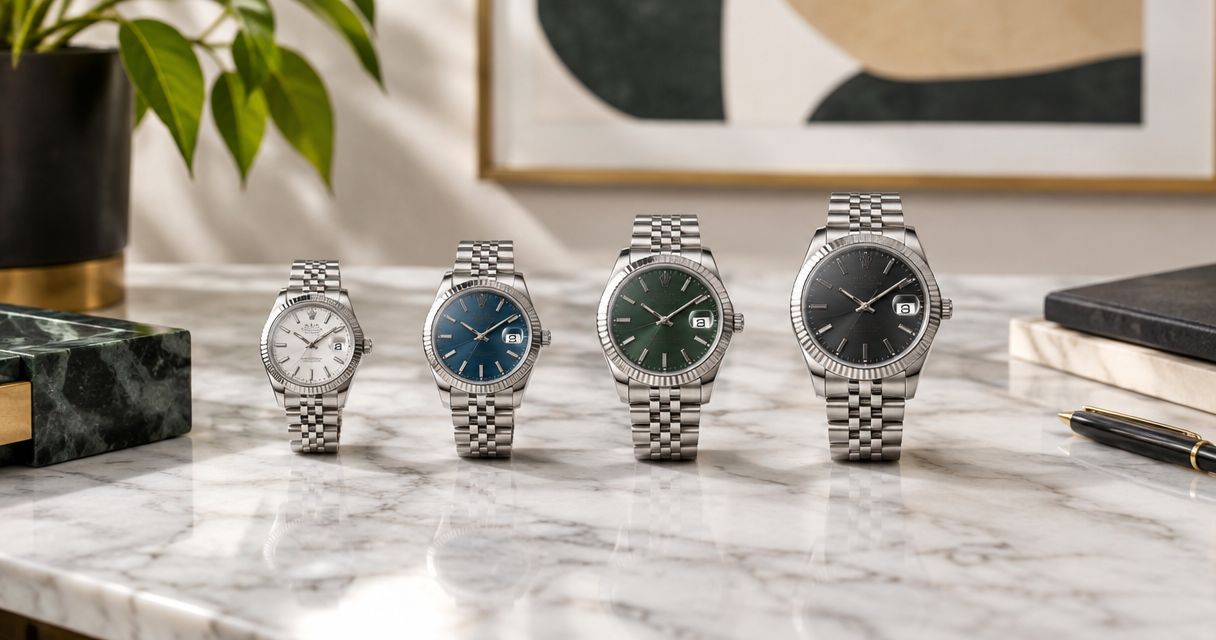
- Rolex Datejust 36 and Datejust 41 model the size sweet spot most litigators wear daily.
- Patek Philippe Calatrava at 38mm sets the dress-watch standard for partner-level meetings.
- Buy from a dealer that verifies papers and authenticity before wiring money for a pre-owned piece.
- Cartier Tank watches read as boardroom-appropriate without a single complication on the dial.
Why luxury watches matter for lawyers
A watch is one of the few personal objects a lawyer wears in every room that matters: deposition, bench conference, closing argument, client dinner. Unlike a suit or a bag, it stays visible during the moments a lawyer is being evaluated for judgment, not just competence. Luxury Time NYC sees this segment gravitate toward the same handful of references for a reason — they read as deliberate, not decorative.
The watch also has to survive the job. Court days run long, travel is constant, and a case that scratches on a courthouse bench or a dial that's hard to read under fluorescent light becomes a daily annoyance rather than an asset. The right choice for a lawyer is boring by design: durable, legible, and forgettable to everyone except the wearer.
Set your dress-code baseline before you shop
Every firm, court, and client base has an unwritten rule about what reads as appropriate. Figure this out before you pick a model, not after.
- Check your firm's actual dress code, not the one from five years ago
- Note bench and courtroom decorum in your jurisdiction — some judges notice
- Match your client industry: finance clients read differently than startup founders
- Account for video-hearing visibility — a wrist close-up on Zoom shows more than you think
- Ask a senior partner what they wear to depositions versus trial
Pick a case size that reads at 36mm to 41mm
Oversized dive and pilot watches look sharp on a weekend but fight against tailored cuffs and courtroom optics. Stay in the 36mm to 41mm band that dress and daily-wear watches have occupied for decades.
- 36mm suits a smaller wrist and reads as classic dress-watch proportion
- 41mm is the modern standard for daily wear without looking oversized
- Avoid cases over 44mm for anything worn under a shirt cuff
- Check clearance under your typical cuff and jacket sleeve before buying
- Try the watch on with a suit jacket, not just a t-shirt, before deciding
Choose the silhouette: dress watch versus daily-wear watch
This is the fork every lawyer hits. A slim dress watch disappears under a cuff; a steel daily-wear piece takes the abuse of a real caseload.
- A round, thin dress case works for closings, client dinners, and formal court appearances
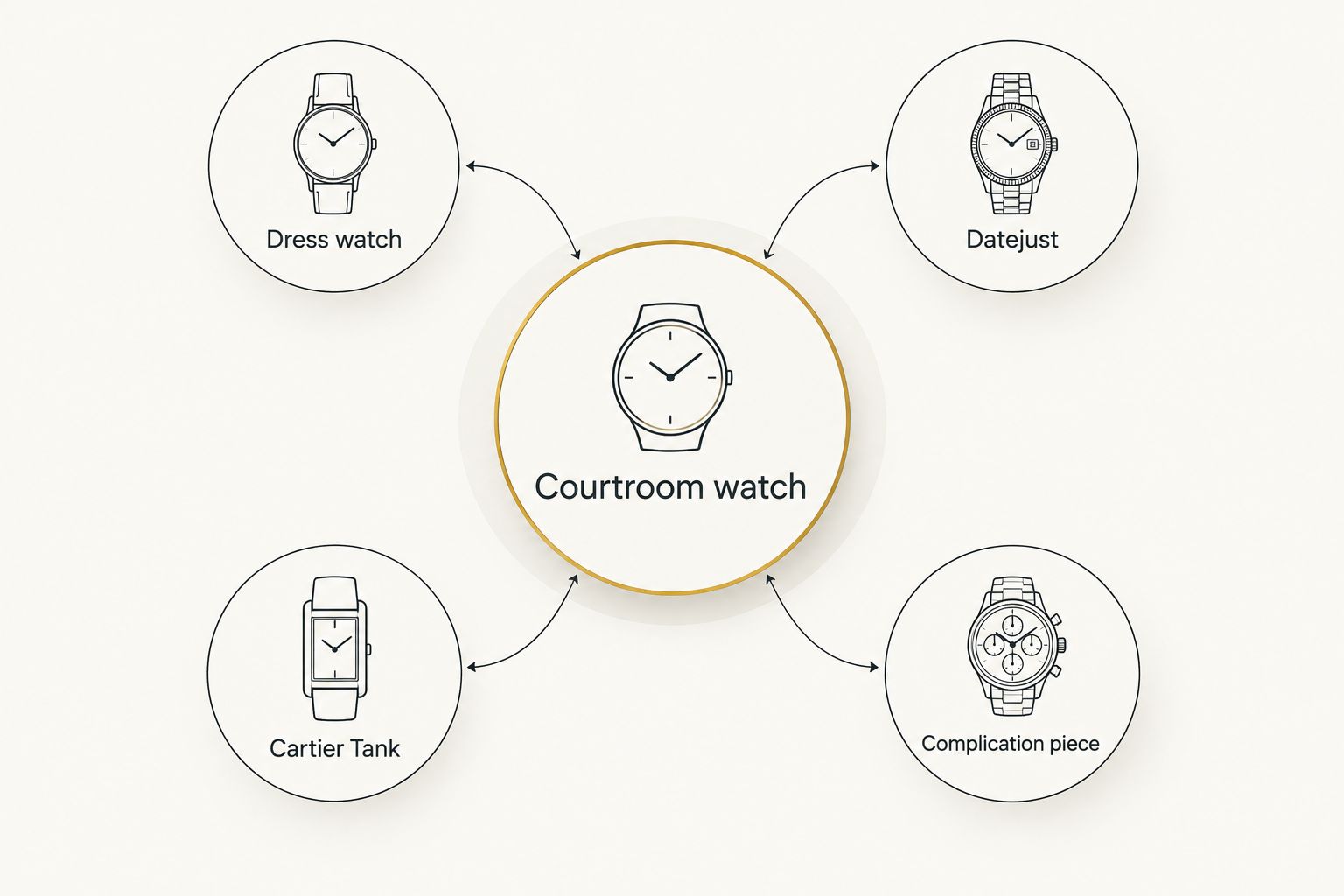
- Cartier Tank watches read as boardroom-appropriate with zero complications to explain
- A steel sports-adjacent watch handles daily deposition and travel wear better than gold
- Skip chronographs with busy sub-dials if legibility across a table matters to you
- Match metal to how often you're photographed or on camera for client work
Decide metal and dial finish for daily wear
Metal choice signals formality faster than any complication does. Steel reads as working professional; white gold and platinum read as partner-level.
- Stainless steel takes daily scuffs without showing them under office light
- White gold or platinum signals a step up for partner or judge-facing meetings
- Muted dial colors — black, white, silver, soft green — hold up across every setting
- Avoid bright or heavily textured dials that photograph poorly in depositions
- Fluted or smooth bezels both work; avoid diamond-set bezels for daily litigation wear
A slim steel or white gold case worn under a French cuff during a closing argument looks deliberate, not decorative — the watch supports the argument instead of competing with it.

Buy from a source that verifies authenticity and papers
The manual route works: check hallmarks, compare serial ranges against published brand records, and ask for box and papers before you pay. It's slow, and it puts the authentication risk on you.
The faster path is a dealer that verifies condition, papers, and authenticity before the watch ships, so the diligence is already done. Certified pre-owned Rolex buyers skip the serial-number research entirely when the dealer has already run it.
- Confirm box and papers exist before wiring any money
- Ask for close-up photos of the case back, movement, and clasp stamps
- Cross-check the reference number against known production specs
- Buy from a dealer who will put authenticity and condition in writing
- Get an independent appraisal on anything over five figures before final payment


Protect the investment: insure and service on schedule
A watch bought for daily courtroom wear needs the same paperwork discipline as any other asset on a lawyer's balance sheet.
- Get a written appraisal at purchase, then update it every few years
- Add a specific rider to your policy rather than relying on general property coverage
- Follow the manufacturer's service interval instead of waiting for a problem
- Keep original box, papers, and service records together — resale buyers ask for all three
- Photograph the case back and clasp stamps once, for your own insurance file
Comparing watch types for lawyers
| Watch type | Best for | Key strength | Key limitation |
|---|---|---|---|
| Slim dress watch (Calatrava-style) | Closings, formal court, client dinners | Disappears under a cuff, reads as deliberate | Less durable for rough daily handling |
| Rolex Datejust (36mm-41mm) | Daily litigation and deposition wear | Steel durability with a dress-appropriate face | Common reference, less distinctive |
| Cartier Tank | Boardroom and partner meetings | Recognizable silhouette with zero complications | Limited daily-wear toughness versus steel sports cases |
| Chronograph or Royal Oak-style sports watch | Weekend wear that still reads professional | Handles travel and daily wear well | Busier dial, less ideal for formal court settings |
| Complication piece (Day-Date, perpetual calendar) | Partners, judges, senior counsel | Signals seniority without ostentation | Higher cost of ownership and service |
Common mistakes lawyers make buying a luxury watch
- Wearing an oversized dive or pilot watch to trial. It distracts from the argument instead of supporting it, and it reads as leisurewear in a formal setting.
- Buying a box-less, papers-less watch to save money. The discount disappears the moment you try to resell without documentation.
- Choosing a heavily textured or bright dial for video hearings. What looks sharp in person can read as distracting on a camera close-up.
- Skipping the insurance rider. General property coverage rarely matches the actual replacement value of a watch worth five or six figures.
- Treating the watch as a single purchase instead of a two-piece rotation. A steel daily piece and a slim dress piece cover more of a lawyer's calendar than one watch trying to do both jobs.
FAQ
What is the best watch size for a lawyer to wear in court?
36mm to 41mm is the range most litigators settle on for courtroom wear in 2026. Anything over 44mm tends to catch under a cuff and reads as leisurewear rather than professional attire.
Is a Rolex Datejust appropriate for a lawyer?
Yes, the Rolex Datejust in 36mm or 41mm is one of the most common choices among practicing lawyers because it pairs steel durability with a dress-appropriate face. It works for depositions, client meetings, and formal court appearances alike.
Should a lawyer buy new or pre-owned?
Certified pre-owned gets more watch for the money once condition and papers are verified by the dealer. New avoids any authentication step but usually costs more for the same reference.
Is a Cartier Tank a good choice for a partner or senior associate?
The Cartier Tank reads as boardroom-appropriate because it carries no complications to explain and a silhouette that's been recognized as formal wear for decades. It suits client-facing roles where a quiet, established brand matters more than technical features.
How do I verify a pre-owned watch is authentic before buying?
Check the case back and movement stamps against published reference specs, confirm the serial number matches known production ranges, and request box and papers before payment. A dealer that verifies this before shipping removes the research burden from the buyer.
Do lawyers need to insure a luxury watch separately?
A dedicated rider is worth adding once a watch's value exceeds what a general property policy typically covers. Get a written appraisal at purchase and update it every few years to keep the coverage accurate.
What's the difference between a dress watch and a daily-wear watch for a lawyer?
A dress watch is thinner and reads as more formal for closings and client dinners, while a daily-wear steel piece like a Datejust handles the wear of depositions and travel better. Many lawyers keep one of each rather than asking one watch to do both jobs.
Are complication watches like a Day-Date appropriate for junior lawyers?
A Day-Date or perpetual calendar piece tends to read as senior-level and is more common among partners and judges than junior associates. A simpler Datejust or Calatrava-style dress watch is the more standard choice earlier in a legal career.
One last thing
The two-watch rotation solves more problems than a single "do everything" watch ever will: a steel Datejust for the daily grind of depositions and travel, and a slim dress piece for closings and client dinners. Lawyers who try to make one watch cover both jobs usually end up wearing the wrong one to the wrong meeting at least once a quarter in 2026 the way they did in 2025.