Best overall: the Omega Constellation Co-Axial Master Chronometer 39 mm in steel. Best for a larger wrist: the 41 mm ceramic-bezel model. Best for low-maintenance wear: the 28 mm quartz model. This 2026 guide from Luxury Time NYC compares five Constellation choices by fit, movement, design, and buying risks.
- The Omega Constellation 39 mm in steel is the best default for a modern mechanical bracelet watch.
- Choose the Constellation 41 mm for stronger wrist presence, or the 28 mm quartz for compact, low-maintenance wear.
- The Omega Globemaster suits traditional tastes; vintage pie-pan Constellations suit collectors prepared to investigate originality.
- For pre-owned Omega watches, inspect the exact reference, bracelet fit, condition, and service documentation before buying.
Why this matters
The Omega Constellation name covers distinctly different watches. A compact quartz model, a modern claw-bezel automatic, and a vintage pie-pan example do not deliver the same ownership experience.
Luxury Time NYC’s Omega Constellation recommendation is the steel 39 mm automatic for buyers who want one modern mechanical bracelet watch. It balances the collection’s recognizable design with a less commanding size than the 41 mm alternative. Choose differently when your wrist, wardrobe, or interest in collecting gives you a clear reason.
For a 2026 purchase, start with the exact reference rather than the collection name. Case dimensions, movement, materials, and bracelet configuration belong to the individual watch—not every Constellation.
What makes the best Omega Constellation?
The strongest choice is the watch that fits your routine without introducing compromises you already know will bother you. Use these criteria before comparing dial colors.
- Wrist fit: Judge the case, bracelet, and first links together. Diameter alone does not describe how a watch sits.
- Movement preference: Choose automatic for mechanical interest or quartz when you want less interaction between wears.
- Design direction: Decide between the recognizable claws and Roman-numeral bezel, the Globemaster’s traditional styling, and vintage pie-pan character.
- Condition: Inspect case edges, bezel markings, dial surfaces, bracelet articulation, and clasp operation on the actual example.
- Documentation: Match the reference and identifying details to the watch. Read service records for what was performed, not simply whether a receipt exists.
- Ownership practicality: Confirm bracelet sizing and understand the movement’s care requirements before committing.
A beautiful dial cannot compensate for an uncomfortable bracelet. Likewise, a complete presentation set does not establish that a vintage dial or handset is original.
Best Omega Constellation watches at a glance
These are configuration-level recommendations, not claims that every example within a group has identical specifications. Confirm the full reference before treating any detail as a purchase requirement.
| Watch | Best for | Standout feature | Key limitation |
|---|---|---|---|
| Constellation Co-Axial Master Chronometer 39 mm, steel | One modern mechanical bracelet watch | Recognizable claw-bezel design in a middle-size case | Distinctive styling is not understated |
| Constellation Co-Axial Master Chronometer 41 mm, ceramic bezel | Greater wrist presence | Larger case and ceramic-bezel treatment | More visually commanding on smaller wrists |
| Globemaster Co-Axial Master Chronometer 39 mm | Traditional dress-watch styling | Pie-pan dial and fluted bezel | Does not deliver the familiar claw-bezel look |
| Constellation Quartz 28 mm | Compact, low-maintenance wear | Small case and battery-powered movement | No mechanical movement experience |
| Vintage Constellation pie-pan | Collecting period design | Faceted dial and vintage character | Originality and condition require close investigation |
1. Constellation 39 mm: best for everyday mechanical wear
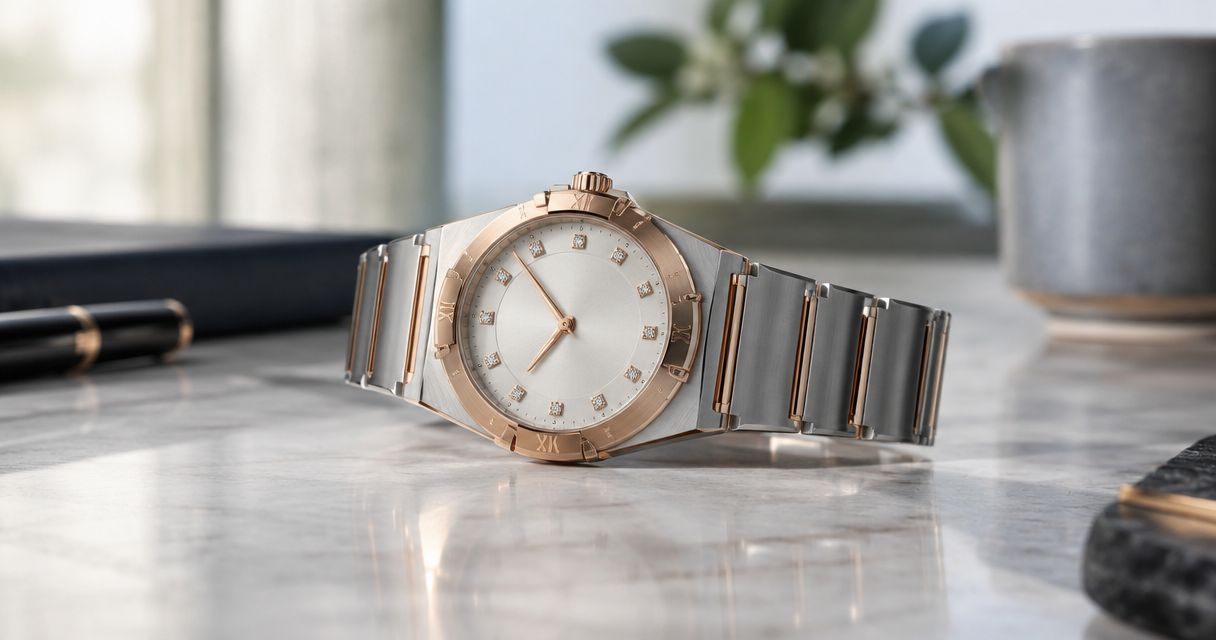
The steel Omega Constellation Co-Axial Master Chronometer 39 mm is the default pick for a buyer who wants the modern collection’s identity. The claws, Roman-numeral bezel, and closely integrated bracelet give it a recognizable appearance without requiring a large case.
The automatic movement adds mechanical interest, while the steel configuration keeps the material choice straightforward. Try it with both a shirt cuff and casual clothing; the polished details remain a visible part of its character.
Constellation 39 mm pros:
- Recognizable modern Constellation design.
- Automatic movement for buyers who enjoy mechanical watches.
- Middle-size case offers an alternative to the larger 41 mm model.
- Bracelet styling creates a cohesive watch rather than a case-and-strap combination.
Constellation 39 mm cons:
- Claws and bezel numerals are prominent design elements.
- Bracelet fit needs checking beyond the stated case diameter.
Best for: Your first modern Constellation or a mechanical watch for regular office and weekend wear.
Before buying pre-owned, request close photographs of the claws, bezel, clasp, and bracelet edges. Ask whether all accompanying links are included and whether the bracelet can be sized for your wrist. Do not treat a polished surface as proof of excellent overall condition.
Verdict: Buy the steel Constellation 39 mm if you want the clearest all-round starting point in 2026.
2. Constellation 41 mm: best for stronger wrist presence
The Omega Constellation Co-Axial Master Chronometer 41 mm gives the modern design more visual presence. Ceramic-bezel versions make the bezel treatment a central part of the watch’s appearance.
Choose this model because you prefer its proportions, not because a larger diameter automatically makes a watch better. Compare it directly with the 39 mm while looking at the whole wrist, rather than examining only a close-up photograph.
Constellation 41 mm pros:
- Larger case suits buyers who want a more prominent watch.
- Ceramic bezel creates a distinct alternative to metal-bezel configurations.
- Automatic movement preserves the mechanical ownership experience.
- Modern Constellation identity remains immediately recognizable.
Constellation 41 mm cons:
- Larger proportions are less discreet beneath a cuff.
- Ceramic bezel condition deserves careful inspection for chips or damage.
Best for: Buyers who find the smaller modern Constellation too restrained on the wrist.
On a pre-owned example, request sharp bezel photographs from several angles. Also inspect the junction between case and bracelet: the way the first links sit matters when assessing fit. A watch that looks balanced face-on can still feel awkward from the side.
Verdict: Buy the Constellation 41 mm when wrist presence is your priority; skip it if you already prefer compact watches.
3. Globemaster 39 mm: best for traditional dress-watch styling
The Omega Globemaster belongs to the Constellation family but takes a different design route. Its pie-pan dial and fluted bezel suit a buyer who wants a more traditional appearance than the claw-bezel models offer.
The 39 mm Globemaster is the recommendation here, rather than the separate Annual Calendar version. Keeping those models distinct prevents a simple time-and-date preference from turning into a purchase driven by extra functions you do not want.
Globemaster 39 mm pros:
- Pie-pan dial brings depth and a connection to historic Constellation design.
- Fluted bezel offers a traditional alternative to the claws.
- Automatic Master Chronometer movement combines mechanical interest with modern certification.
- Conventional styling works for buyers who prefer a dress-oriented watch.
Globemaster 39 mm cons:
- Wrong choice if the modern Constellation bracelet-and-claws design is the attraction.
- Strap and bracelet configurations need separate fit assessments.
Best for: A collector who wants modern Omega watchmaking with traditional dial and case styling.
Compare the exact configuration you intend to wear. A strap changes the visual balance and feel, so do not assume a bracelet example answers every fit question. Look closely at the bezel’s definition and ask about previous refinishing when evaluating a pre-owned watch.
Verdict: Buy the Globemaster 39 mm for traditional styling; skip it if you want the familiar modern Constellation silhouette.
4. Constellation Quartz 28 mm: best for compact, low-maintenance wear
The Omega Constellation Quartz 28 mm suits buyers who want a compact luxury watch without winding or maintaining a mechanical power reserve. Its battery-powered movement makes it a practical choice for a watch that rotates with jewelry or other timepieces.
Choose the reference by dial readability and wrist fit first. Decorative details are personal preferences, but you still need to read the time comfortably in the settings where you will wear it.
Constellation Quartz 28 mm pros:
- Compact case suits buyers who prefer a smaller watch.
- No winding routine or mechanical power-reserve management.
- Recognizable Constellation styling in a smaller format.
- Useful for occasional wear between other watches.
Constellation Quartz 28 mm cons:
- Battery replacement remains part of ownership.
- Small dial provides less viewing area than the larger recommendations.
- Does not satisfy a buyer specifically seeking a mechanical movement.
Best for: Compact everyday wear, occasional wear, or a gift when the recipient has expressed a clear preference for a smaller watch.
For a pre-owned purchase, ask about battery and service history rather than accepting that a running seconds hand settles the condition question. Confirm bracelet length, clasp operation, and the condition of any decorative elements on the exact watch.
Verdict: Buy the Constellation Quartz 28 mm for convenience and compact proportions, not as a substitute for a mechanical watch you actually want.
5. Vintage Constellation pie-pan: best for period-design collectors
A vintage Omega Constellation with a pie-pan dial offers a different kind of appeal: faceted dial geometry, period proportions, and the character of an older watch. It is a collecting choice before it is an easy alternative to a modern model.
“Pie-pan” describes the dial’s shape, not one universal reference or specification. Different examples require their own checks for movement, case material, dial configuration, and originality.
Vintage Constellation pie-pan pros:
- Distinctive dial shape gives the watch visual depth.
- Period design offers an alternative to modern bracelet models.
- Reference research adds interest for an engaged collector.
Vintage Constellation pie-pan cons:
- Refinished dials and replacement components complicate evaluation.
- Service needs depend on the individual watch’s condition and history.
- Age alone does not establish collectibility or future value.
Best for: A collector willing to investigate the specific reference and accept vintage ownership responsibilities.
Request clear dial, caseback, and movement photographs, with the case opened by a qualified watchmaker. Check whether the dial, hands, crown, and movement are appropriate for that reference. An attractive example is not automatically an original example.
Verdict: Wait until a vintage-watch specialist has assessed the watch if you cannot evaluate its originality yourself.
How we ranked these Constellation choices
The order prioritizes an uncomplicated modern ownership decision, then separates recommendations by distinct needs: larger proportions, traditional styling, compact quartz convenience, and vintage collecting. It is not a ranking of investment returns or individual watches’ condition.
For Luxury Time NYC’s Omega Constellation guide, the 39 mm steel automatic wins the default slot because it represents the modern design without making size, decoration, or vintage research the main reason to buy. In 2026, the condition of the actual example still takes priority over its position in this list.
Check the exact watch before you commit
Use this sequence after choosing your preferred model. It keeps the buying decision focused on the watch you will receive rather than photographs of another example.
- Reference check: Match the full reference to the stated movement, materials, dial, and configuration.
- Condition check: Examine dial, bezel, case edges, crystal, bracelet, and clasp with clear photographs.
- Fit check: Confirm bracelet length and included links, or inspect the strap and buckle configuration.
- Service check: Read dated records and ask what work was completed and which components were replaced.

Ask the seller to put the watch’s description and any stated purchase terms in writing. Luxury Time NYC sells new and pre-owned luxury watches and buys and trades timepieces; confirm the details of any proposed Constellation transaction directly rather than assuming another watch’s terms apply.
Which Omega Constellation should you choose?
Choose the steel Constellation Co-Axial Master Chronometer 39 mm unless you have a specific reason to choose differently. It is the strongest starting point for an undecided buyer seeking the modern design and a mechanical movement.
Choose the 41 mm for greater presence, the Globemaster for traditional styling, or the 28 mm quartz for compact convenience. Reserve the vintage pie-pan route for a purchase supported by reference research and a condition assessment. Your 2026 shortlist should become narrower as your requirements become clearer—not longer because more dial colors exist.
FAQ
What's the best Omega Constellation for a first-time buyer?
The steel Omega Constellation Co-Axial Master Chronometer 39 mm is the best default for a first-time buyer seeking a modern mechanical bracelet watch. Choose another size or quartz movement when fit or convenience matters more to you.
Is the Omega Constellation 39 mm better than the 41 mm?
The 39 mm is the better starting point for moderate proportions, while the 41 mm suits buyers seeking greater wrist presence. Compare the complete case-and-bracelet fit rather than choosing by diameter alone.
Is the Omega Globemaster part of the Constellation family?
Yes, the Omega Globemaster belongs to the Constellation family. Its pie-pan dial and fluted bezel distinguish it from the modern claw-bezel Constellation models.
Should I buy a quartz or automatic Omega Constellation?
Choose quartz for convenience and automatic for the experience of owning a mechanical movement. Quartz still requires battery care, while an automatic needs attention to winding and its power reserve.
What should I check before buying a pre-owned Omega Constellation?
Check the exact reference, condition, bracelet fit, identifying details, and service documentation. Request photographs of the actual watch and written confirmation of its description and purchase terms.
Is a vintage pie-pan Constellation a good first vintage watch?
A vintage pie-pan Constellation suits a first vintage purchase only when you can assess originality or obtain specialist help. Dial refinishing, replacement parts, and movement condition need individual evaluation.
Can I swim with an older Omega Constellation?
Do not assume an older Omega Constellation is suitable for swimming. Confirm the exact reference's intended use and have its current water resistance assessed before exposing it to water.
One last thing
Ask for an on-wrist side photograph before deciding from a front-facing image. The bracelet’s first links and the case’s height affect how the watch sits, yet neither is clear in a straight-on dial photograph. That extra view is more useful than another image of the same dial color.