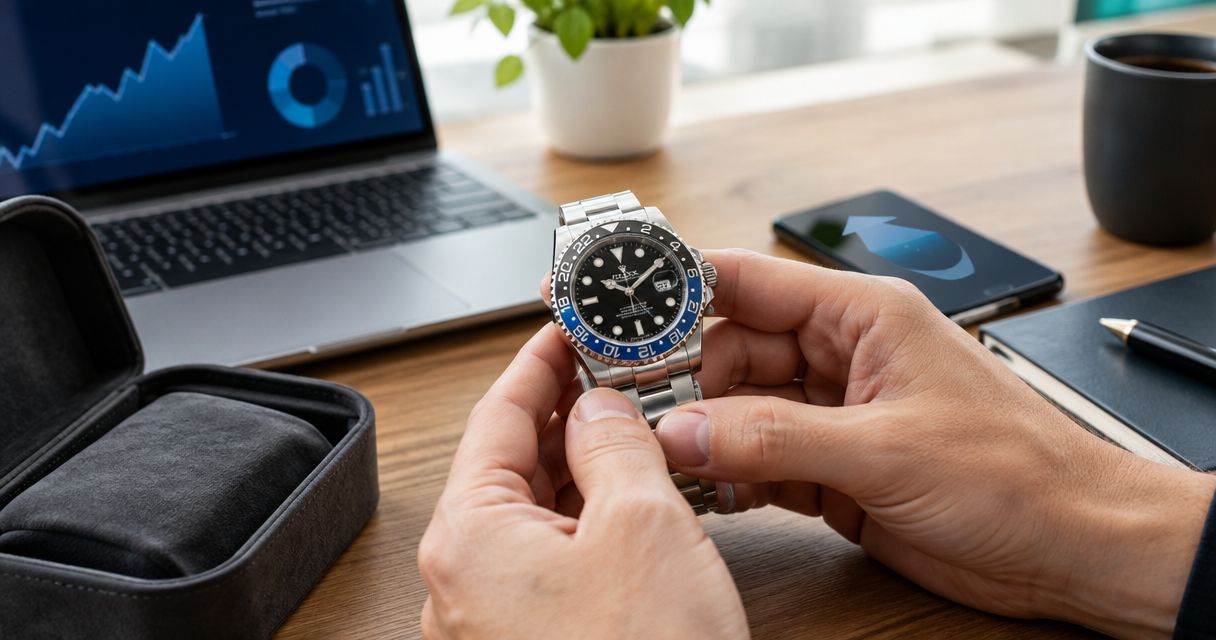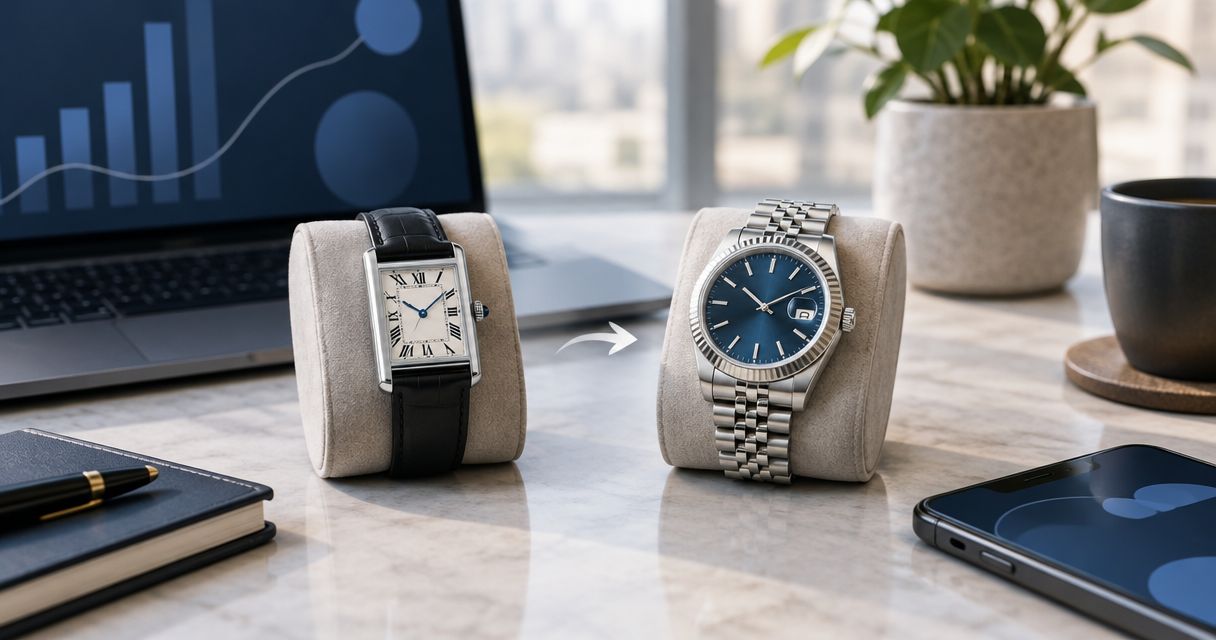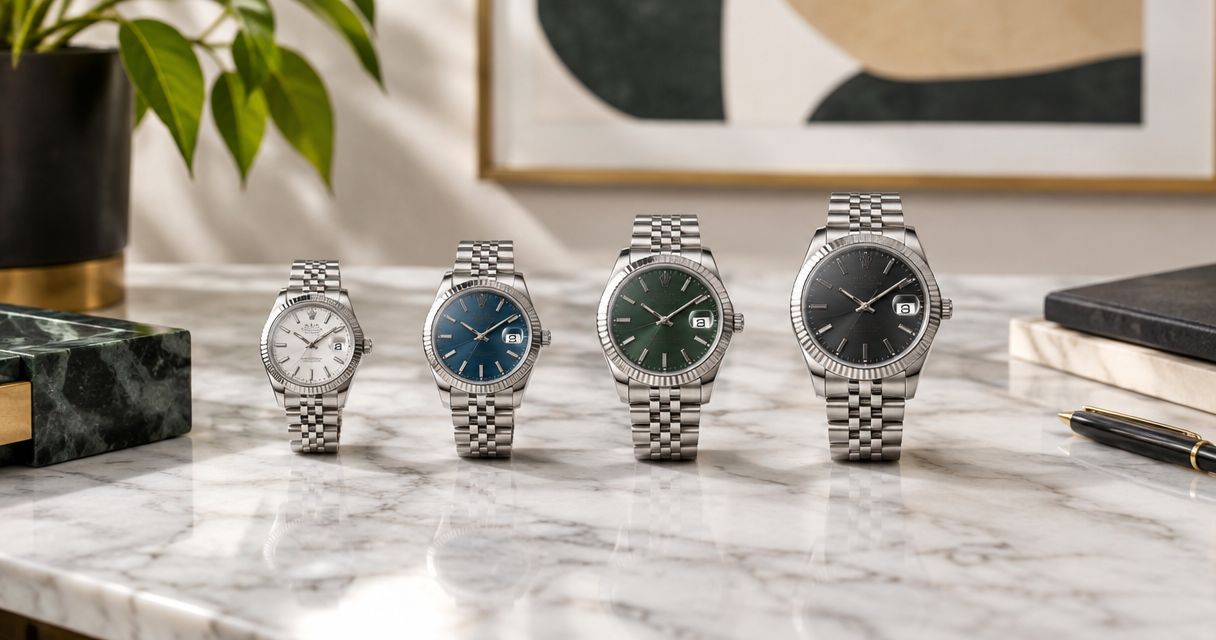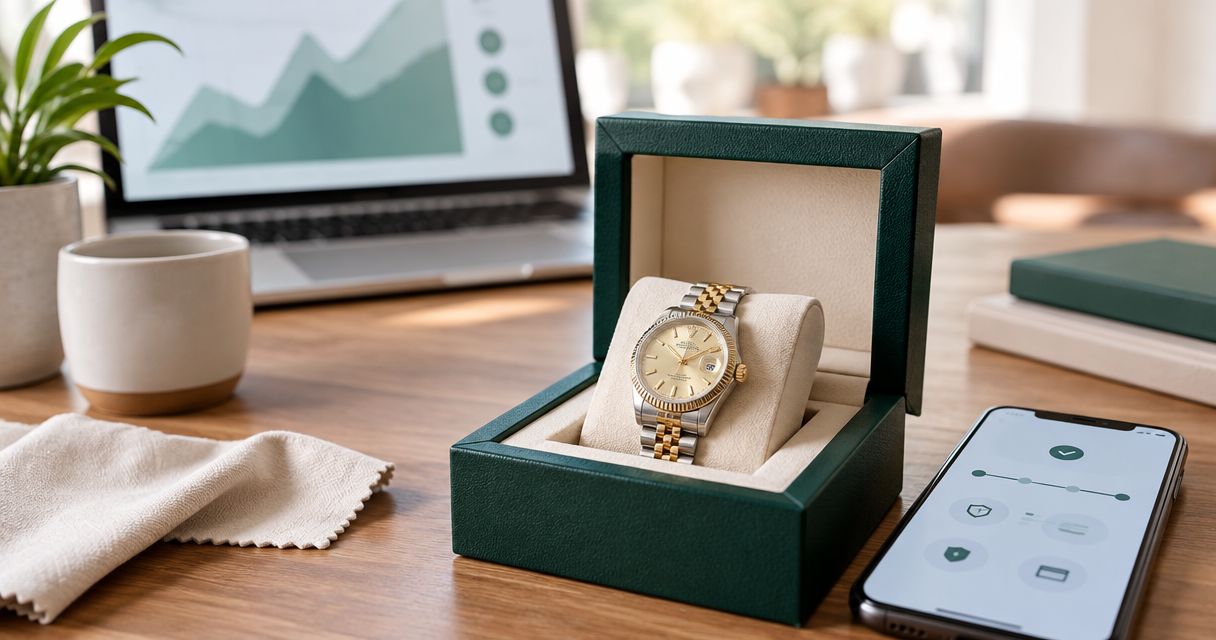
Instead of repeating your watch’s details to every buyer, build one seller file to sell your pre owned ladies Rolex: identify the reference, document its condition, request a written offer, and confirm the payout terms before handing it over. This 2026 workflow keeps the watch, inspection, and payment tied to the same written record.
- To sell pre owned ladies Rolex watches, document the exact reference and condition before requesting an offer.
- Luxurytimenyc buys and trades luxury watches; ask for transaction-specific inspection and payout terms.
- A photo-based estimate is not a final offer unless the buyer explicitly confirms it.
- Keep shipping coverage, inspection approval, and payment confirmation in your seller file.
Why this matters
A ladies Rolex is not a single specification. A 26 mm Lady-Datejust, a 28 mm Lady-Datejust, and a 31 mm Datejust require different reference-level comparisons; case size alone does not identify the watch.
Luxurytimenyc is best for luxury-watch owners seeking a retailer that buys and trades timepieces. Start through the contact page, then request the instructions that apply to your watch rather than assuming a payment method or shipping arrangement.
The benefit of a retailer inquiry is a direct conversation about selling or trading. The limitation is that an initial discussion does not establish your watch’s authenticity, final offer, or payout deadline. Get those transaction details in writing.
Before you start
- Watch and ownership records: Gather the watch, purchase documents, service receipts, original accessories, and evidence that you have authority to sell it. For an inherited or jointly owned watch, resolve selling authority before arranging a handoff.
- Camera and private seller file: Use clear photographs and a document you control. Keep the full serial number, identity documents, and payment details out of public listings; share sensitive information only through a verified channel when required.
- The non-obvious gotcha: Disclose any known replacement dial, added diamonds, changed bezel, or replacement bracelet before requesting an estimate. An altered configuration needs assessment, and photographs alone do not establish whether parts are original.
You do not need a special app to follow this process. The bold labels below are suggested headings for your own seller file, not claims about fields on a retailer’s website.
Watch identification
- Create your watch record. Enter Brand, Model, Reference, Serial number, Case size, Metal, Dial, and Bracelet in your private file. Copy reference information from reliable documents rather than identifying the watch by appearance alone.
- Separate known facts from unanswered questions. Record an uncertain production date as unknown. Do not substitute the purchase date for the production date, or describe an undocumented service as a completed overhaul.
- Match documents to the watch. Compare the identifying details on your paperwork with the watch’s records. If anything conflicts, flag the discrepancy and ask for professional verification; do not open the case or remove parts yourself.
- List everything included. Record the box, warranty documents, booklets, service records, spare links, and other accessories individually. State clearly when an item is missing or when you cannot confirm that it belongs to this watch.
Expected result: You have one identifiable watch record, with uncertainties disclosed instead of hidden inside a vague description.
For your 2026 seller file, date the entry and retain the original photographs. That creates a clear record of what you submitted and when, particularly if you contact more than one buyer.
Condition evidence
- Photograph the watch as it is. Capture the dial straight on, both case sides, the case back, bracelet, clasp, and included accessories. Use indirect light and sharp focus; filters and heavy reflections make assessment harder.
- Show wear deliberately. Add close-ups of scratches, dents, chipped surfaces, bracelet wear, and damaged accessories. Photograph the issue rather than describing every mark as normal wear.
- Record operating observations. Note whether the watch runs and describe any known winding, setting, date-change, or clasp problem. Do not claim tested accuracy or water resistance without supporting documentation.
- Document changes and service. Attach service receipts and identify any known refinishing or replaced components. If you do not know whether a diamond dial or bezel is factory-original, state that uncertainty directly.
Expected result: A buyer can distinguish visible condition, documented history, and items requiring physical inspection.
Do not authorize polishing or repairs solely to prepare for a sale without discussing them first. An irreversible cosmetic change is a separate decision from collecting evidence, and a repair expense does not establish a matching increase in the buyer’s offer.
Keep your submission consistent. If you later discover a missing link or service receipt, update the file and tell every buyer still considering the watch.
Offer and inspection terms
- Submit a consistent inquiry. Send the same reference details, photographs, condition notes, and accessory list to each buyer you approach. Tell Luxurytimenyc whether your goal is an outright sale or a trade so the inquiry follows the right path.
- Identify the offer stage. Ask whether the response is an indicative estimate, an inspection-dependent offer, or a final offer. Record the answer under Offer status, along with its date and any stated expiry.
- Confirm the inspection arrangement. Ask who receives the watch, where inspection occurs, what documentation accompanies it, and how acceptance or rejection is recorded. Request written terms for a revised offer and for returning the watch if you decline.
- Agree on transfer responsibilities. Before shipping, establish who arranges transport and what coverage applies to this exact shipment. Confirm packaging, declared-value requirements, exclusions, and the claims process with the responsible party.
Expected result: You know what remains conditional, who holds the watch during assessment, and what happens if the transaction stops.
For a 2026 sale, use the buyer’s current written instructions. Do not reuse an old shipping label or assume a previous transaction’s coverage applies to another watch.
The process has distinct approval gates. Keep identification, inspection, acceptance, and payment separate so receipt of the watch never becomes shorthand for completion of the sale.
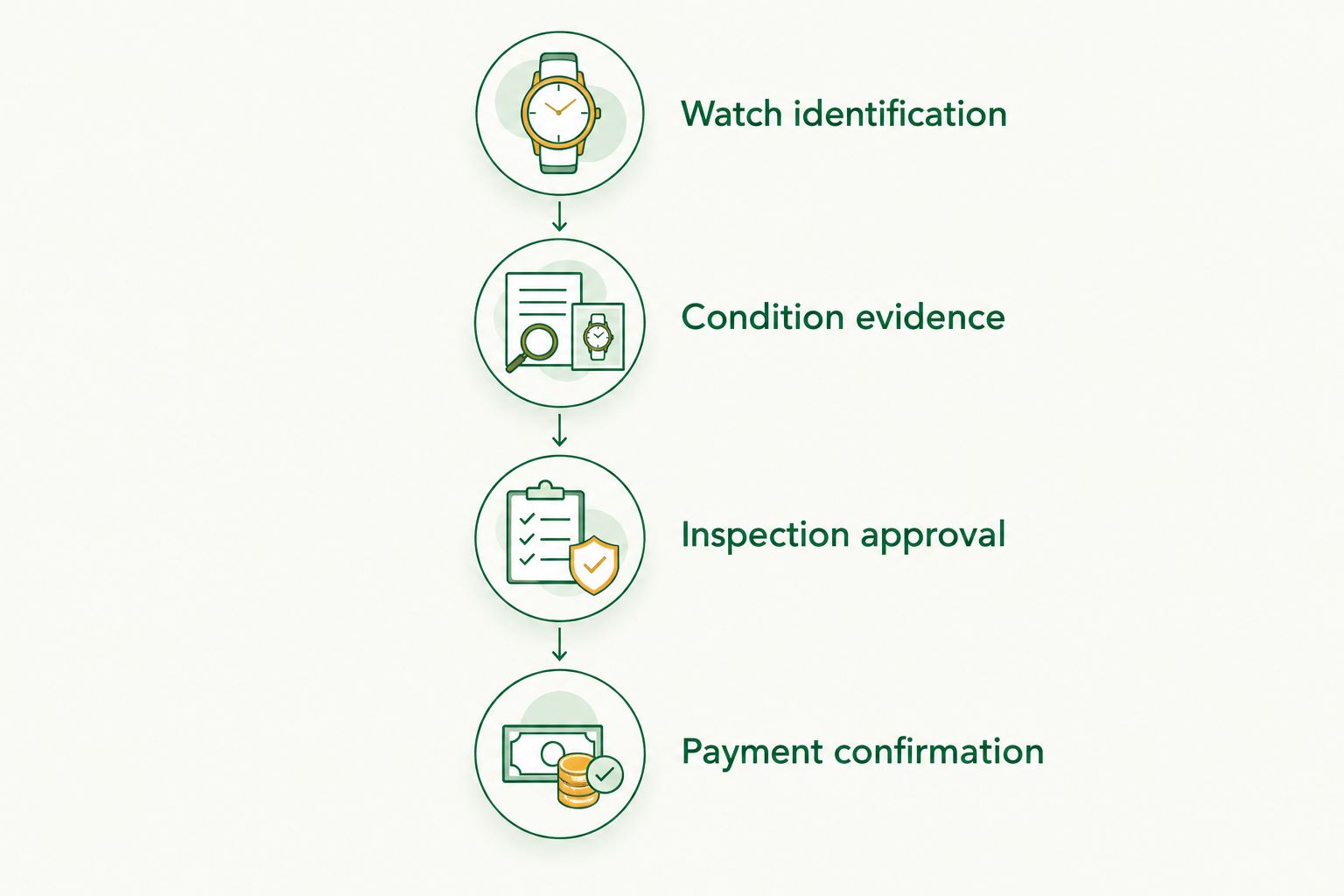
Inspection approval and payment confirmation
- Record receipt. Keep the handoff receipt or delivery record and request confirmation identifying the watch received. Retain your packaging photographs and inventory of enclosed accessories.
- Review the final assessment. Ask for the inspection outcome and the final written offer. If it differs from the earlier estimate, request the specific reason before deciding whether to proceed.
- Approve explicit payout terms. Record Accepted offer, Deductions, Payment method, Payment trigger, and Expected payment date. Ask whether any additional identity or ownership checks must be completed before payment is released.
- Verify payment independently. Check your own financial account through its usual secure access, not a link in a payment message. Ask your financial institution about payment status or finality if anything is unclear, and retain the sale agreement and payment record.
Expected result: Your file connects the inspected watch to an accepted agreement and independently verified payment.
A payment screenshot is not proof that funds reached your account. Likewise, a delivery notification does not confirm inspection approval or payment authorization. Treat each milestone as a separate event with its own evidence.
If a promised payment date passes, follow up using the established contact channel and reference the written agreement. Keep the discussion in the same transaction record rather than starting disconnected conversations.
Choose the right transaction before accepting
An outright sale, a trade, and consignment solve different problems. Use this comparison to choose the structure you want; it does not establish that a particular retailer offers every route.
| Transaction | Best for | Main benefit | Main limitation | Confirm before proceeding |
|---|---|---|---|---|
| Outright sale | Owners who want to exit ownership | No replacement purchase is required | You must decide whether to accept the buyer’s offer | Inspection conditions and payout trigger |
| Trade | Owners replacing their current watch | Links the outgoing watch to the next purchase | Both sides of the transaction need written agreement | Trade allowance and replacement-watch terms |
| Consignment | Owners willing to wait for a third-party sale | A seller markets the watch on your behalf | Payment depends on the consignment agreement and sale | Commission, custody, withdrawal, and settlement terms |
Choose an outright sale when receiving payment is your objective; choose a trade when replacing the watch is your objective. Do not treat a trade allowance as interchangeable with a standalone purchase offer.
Consignment requires separate checks. A retailer’s willingness to buy a watch does not automatically establish consignment terms, custody coverage, or a settlement schedule.
Second workflow: trade your ladies Rolex toward another watch
Luxurytimenyc buys, sells, and trades luxury watches, so a trade inquiry is an adjacent route when you want a replacement rather than an exit. Keep the same identification and condition file, but add a separate record for the watch you want.
- Define the replacement. Specify the model or reference, desired condition, and documentation requirements. Do not make the outgoing watch’s transfer depend on an undefined future selection.
- Separate the agreements. Request a written assessment of your watch and separate written terms for the replacement. Identify any balance due and every condition that must be satisfied before either side completes.
- Confirm the sequence. Establish when your watch changes ownership, when the replacement changes ownership, and what happens if either inspection fails. Record the cancellation or return arrangement before authorizing the exchange.
Expected result: You can explain both sides of the trade without relying on a verbal promise.
The Datejust-to-Submariner trade workflow explores that replacement path. For your own 2026 trade, use the exact references and agreed condition descriptions rather than broad model names.
Troubleshooting
The watch has no original box or papers
State that in the first inquiry. Submit the watch details and any ownership or service records you do have, then ask what verification the buyer requires; do not describe the watch as a complete set.
The estimate changes after inspection
Request a written explanation identifying the condition issue, configuration difference, or missing item behind the revision. Compare it with your original disclosure and use the agreed acceptance or return process rather than assuming the earlier estimate was unconditional.
The reference or diamond configuration is uncertain
Pause definitive claims and request professional assessment. Do not remove a bracelet, open the case, or label stones as factory-set simply because they appear on an older receipt.
A shipping label arrives without clear coverage terms
Do not ship until responsibility and coverage are confirmed. Tracking, a signature requirement, and shipment coverage address different risks; ask specifically about watches, applicable limits, exclusions, and required packaging.
Payment instructions change unexpectedly
Verify the change through a previously established contact channel. Do not send credentials, authorize a new transfer, or act on a replacement link solely because the message contains accurate watch details.
Customize your workflow
Turn the seller file into a reusable collection record. Keep separate entries for each watch so documents, spare links, and photographs do not become mixed between references.
For your 2026 transaction, add a short closing checklist: watch identified, accessories inventoried, inspection terms accepted, final agreement retained, and payment verified. This is more useful than saving an isolated offer message without its conditions.
If your main uncertainty is documentation, resolve that before arranging transport. If your main uncertainty is the replacement watch, keep the sale and trade decisions separate until you can assess both clearly.
FAQ
How do I sell a pre-owned ladies Rolex?
Identify the exact reference, document its condition, request a written offer, and confirm inspection and payment terms before transferring the watch. Keep the accepted agreement and verify payment through your own financial account.
Can I sell my ladies Rolex without the original box and papers?
You can request an assessment without the original box and papers, but the buyer must confirm its documentation and verification requirements. Disclose missing items immediately and provide any ownership or service records you have.
Should I polish my ladies Rolex before selling it?
Do not authorize polishing solely for a sale without discussing it with the prospective buyer first. Document the current condition and request an assessment before making an irreversible cosmetic change.
How long does a ladies Rolex payout take in 2026?
Your payout timeline is the timeline agreed with the buyer for your transaction. Ask what triggers payment, which checks must finish first, and what payment date applies before accepting the final offer.
Is a photo estimate the final offer for my Rolex?
A photo estimate is final only if the buyer explicitly confirms that status and its conditions. Ask whether physical inspection can change the offer and what happens if you reject a revision.
Can I trade my ladies Rolex instead of selling it?
You can ask Luxurytimenyc about a trade because the retailer buys, sells, and trades luxury watches. Confirm acceptance of your specific watch and keep the outgoing-watch assessment separate from the replacement-watch agreement.
Should I share my Rolex serial number in a public listing?
Keep the full serial number out of public listing photographs and descriptions. Provide identifying information privately through a verified channel when it is needed for the transaction.
One last thing
Photograph the spare bracelet links alongside the watch before packing. Then list them on the handoff inventory: an accessory shown in your inquiry but absent from the package creates an avoidable discrepancy at inspection.
Close the sale only when the record is complete—not when the parcel arrives. Your final file should show what you transferred, what you accepted, and how payment was confirmed.