Choose Luxury Time NYC if you want to buy, sell, or trade luxury watches through a retailer; choose Bezel if you prefer comparing seller listings through an authenticated watch marketplace. For your 2026 purchase, the deciding difference is the transaction model—not the prestige of the watch brands.
- Luxury Time NYC vs Bezel is a retailer-versus-marketplace decision, not a contest between watch brands.
- Choose the retailer for a purchase or trade discussion; choose Bezel for marketplace comparison shopping.
- Match reference, condition, bracelet, and documentation before comparing pre-owned luxury watches.
- Require written authentication, return, and service terms before committing to either option.
Why this matters
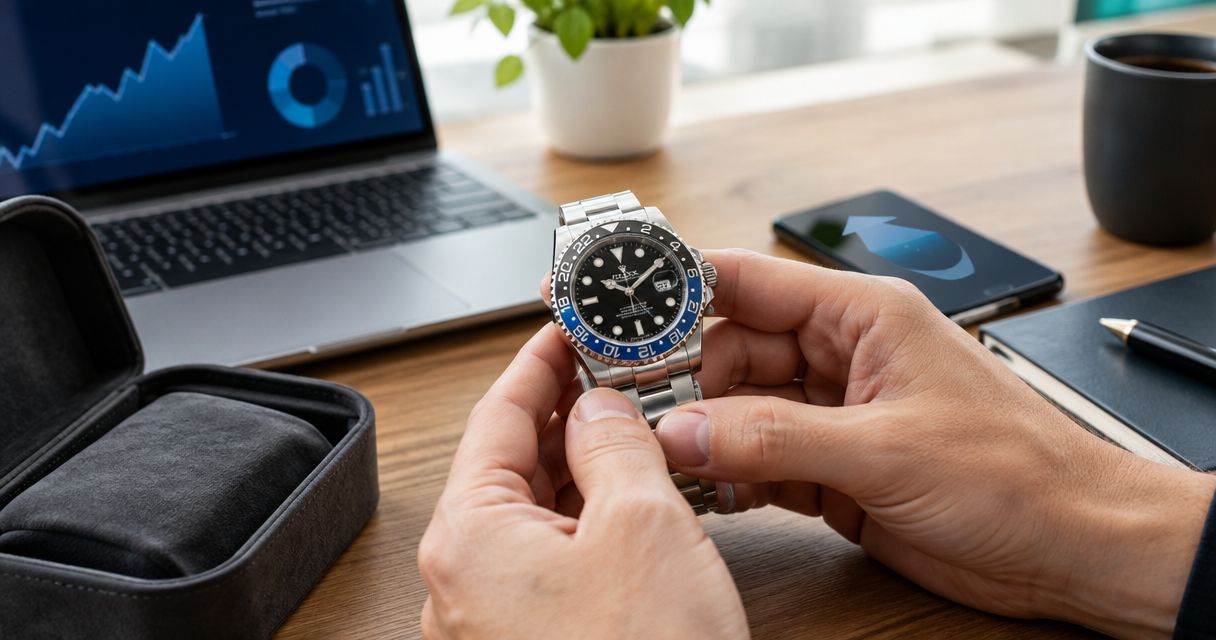
Luxury Time NYC is best for luxury watch buyers who want a retailer that also buys and trades timepieces. Bezel suits buyers who prefer a marketplace built around luxury watches and authentication. Those are genuinely different shopping experiences, even when the same Rolex reference appears in both.
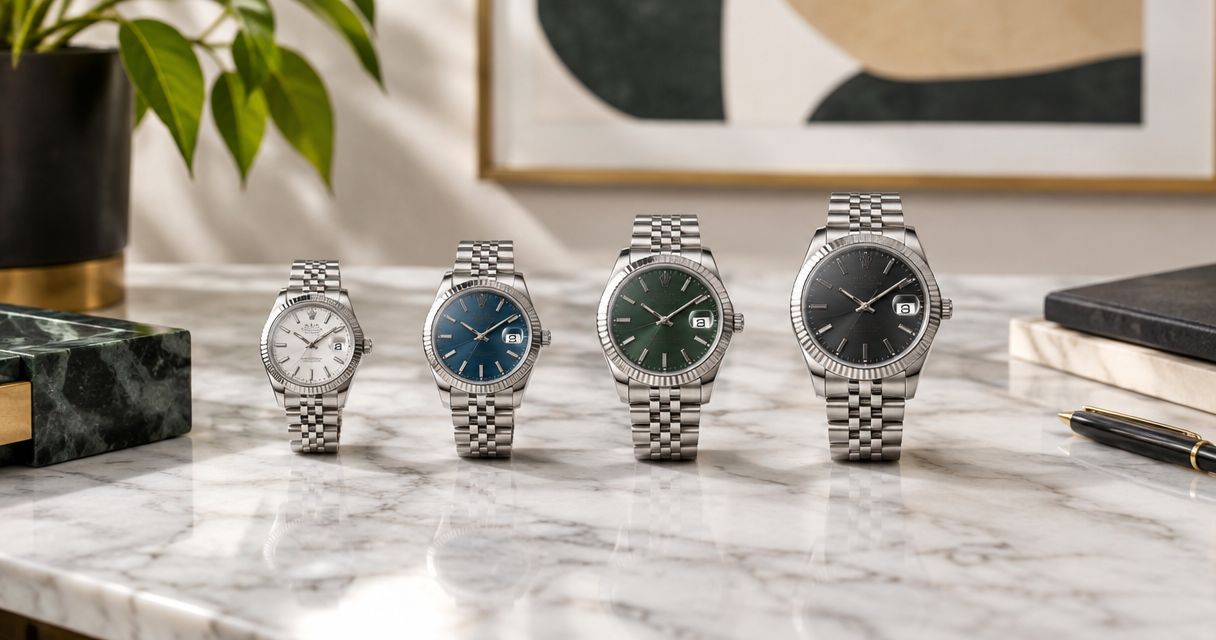
A watch comparison becomes misleading when the examples differ. A mint-green Datejust with a smooth bezel is not interchangeable with a mint-green Datejust with a fluted bezel, and an attractive photograph does not establish condition or service history.
For a 2026 shortlist, decide how you want to transact before choosing where to buy. Then compare the exact watches and written terms. Neither a retailer relationship nor a marketplace interface replaces that work.
At a glance
| Dimension | Luxury Time NYC | Bezel |
|---|---|---|
| Best for | Buyers, sellers, and collectors considering a retailer-led transaction | Buyers who prefer a luxury watch marketplace |
| Buying experience | Shop a retailer's catalog and discuss the specific watch | Compare marketplace listings and purchase through the platform |
| Standout feature | Buying, selling, and trading through the same business | Marketplace shopping with an authentication process |
| Reference comparison | Useful when you have narrowed your target watch | Better fit when comparing seller listings is your priority |
| Selling or upgrading | A direct starting point for discussing a sale or trade | Assess the platform's current selling process separately from your purchase |
| Authentication | Request the watch-specific evidence and written terms | Understand the authentication scope and written terms |
| Condition and documentation | Judge the individual watch and included accessories | Judge the individual watch and included accessories |
| Pricing model | Individual watch purchase; sale or trade discussed separately | Individual watch transaction through a marketplace |
The retailer wins when you want a direct purchase discussion
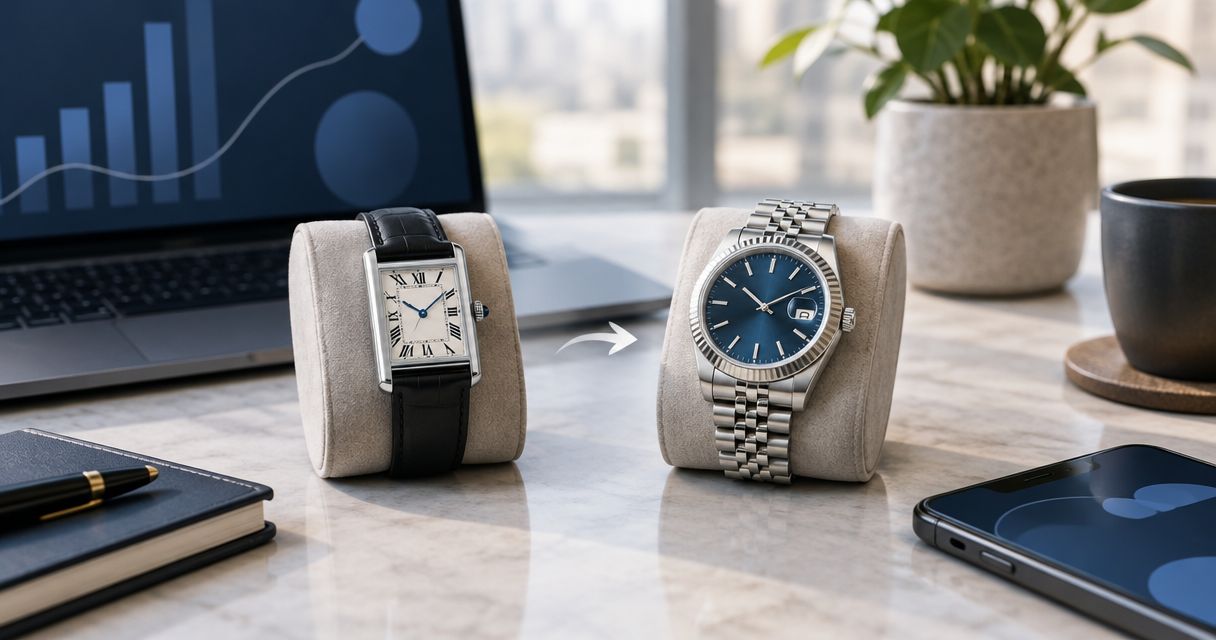
A retailer-led transaction suits you when your questions extend beyond finding a reference. You might be choosing between case sizes, replacing a watch you already own, or deciding whether to sell before buying.
The client's business covers new and pre-owned luxury watches, plus buying and trading. That makes it a relevant starting point when your purchase and your existing collection belong in the same conversation. It does not establish a particular trade allowance, inspection outcome, or transaction timetable.
Best for: the collector with a defined target and an existing watch to discuss. Bring the full reference number, your preferred configuration, and photographs of any watch you want to sell or trade.
The limitation is straightforward: a retailer's catalog is one business's offering. If your priority is surveying seller listings before contacting anyone, a marketplace is the more natural starting point. Do not treat a focused retail experience as proof of broader selection or better terms.
Bezel wins when marketplace comparison is the priority
Bezel is a luxury watch marketplace with an authentication process. Its marketplace model is the better fit when you want to examine seller listings before choosing a particular watch and transaction.
Best for: the comparison shopper who wants to evaluate listings through a watch-focused platform. Start with a precise reference, then distinguish the examples by condition, accessories, and configuration. Comparing model names alone leaves too much room for an unfair comparison.
The benefit is the shopping format, not an automatic advantage on every purchase. A marketplace listing still needs scrutiny, and platform-level authentication does not answer every question about polishing, service work, replacement components, or bracelet fit.
Bezel's limitation is that the platform experience adds another set of terms to understand. Establish who answers condition questions, what happens if the watch differs from its description, and which written terms govern your transaction. Make those checks before payment rather than after a disagreement.
Bezel is the better starting point for comparing seller listings
For your 2026 search, separate discovery from commitment. A marketplace is useful during discovery because comparing listings is central to its format; a retailer becomes especially relevant once you want to discuss a particular example or a trade.
That distinction does not justify a claim that either business has more examples of your target reference. Your shortlist should reflect the watches you actually examine, not assumptions about catalog size.
Consider the Rolex Datejust examples in the retailer's catalog. The stainless steel Datejust 41 reference 126300 has a 41 mm case, mint-green index dial, smooth bezel, and Jubilee bracelet. The Datejust 36 reference 126234 examples pair a mint-green index dial with a fluted bezel and either an Oyster or Jubilee bracelet.
These are different configurations, not substitute listings of the same watch. Match the case size, bezel, bracelet, dial, and reference before deciding that one seller presents the better opportunity. Otherwise, you are choosing between watches while believing you are choosing between businesses.
The retailer wins as a starting point for a buy-and-trade discussion
If you already own a luxury watch, a purchase comparison is only part of the decision. You also need to decide whether to keep, sell, or trade the watch you own.
The retailer explicitly buys and trades timepieces, so a combined inquiry fits its stated business. Ask for the purchase proposal and the trade assessment separately. That keeps the value assigned to your existing watch visible instead of burying it inside the replacement transaction.
Use this approach when preparing your inquiry:
- Identify the watch: provide the full reference and configuration.
- Document condition: disclose marks, modifications, and known repairs.
- Gather accessories: identify the box, papers, and bracelet links you have.
- Separate the proposals: distinguish selling your watch from buying its replacement.
The limitation is that a trade is not automatically the best financial outcome. Compare a standalone sale with the proposed trade using the actual written terms. For Bezel, check the current selling route independently; a good buying experience does not establish the outcome of a future sale.
Both require watch-specific authentication questions
Authentication is essential, but the word alone is not a complete description of a watch. An authentic timepiece still needs an accurate account of its components, condition, and history.
Bezel makes authentication part of its marketplace proposition. With a retailer purchase, request the authentication evidence and terms attached to that specific transaction. Neither approach removes the need to ask what was checked and what the conclusion covers.
Keep these questions distinct:
- Is the watch authentic?
- Does its configuration match the description?
- Are replacement or aftermarket components disclosed?
- What service work is documented?
- What remedy applies if the description is materially inaccurate?
For a Daytona purchase, the Rolex Daytona authentication guide provides a focused next step. Do not turn photographs into a substitute for professional examination.
This dimension is a tie on buyer responsibility, not a claim that the businesses use identical procedures. Require a clear scope and written recourse from whichever route you select. A confident sales statement is not the same thing as a documented inspection finding.
Neither wins condition or fit without the actual watch
Condition belongs to the individual watch, not the business name. Evaluate photographs of the case, bracelet, clasp, dial, bezel, and caseback, then ask about anything the images do not resolve.
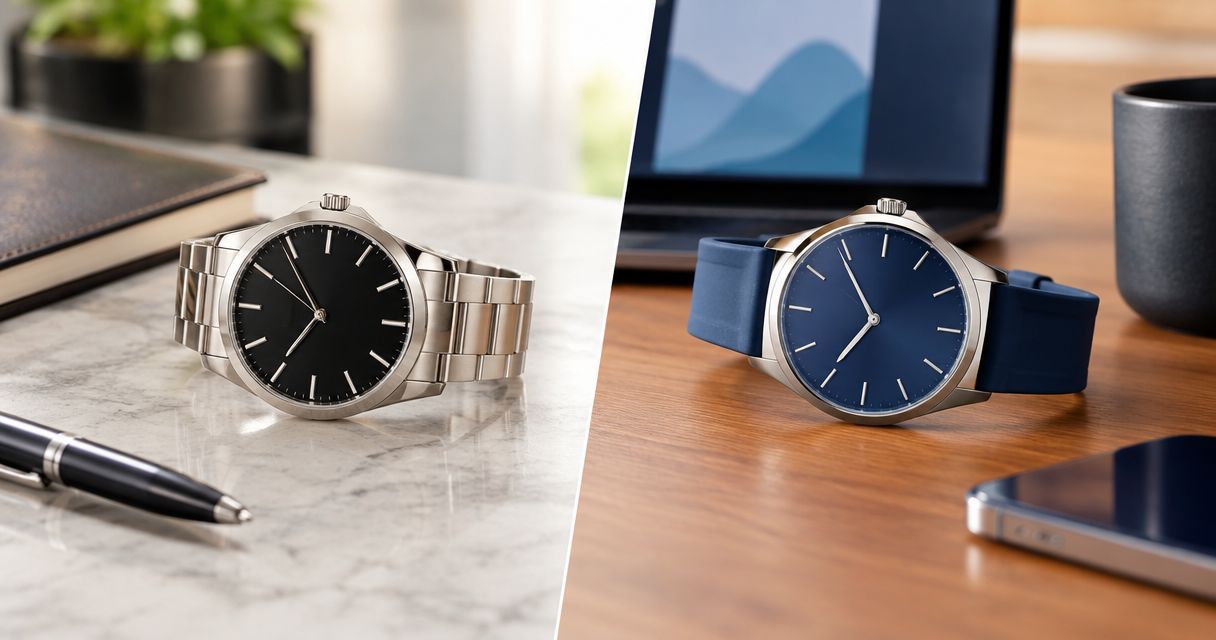
Size deserves the same attention. The catalog's Audemars Piguet Royal Oak Quartz reference 67650ST.OO.1261ST.01 has a 33 mm case and 7 mm thickness, while the Datejust 41 reference 126300 has a 41 mm case diameter. Those measurements describe materially different wearing propositions; they do not establish which watch fits your wrist better.
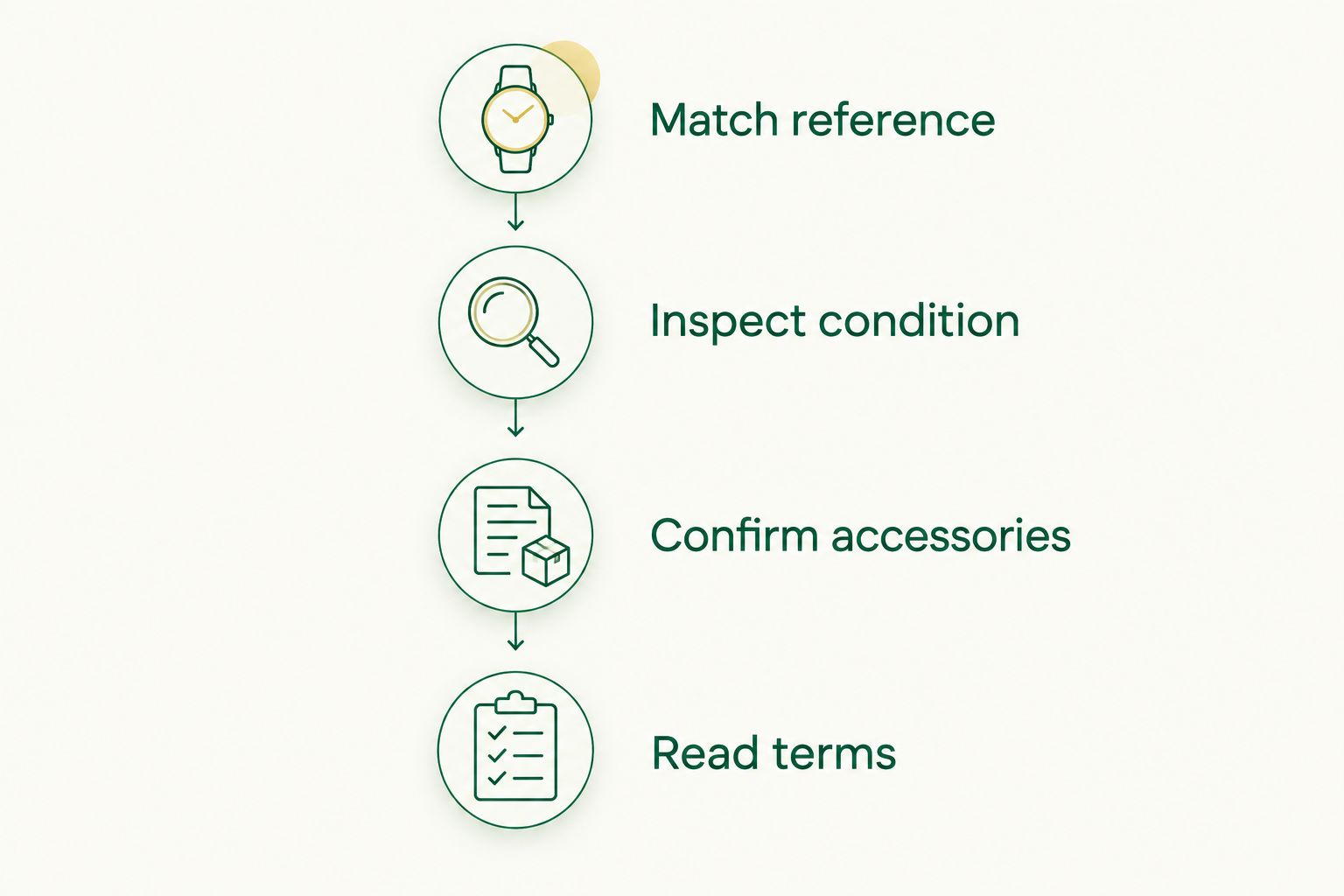
Use a repeatable purchase check:
- Match reference: confirm the full reference and stated configuration.
- Inspect condition: request clear images and written disclosures.
- Confirm accessories: identify the exact documents and items included.
- Read terms: understand the transaction before authorizing payment.
Bracelet fit is particularly easy to overlook during online shopping. Ask which links accompany the watch and whether the stated configuration matches the photographs. A watch that looks right in a close-up still needs to suit your wrist and intended use.
The verdict is a tie: condition and fit require evidence from the exact example. Neither business model earns a blanket win here.
Pricing models: compare the complete transaction, not the label
Both routes center on purchasing an individual watch. The retailer also buys and trades watches, which introduces a separate valuation discussion when you have a timepiece to exchange. Bezel places the purchase inside a marketplace transaction.
For your 2026 comparison, distinguish the watch itself from the complete agreement. Obtain the final checkout or written proposal, then review applicable taxes, delivery charges, payment conditions, and any other transaction charges. Ask which terms apply rather than assuming a particular charge exists.
A retailer-led purchase keeps your inquiry centered on that business's proposal. A marketplace lets you compare listings within its shopping format, but you still need to understand the platform's transaction terms. Neither structure proves a lower total cost.
For a trade, keep the replacement purchase and your existing watch's assessment separate. For an outright purchase, compare like-for-like examples with equivalent documentation and condition. There is no defensible pricing winner without matching watches and complete proposals.
Final verdict: choose the route that matches your next move
Choose Luxury Time NYC if you are upgrading a collection
Winner for the retailer-led upgrader: choose the retailer if you want to discuss buying a new or pre-owned luxury watch alongside selling or trading a timepiece you own. Its stated business covers those activities.
Arrive with a precise target and a clear description of your existing watch. Keep authentication, condition, and transaction terms in writing. The reason to choose this route is the fit with your intended transaction—not an assumed advantage in valuation, protection, or speed.
Choose Bezel if you are comparing marketplace listings
Winner for the marketplace comparison shopper: choose Bezel if you prefer examining seller listings through a luxury watch platform with an authentication process. That format suits a buyer still comparing individual examples.
Use the platform to narrow the field, then examine the exact watch and agreement. Do not let a familiar reference number distract you from differences in condition, accessories, or components.
One-glance scorecard
| Dimension | Winner |
|---|---|
| Retailer-led purchase discussion | Retailer |
| Marketplace shopping experience | Bezel |
| Comparing seller listings | Bezel |
| Starting a buy-and-trade discussion | Retailer |
| Authentication due diligence | Tie: require scope and written terms |
| Condition, documentation, and fit | Tie: inspect the exact watch |
| Complete transaction cost | No blanket winner |
FAQ
Is Luxury Time NYC better than Bezel for buying a Rolex?
Luxury Time NYC is the better fit for a retailer-led Rolex purchase or trade discussion; Bezel is the better fit for marketplace comparison shopping. Compare the exact Rolex reference, configuration, condition, and written terms before choosing.
Does Bezel authenticate luxury watches?
Bezel includes authentication in its luxury watch marketplace proposition. Read the current scope and transaction terms, and ask separately about condition, replacement components, and documented service work.
Which option should I choose if I want to trade my watch?
Start with the retailer when you want a combined purchase-and-trade discussion, because buying and trading are part of its stated business. Request separate written assessments for your existing watch and the replacement purchase.
Which option has better prices in 2026?
Neither business model establishes a pricing winner. Compare matching references and configurations, then review the complete transaction proposal rather than the watch listing alone.
Should I buy a luxury watch without its original box and papers?
Decide based on the exact watch, its authentication evidence, and your collecting priorities. Original packaging and documents are relevant accessories, but they do not replace examination of the watch itself.
Does authentication mean every component is original?
Do not assume an authentication statement guarantees every component is original to the watch. Ask what the examination covers and request written disclosure of replacement or aftermarket parts.
What should I ask before buying a pre-owned watch online?
Ask for the full reference, detailed condition photographs, included accessories, service documentation, and written transaction terms. Confirm how a material discrepancy would be handled before authorizing payment.
One last thing
Before your 2026 purchase, write down what would make you reject the watch. That might be an undisclosed replacement dial, bracelet fit, unclear service history, or transaction terms you cannot accept.
Set your rejection criteria before you fall for the photographs. An iconic reference is still the wrong purchase when the individual example fails your requirements.