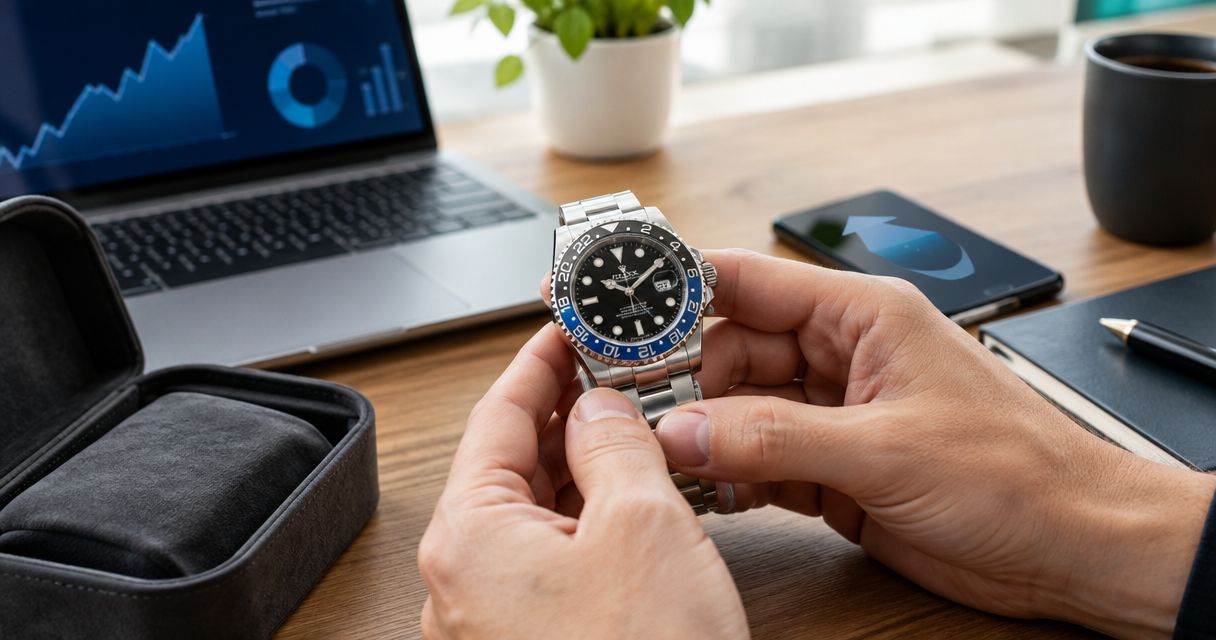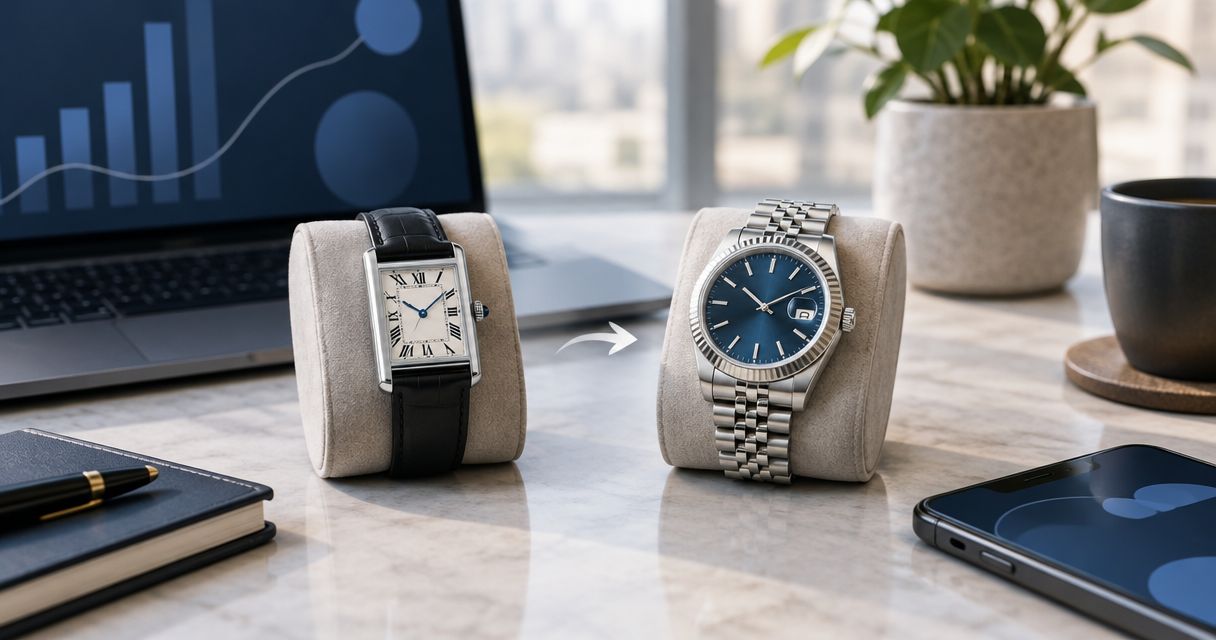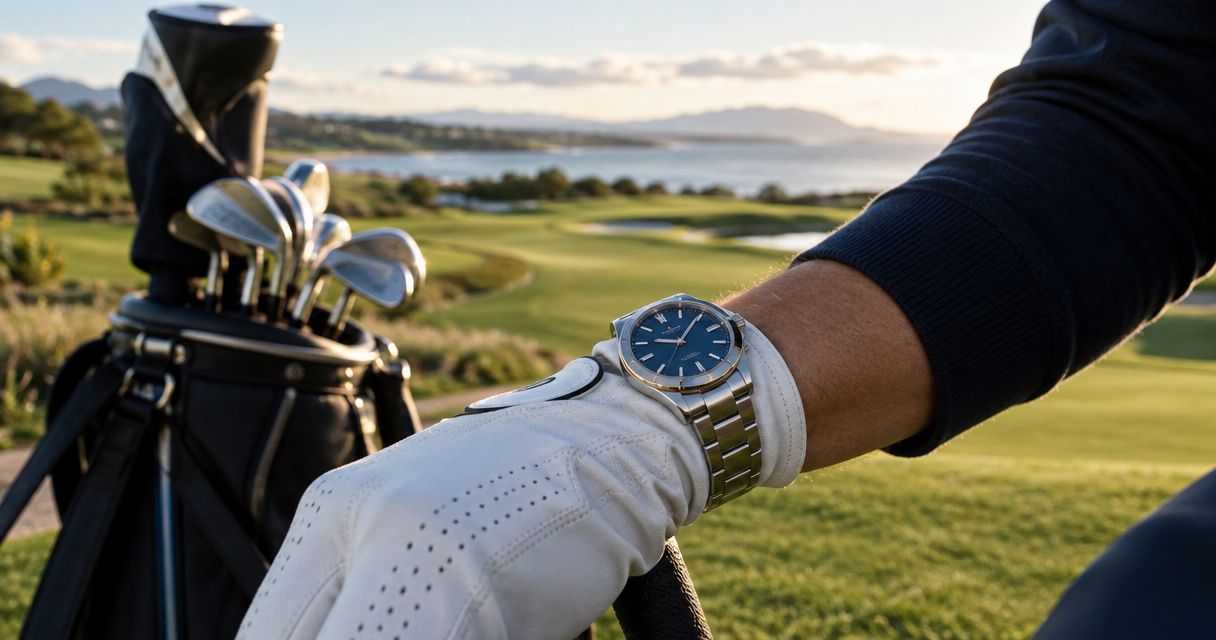
Golfers’ luxury watch selection is the process of choosing a high-end timepiece with the aim of balancing wrist comfort, appropriate use, and style on and off the course. The best luxury watches for golfers in 2026 start with fit and model-specific care guidance—not a famous player’s endorsement.
- Choose luxury watches for golfers by fit and intended use, not golf sponsorships.
- Luxury Time NYC suits golfers comparing new and pre-owned luxury watches across several brands.
- Rolex Datejust options offer different case sizes; neither size alone establishes suitability for swinging.
- Separate course wear from clubhouse wear when manufacturer guidance or condition leaves questions unanswered.
Why this matters: golf asks more than everyday wear
A watch that feels comfortable at dinner can interfere with your glove or wrist movement during a swing. Golf also brings sweat, sunscreen, sand, and changing weather into the ownership decision.
Choose the watch for the way you will actually wear it. An after-round watch and a watch worn through every shot have different requirements. Appearance alone cannot settle that distinction.
Luxury Time NYC sells new and pre-owned luxury watches and buys and trades timepieces. That gives you several purchasing routes, but the decision still starts with your intended use rather than the transaction.
Why luxury watch selection matters for golfers
Golfers need to separate mechanical suitability from personal comfort. A secure bracelet does not establish shock tolerance, and a water-resistance specification does not establish suitability for repeated golf swings.
The choices also differ physically. The Rolex Datejust 41 reference 126300 has a 41 mm stainless steel case. The Audemars Piguet Royal Oak Quartz reference 67650ST.OO.1261ST.01 has a 33 mm stainless steel case and a listed thickness of 7 mm. Those measurements help frame a fitting session; they do not tell you how either watch feels on your wrist.
For your 2026 shortlist, resolve three separate questions: whether you like the watch, whether it fits, and whether its documented care guidance matches your plans. A watch must pass all three before you treat it as an on-course choice.
How to choose luxury watches for golfers
Define when you will wear the watch
Start with a written use case. Decide whether the watch belongs on your wrist during play, before and after the round, or only at club events. This costs nothing and prevents you from comparing fundamentally different purchases.
If you want one watch for work, travel, and the clubhouse, daily comfort and styling deserve attention. If you intend to swing with it, add manufacturer guidance and the individual watch’s condition to your requirements. Do not turn a collector’s piece into sports equipment by assumption.
Use these categories to keep your shortlist focused:
- Course wear: consider only after checking model-specific guidance and fit.
- Clubhouse wear: prioritize comfort, appearance, and compatibility with your clothing.
- Everyday wear: assess how the watch fits your routine beyond golf.
- Collector wear: decide how you will protect the watch when activities change.
Test the fit around your glove and wrist
Use a watch you already own to understand what bothers you. Put on your golf glove, take your normal address position without hitting a ball, and notice where the crown, clasp, and bracelet sit. Stop if the watch restricts movement or presses against your hand.
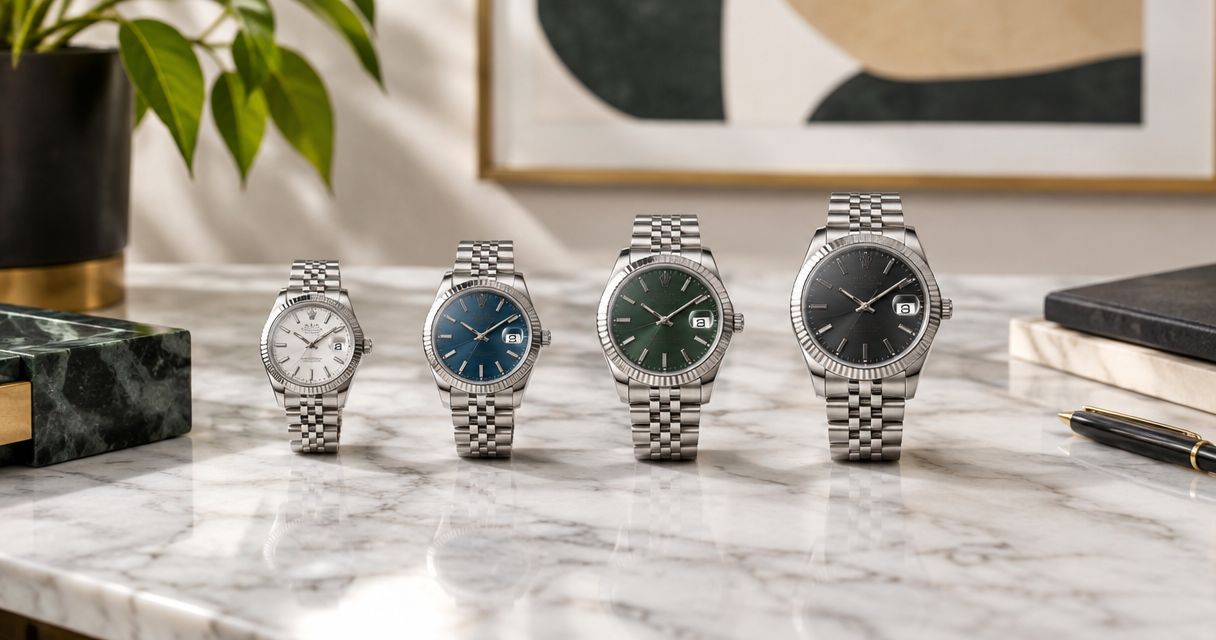
Case diameter is only part of the fit. A 36 mm Rolex Datejust and a 41 mm Rolex Datejust provide different starting points, but case shape, bracelet adjustment, and your wrist determine the result. Do not buy a larger case simply because it looks more substantial in photographs.
Best for golfers sensitive to wrist interference: start your fitting session with smaller cases, then compare larger alternatives rather than ruling either out by measurement alone.
- Check whether the crown presses into the back of your hand.
- Notice whether the glove catches the case or bracelet.
- Confirm that the clasp stays centered during ordinary movement.
- Assess whether the watch slides toward your hand.
- Try the watch with the shirt cuffs you normally wear.
Verify the reference and its care requirements
Read the manufacturer’s instructions for the exact reference first. Ask the seller about the individual watch’s condition, service documentation, and any replacement or modified components. A model name is not a condition report.
Luxury Time NYC’s luxury watch selection includes both new and pre-owned pieces. Use the retailer as the next step after your initial research: send a precise reference and intended use through the contact page, then request written answers before deciding.
For a 2026 purchase, distinguish the date of your enquiry from the watch’s production year. A current listing does not establish when the watch was made, when it was last serviced, or whether its water resistance has been checked.
- Record the complete reference number, not just the collection name.
- Request the condition description for the exact watch.
- Ask what service records accompany that watch.
- Confirm whether components are original, replaced, or modified.
- Ask for manufacturer guidance relevant to golf use.
- Keep unanswered questions open rather than treating silence as approval.
Match the design to your golf routine
Choose visible features you will enjoy beyond the first fitting. A clear dial helps you read the time; an elaborate dial or diamond setting can suit a collector who wants a more decorative clubhouse watch. Neither preference needs a performance claim to justify it.
The Rolex Datejust 36 reference 126234 pairs a mint green index dial with a fluted bezel in the supplied options. The Rolex Datejust 41 reference 126300 pairs a mint green index dial with a smooth bezel. Compare those design choices separately from the size decision.
Best for a clubhouse-first buyer: choose the appearance you want, then verify comfort. There is no reason to demand on-course versatility from a watch you plan to remove before playing.
- Compare dial readability in ordinary daylight.
- Decide whether you prefer a smooth or fluted bezel.
- Try bracelet styles rather than assuming one will fit better.
- Consider how the watch works with both golf clothing and evening clothes.
- Separate decorative features from functional requirements.
Compare new, pre-owned, and trade-in routes
Build your own comparison sheet before approaching a seller. Put the reference, condition, included documents, bracelet configuration, and unanswered questions in separate columns. Compare like with like; two watches from the same collection are not automatically equivalent purchases.
Luxury Time NYC offers new and pre-owned luxury watches, plus buying and trading. Best for golfers changing an existing collection: consider a trade enquiry alongside a separate purchase enquiry. The limitation is that the transaction route does not remove the need to inspect the proposed replacement watch.
Do not assume that a box and papers establish present mechanical condition. Equally, do not reject a watch solely because its documentation differs from another listing; investigate what is actually included and what can be verified.
- Compare the exact reference and configuration.
- Request a clear list of included accessories and documents.
- Ask for photographs of the case, clasp, and bracelet.
- Separate the assessment of your existing watch from the replacement decision.
- Read the specific transaction terms before committing.
Plan removal, storage, and after-round care
Decide where the watch will go before you reach the first tee. If your research does not establish suitability for play, remove it rather than experimenting during a round. A planned routine is easier to follow than an improvised one beside the practice area.
For your 2026 golf routine, include care after the round as well as protection during it. Follow the manufacturer’s cleaning instructions, and do not assume that every watch can be rinsed or treated identically. Condition and construction matter.
The process is straightforward: verify guidance, check fit, decide wear, then plan storage. These are separate decisions, and an unresolved answer at the first stage should stop an on-course recommendation.
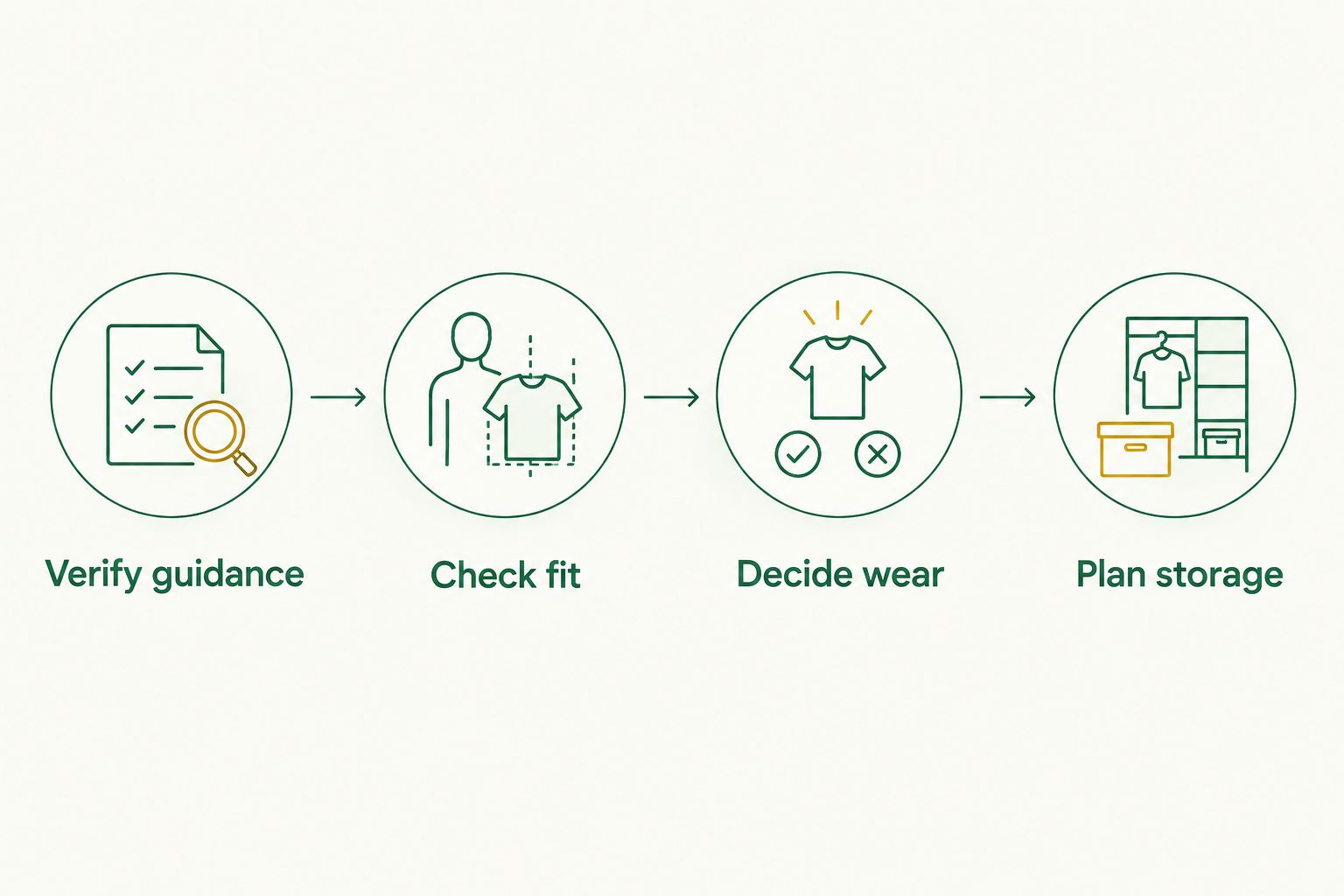
Keep the routine practical enough to follow every time you play:
- Choose a protective storage method before leaving home.
- Avoid loose storage beside keys, clubs, or other hard objects.
- Follow the manufacturer’s instructions for cleaning after wear.
- Ask an appropriate watch professional about any change in operation.
- Keep care and service documentation with your ownership records.
Compare watch options for golfers in 2026
These options illustrate different case sizes and designs, not verified golf-performance ratings. The best starting point for a clubhouse-first buyer is the watch that fits comfortably and matches their preferred style. None of the supplied product details establishes suitability for swinging.
| Option | Best for | Main advantage | Key limitation |
|---|---|---|---|
| Rolex Datejust 36, reference 126234, mint green dial, Jubilee bracelet | Golfers starting with a smaller-case clubhouse watch | Combines a 36 mm format with a fluted bezel and mint green dial | Condition and golf-use suitability require separate confirmation |
| Rolex Datejust 41, reference 126300, mint green dial, Jubilee bracelet | Golfers who prefer a larger case and smooth bezel | Listed 41 mm stainless steel case with box and papers | Larger diameter does not establish better comfort or sports suitability |
| Audemars Piguet Royal Oak Quartz, reference 67650ST.OO.1261ST.01 | Golfers prioritizing a compact clubhouse option | Listed 33 mm case and 7 mm thickness | Quartz movement alone does not establish suitability for golf |
| Patek Philippe Nautilus Chronograph, reference 5980/1A-019 | Collectors seeking a white-dial chronograph for after-round wear | Stainless steel construction with chronograph and date functions | The supplied listing leaves condition for enquiry and does not establish golf-use suitability |
Start with the Datejust size comparison
Best for comparing case sizes: the Rolex Datejust 36 and Rolex Datejust 41 provide a focused starting pair. Their different bezels and bracelet configurations also show why you should compare the complete watch, not just the diameter.
The cards below identify the exact listed configurations. Treat them as candidates for further inspection, not as approved equipment for play.


Common mistakes golfers make
- Buying the sponsorship instead of the watch. A player’s association with a brand does not answer questions about your reference, its condition, or your intended use.
- Treating water resistance as golf approval. Water exposure and swing-related forces are different considerations. Check the relevant instructions separately.
- Choosing diameter without testing wrist movement. A watch can look proportionate yet press against your hand or interfere with a glove.
- Assuming a quartz watch settles the durability question. Movement type is one characteristic, not a substitute for model-specific guidance.
- Removing the watch without a storage plan. Decide how to protect it before play rather than leaving that decision to the practice area.
FAQ
What are the best luxury watches for golfers in 2026?
The best luxury watches for golfers match the owner's intended use, fit comfortably, and have care guidance consistent with that use. Start with clubhouse wear as a separate decision from wearing a watch through a swing.
Can I wear a Rolex Datejust while playing golf?
Check the guidance for your exact Rolex Datejust reference and the condition of your individual watch before wearing it during play. Neither the model name nor the case diameter alone establishes suitability.
Is a 36 mm watch better than a 41 mm watch for golf?
Neither size is automatically better for golf. Compare crown contact, glove interference, bracelet movement, and overall comfort on your own wrist.
Is a quartz luxury watch better than a mechanical watch for golfers?
Quartz movement alone does not make a luxury watch the better golf choice. Assess the complete watch, its manufacturer guidance, and its condition rather than using movement type as a durability rating.
Should I buy a new or pre-owned luxury watch for the clubhouse?
Choose between new and pre-owned by comparing the exact watch, its condition, documentation, and transaction terms. Clubhouse use does not remove the need to verify those details.
Does a water-resistant watch automatically suit golf?
No, a water-resistance specification does not establish suitability for golf swings. Review the manufacturer's activity and care guidance separately.
Can I trade my current watch toward another luxury watch?
Luxury Time NYC buys and trades timepieces. Ask for an assessment of your existing watch and review the proposed replacement independently before agreeing to a transaction.
One last thing
Your best golf watch does not have to be your watch for playing golf. For 2026, make that distinction before buying: a timepiece chosen for the clubhouse can still be the right purchase without accompanying every swing.
Resolve the wear decision before the brand decision. That keeps an iconic design from becoming an expensive compromise in comfort or care.