The Rolex Datejust 41 is not automatically better than the 36mm in 2026: choose the 41mm for a larger presence and the 36mm for a more compact fit. Current-generation versions share the same core movement specification, so the larger case does not buy you better timekeeping technology. When buying pre-owned, condition, bracelet fit, and the exact reference matter as much as diameter.
- Is the Rolex Datejust 41 better than the 36mm? Only when you prefer its larger fit and stronger wrist presence.
- Rolex Datejust 36 is best for buyers seeking a compact everyday watch; Datejust 41 suits a larger-watch preference.
- Current-generation Rolex Datejust 36 and Datejust 41 models share caliber 3235 and approximately 70 hours of power reserve.
- Luxurytimenyc sells new and pre-owned luxury watches; compare the exact reference and condition before choosing a size.
Is the Rolex Datejust 41 better than the 36mm in 2026?
The Rolex Datejust 41 wins on size, not on a higher specification. The Rolex Datejust 36 wins when you want the watch to occupy less of your wrist. Neither advantage makes one size universally better.
For this 2026 comparison, Rolex’s published specifications for current-generation Datejust models provide the technical baseline. Older pre-owned references need a separate check. Start with the guidance on buying a pre-owned Rolex safely before treating every Datejust as mechanically identical.
| Comparison | Rolex Datejust 36 | Rolex Datejust 41 |
|---|---|---|
| Published case diameter | 36mm | 41mm |
| Current-generation movement | Caliber 3235 | Caliber 3235 |
| Published power reserve | Approximately 70 hours | Approximately 70 hours |
| Published water resistance | 100 meters | 100 meters |
| Best for | A compact, less prominent fit | A larger, more prominent fit |
| Main advantage | Less case diameter across your wrist | More dial and case presence |
| Main drawback | Looks small if you prefer larger watches | Occupies more wrist space |
| Decision rule | Choose it when compact proportions feel right | Choose it when the larger case sits comfortably |
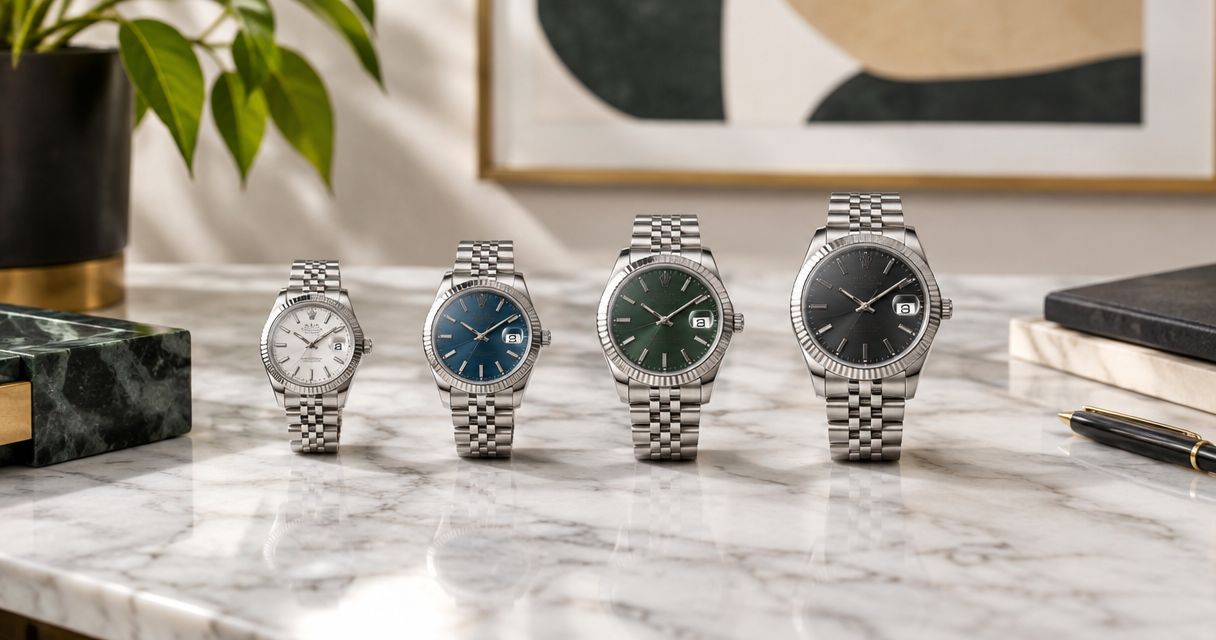
The published diameter difference is 5mm. That is enough to make trying both worthwhile, but it does not establish a universal wrist-size cutoff. Your wrist shape and preferred fit still decide the result.
Why this matters
A Datejust is an everyday watch for many buyers, so an uncomfortable fit is not a minor compromise. You will notice it while typing, moving your wrist, and wearing sleeves. A watch that looks impressive in a close-up photograph still needs to work in those ordinary situations.
The wrong comparison is larger versus smaller as a ranking of quality. The useful comparison is how each exact watch sits on you. Separate mechanical capability from appearance, then judge whether the extra case diameter improves your experience.
For a 2026 purchase, also separate a current-generation Datejust from an older pre-owned example. A familiar model name does not establish its movement, service history, or condition. Read the reference information before relying on a general size comparison.
Rolex Datejust 36: 36mm for a compact everyday fit
Best for: buyers who want a Datejust that takes up less wrist space. The Rolex Datejust 36 makes sense when you prefer the dial and bracelet to remain part of your outfit rather than its focal point. Its smaller case gives you a clear alternative to the larger Datejust without changing the essential date-and-time function.
Try the Rolex Datejust 36 with your hand relaxed, not only with your wrist held flat for a photograph. Check whether the bracelet supports the case without letting it roll toward the side of your wrist. Then bend your hand and see whether the crown presses against it.
The drawback is equally clear: the Rolex Datejust 36 will not satisfy someone who wants a visibly larger watch. Do not buy it solely because another collector calls that size correct. If you keep wishing the watch occupied more of your wrist, its compact proportions are not an advantage for you.
Bezel and bracelet choices also affect the overall impression. A fluted bezel and Jubilee bracelet introduce more visual detail than a smooth bezel and Oyster bracelet. Compare the full configuration rather than assuming every 36mm Datejust looks equally restrained.
Verdict: choose the Rolex Datejust 36 when you prefer its compact proportions in person. Do not reject it because it is the smaller option, and do not choose it against your own preference.
Rolex Datejust 41: 41mm for a larger presence
Best for: buyers who want more dial and case presence. The Rolex Datejust 41 is the stronger choice when the 36mm looks smaller than you want and the larger case sits securely. Its appeal is visual and physical, not a different class of movement.
Judge the Rolex Datejust 41 from normal viewing distance. Look in a mirror with your arm at your side, then check it while wearing the clothes you use most often. A close-up wrist photograph is a poor substitute for seeing the watch in proportion to your arm and outfit.
The limitation is the extra space it occupies. If the case projects beyond the usable top of your wrist, shifts during movement, or interferes with your sleeve, a larger appearance is not compensation. Bracelet adjustment matters, but it does not change the case diameter.
The Rolex Datejust 41 also needs the right configuration for your taste. A smooth bezel does not make the case smaller, and a fluted bezel does not make it mechanically better. Treat those choices as separate appearance decisions.
Verdict: choose the Rolex Datejust 41 when you actively prefer its larger proportions and it passes your comfort checks. Size alone is not a reason to upgrade from a Datejust 36 you already enjoy.
What do the current Datejust 36 and Datejust 41 share?
Current-generation Rolex Datejust 36 and Datejust 41 models use caliber 3235, with approximately 70 hours of published power reserve. That means the larger model does not offer a longer published running reserve simply because its case is bigger. Both sizes also have a published water-resistance rating of 100 meters.
These specifications describe the models, not the verified condition of an individual pre-owned watch. A published water-resistance rating is not evidence that a particular used example has passed a recent pressure test. Ask for its testing and service information before deciding how you will use it.
For 2026 buyers, the practical distinction is between model capability and individual-watch condition. The former comes from Rolex’s specifications; the latter needs evidence about the watch in front of you. A clean-looking dial does not answer questions about movement maintenance or seals.
Do not apply caliber 3235 specifications to every older Datejust 36. Identify the reference and movement first. Comparing a current-generation Datejust 41 with an older Datejust 36 is also a comparison of generations, not just diameters.
Why the better Datejust size varies
The better Datejust depends on fit and configuration, not a universal formula. Use these factors to explain what you see when trying the watches rather than turning them into rigid rules.
- Wrist shape: judge the usable top surface of your wrist and whether the case sits within it. Circumference alone does not show that shape.
- Bracelet adjustment: check whether the bracelet holds the case securely without squeezing. A loose bracelet makes a fit comparison less useful.
- Visual preference: decide whether you want the watch to be subtle or prominent. Neither preference is a technical advantage.
- Bezel choice: smooth and fluted bezels give the Datejust different visual textures. Keep the bezel consistent when isolating case size.
- Bracelet style: Oyster and Jubilee bracelets change the appearance of the complete watch. Compare the bracelet you actually intend to wear.
- Reference and condition: current and older references require different specification checks. Pre-owned condition needs its own assessment regardless of size.
Change one variable at a time. If you compare a smooth-bezel Datejust 41 with a fluted-bezel Datejust 36, decide which part of your preference comes from size and which comes from the configuration.
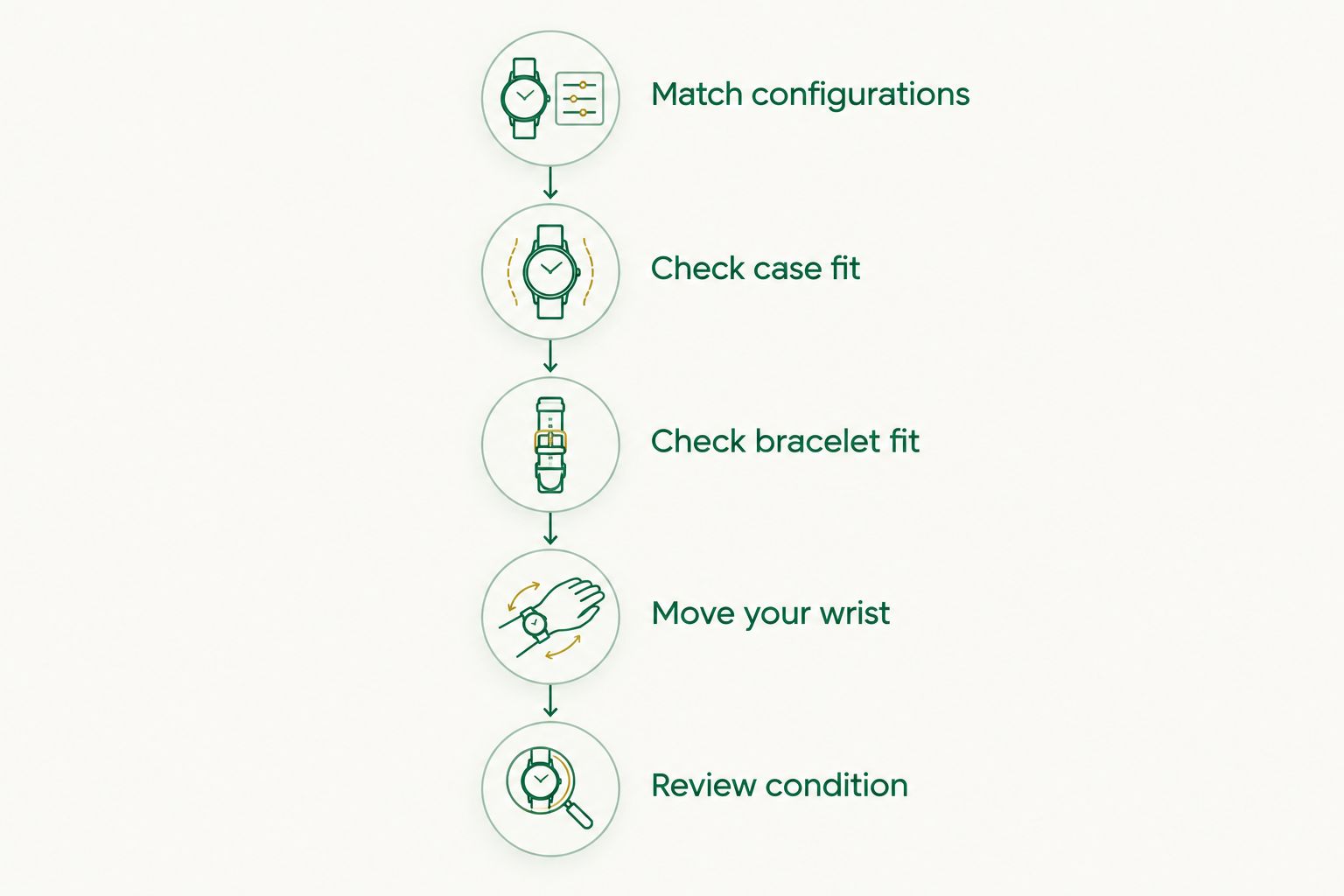
How should you compare both sizes before buying?
A useful fitting session answers a simple question: which Datejust would you keep wearing after the excitement of the purchase fades? Bring your normal expectations to the comparison. Do not choose a size for a photograph if you need it for daily wear.
- Match configurations. Compare similar bezels, bracelets, and dial styles where possible. This makes the case-size difference easier to judge.
- Check case fit. Look at the watch from above and from the side. Notice whether the case sits securely on the top of your wrist.
- Check bracelet fit. Confirm that the bracelet can be adjusted for you. Ask about the links included with the exact watch.
- Move your wrist. Bend your hand, rest it on a desk, and try your usual sleeve. Look for pressure, shifting, or interference.
- Review condition. Check the reference, disclosed condition, included documents, and service information before committing to the individual watch.
The process separates preference from evidence. You decide which size looks right; the seller needs to answer questions about the exact example. Do not let enthusiasm for a particular dial replace those checks.
Which listed Datejust configurations help illustrate the choice?
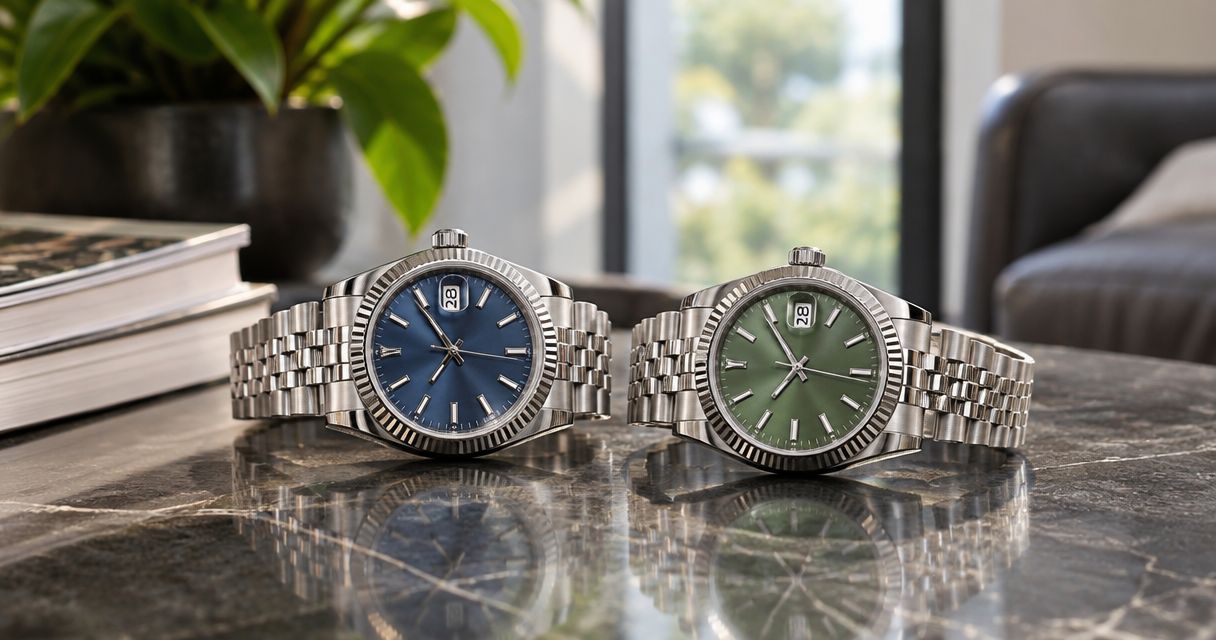
The supplied Luxurytimenyc listings include a mint-green Datejust 41 reference 126300 and mint-green Datejust 36 reference 126234 configurations. They illustrate why diameter is only part of the choice: the listed 41mm has a smooth bezel and Jubilee bracelet, while the listed 36mm configurations have fluted bezels with Oyster or Jubilee bracelets.
| Listed configuration | Best for | Advantage | Limitation |
|---|---|---|---|
| Datejust 41 reference 126300, smooth bezel, Jubilee bracelet | A larger case with a smooth bezel | Combines larger proportions with a less detailed bezel | Does not isolate size when compared with a fluted-bezel watch |
| Datejust 36 reference 126234, fluted bezel, Oyster bracelet | A compact case with an Oyster bracelet | Lets you choose the smaller size without choosing Jubilee | The bezel and bracelet differ from the listed 41mm |
| Datejust 36 reference 126234, fluted bezel, Jubilee bracelet | A compact case with a Jubilee bracelet | Shares the listed 41mm’s bracelet style | The different bezel still affects the visual comparison |
Luxurytimenyc is best for luxury-watch buyers who want to buy, sell, or trade through a retailer. The retailer model is relevant to the purchase process, but it does not decide which Datejust fits you. Confirm the details of the exact watch rather than treating a catalog description as a personal fitting assessment.
The supplied information does not establish the condition or service history of every listed example. Ask Luxurytimenyc to clarify those details and the included bracelet links before choosing. Use these configurations as comparison candidates, not proof that one size is universally better.


Is a 36mm Datejust too small for a man?
A 36mm Datejust is not automatically too small for a man. Choose it when its proportions suit your wrist and your preferred appearance; gender does not establish a fit threshold. If you prefer a larger watch after trying both, choose the Datejust 41 for that reason.
Does the Datejust 41 have a better movement?
The 41mm Datejust does not have a better movement than the current-generation 36mm Datejust: both use caliber 3235. Rolex publishes approximately 70 hours of power reserve for both. An older pre-owned Datejust 36 requires a reference-specific comparison.
Should I replace my Datejust 36 with a Datejust 41 in 2026?
Replacing a 36mm Datejust with a 41mm Datejust in 2026 makes sense when you want a larger fit, not simply a larger model designation. Try the proposed replacement in a comparable configuration before deciding. If your current watch is comfortable and suits your taste, diameter alone gives you no technical reason to replace it.
FAQ
What's the better everyday watch, the Rolex Datejust 36 or Datejust 41?
The Rolex Datejust 36 is better for a compact-fit preference; the Datejust 41 is better for a larger-watch preference. Current-generation versions share caliber 3235, so choose on fit rather than assumed mechanical superiority.
How much bigger is the Datejust 41 than the Datejust 36?
The Datejust 41 has a published case diameter 5mm larger than the Datejust 36: 41mm versus 36mm. Those diameters do not establish a universal wrist-size cutoff.
Can I wear a Datejust 41 on a smaller wrist?
Choose a Datejust 41 on a smaller wrist only if the case sits securely and feels comfortable. Check the case position, bracelet adjustment, crown contact, and sleeve clearance rather than relying on circumference alone.
Do both current Datejust sizes have the same power reserve?
Current-generation Datejust 36 and Datejust 41 models both have approximately 70 hours of published power reserve. Older pre-owned references need a separate movement check.
Is the Rolex Datejust 36 a women's watch?
The Rolex Datejust 36 is not a women-only choice. Its 36mm diameter suits anyone who prefers a compact watch and finds the proportions comfortable.
Should I choose an Oyster or Jubilee bracelet for my Datejust?
Choose the bracelet whose appearance and fit you prefer on the exact Datejust. Try both where possible, and confirm that the supplied bracelet has the links needed for adjustment.
Is a pre-owned Datejust 41 better than a new Datejust 36?
A pre-owned Datejust 41 is not automatically better than a new Datejust 36. Compare fit, the exact reference, disclosed condition, service information, and purchase terms separately.
One last thing
Compare both Datejust sizes in a mirror before deciding in 2026. A wrist close-up answers how the watch fills a photograph; a mirror helps you judge how it fits your overall appearance. Then move your hand and check comfort again.
The final choice should survive both tests. Pick the Datejust 36 or Datejust 41 because you prefer wearing it, not because its diameter sounds more impressive.