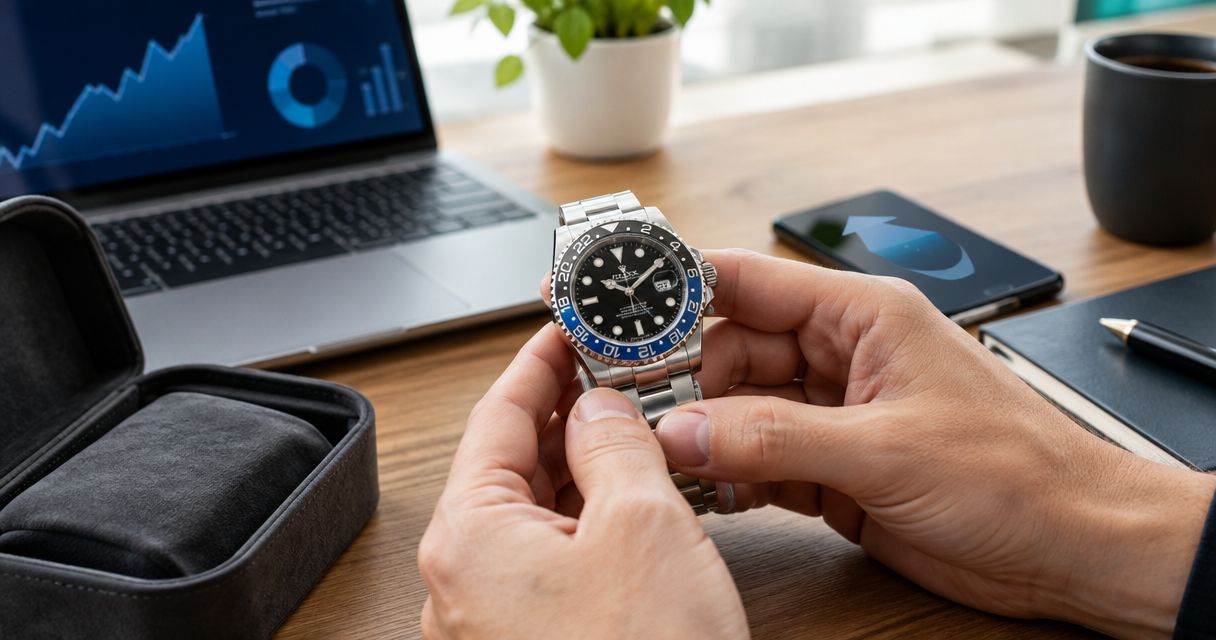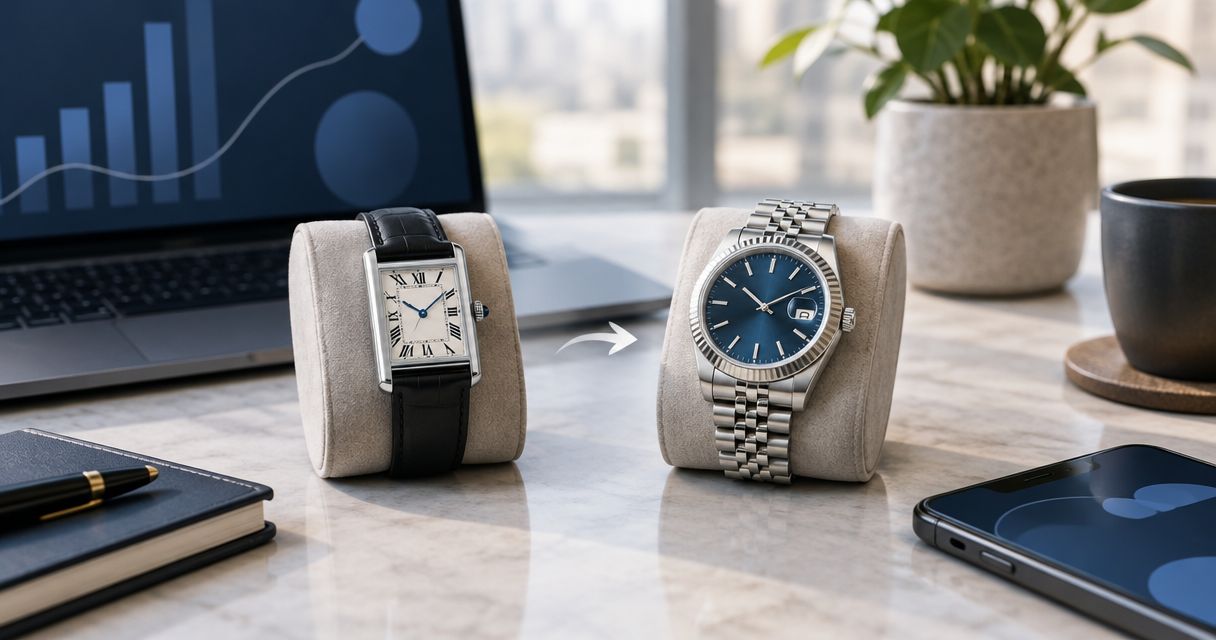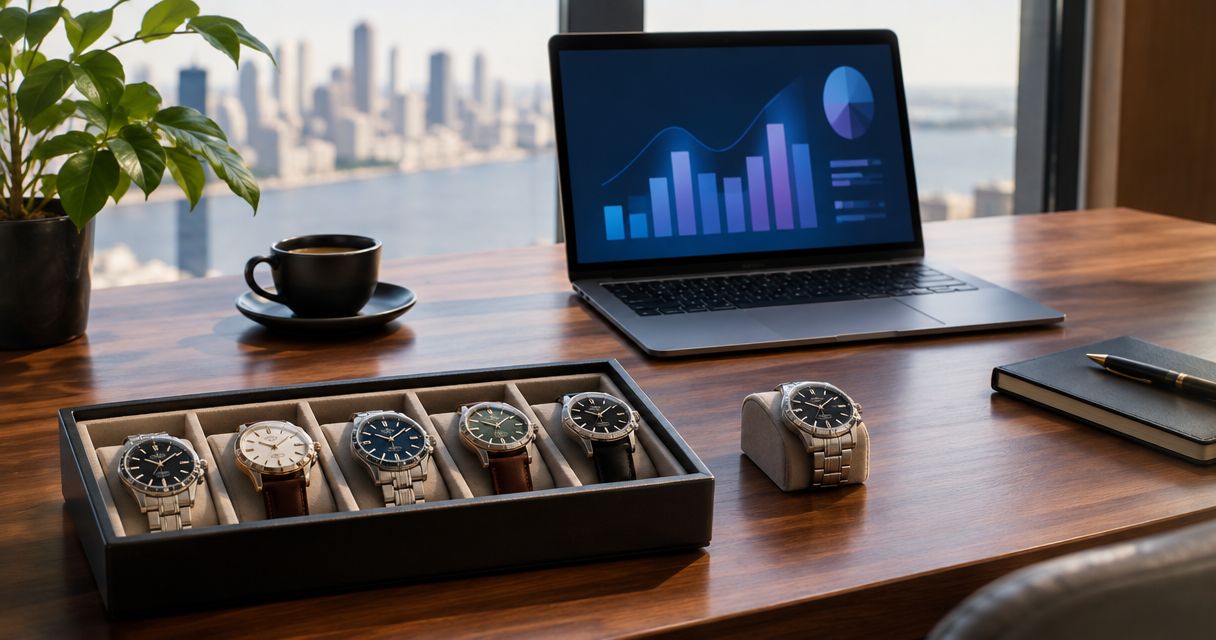
This page benchmarks search demand across six luxury watch brands in 2026 (Rolex, Patek Philippe, Audemars Piguet, Omega, Cartier and Richard Mille) and shows which model families drive each brand's share of attention.
- Rolex is the most searched luxury watch brand in 2026. Its demand is spread across many model families.
- Patek Philippe and Audemars Piguet concentrate search demand on the Nautilus and the Royal Oak.
- Omega and Cartier split demand between two icons each: Speedmaster and Seamaster, Tank and Santos.
- Richard Mille, founded in 2001, has the narrowest search footprint of the six brands.
- Benchmark by reference number, not brand name, before you buy, sell or trade.
Why this matters
Search demand shows what buyers want before they reach a store. For sellers, it signals which references have a deep pool of buyers. For buyers, it flags where competition for the same watch is heaviest.
Luxury Time NYC deals in exactly these brands. The pre-owned and new luxury watch retailer sells, buys and trades Rolex, Audemars Piguet, Patek Philippe and Omega, so the demand patterns below map directly onto what moves through its inventory in 2026.
The short answer: Rolex leads luxury watch search in 2026
Rolex is the most searched luxury watch brand in 2026. Public Google Trends comparisons of brand-name queries in the US put Rolex ahead of Omega, Cartier, Patek Philippe, Audemars Piguet and Richard Mille.
No single monthly volume figure appears on this page. Keyword tools report different volumes for the same term, and those figures shift every month, so a hard number would be stale on publication. What holds steady is the shape of demand: which brands lead, and which model families carry each brand.
Search demand benchmarks by brand, 2026
| Brand | Founded | Flagship families in search | Demand pattern | Dominant query intent |
|---|---|---|---|---|
| All six brands | 1839 to 2001 | 15 model families | Rolex leads; the rest concentrate on one or two icons | Price, resale value, authenticity |
| Rolex | 1905 | Datejust, Submariner, GMT-Master II, Day-Date, Daytona, Sky-Dweller | Broad: spread across six or more families | Price by model, resale value, celebrity wearers |
| Patek Philippe | 1839 | Nautilus, Calatrava, Grand Complications | Concentrated on the Nautilus | Availability, resale value |
| Audemars Piguet | 1875 | Royal Oak, Royal Oak Offshore, Code 11.59 | Concentrated on the Royal Oak | Authentication, resale value |
| Omega | 1848 | Speedmaster, Seamaster | Split between two icons | Entry price, model comparisons |
| Cartier | 1847 | Tank, Santos | Split between two icons | Sizing, gifting, men's vs women's |
| Richard Mille | 2001 | Brand name, individual RM references | Brand-led, few model names searched | Collectability, celebrity wearers |
Rolex leads on breadth: at least six Rolex model families draw searches of their own, more than any other brand in the table. Richard Mille trails on breadth. Founded in 2001, it is the youngest brand here by more than 90 years, and buyers search the brand name far more often than any single model.
Patek Philippe and Audemars Piguet sit in the middle with the same shape. Each has one flagship that carries most of the brand's search attention: the Nautilus for Patek Philippe, the Royal Oak for Audemars Piguet. Omega and Cartier each split demand between two long-running icons.
Search volume tracks the model, not the brand. A buyer typing "Royal Oak" is further down the funnel than one typing "Audemars Piguet", and the model term is where purchase intent concentrates.
“Search volume tracks the model, not the brand.”
Search demand benchmarks by model family, 2026
The brand table shows who leads. The model table shows why. Every family below has its own search footprint, and the launch year explains part of it: older references have had decades to build name recognition.
| Model family | Brand | Launched | What searchers look for |
|---|---|---|---|
| Santos | Cartier | 1904 | Sizes, steel vs gold |
| Tank | Cartier | 1917 | Men's vs women's sizing, gifting |
| Calatrava | Patek Philippe | 1932 | Dress watch options, dial variants |
| Datejust | Rolex | 1945 | Price by size, dial colors, resale value |
| Seamaster | Omega | 1948 | Model comparisons, dive specs |
| Submariner | Rolex | 1953 | Date vs no-date, bezel colors |
| GMT-Master II | Rolex | 1955 (original GMT-Master) | Bezel colorways, references ranked |
| Day-Date | Rolex | 1956 | President bracelet, gold variants |
| Speedmaster | Omega | 1957 | Moonwatch history, entry models |
| Daytona | Rolex | 1963 | Steel vs precious metal, wait times |
| Royal Oak | Audemars Piguet | 1972 | Authentication, sizes, resale value |
| Nautilus | Patek Philippe | 1976 | Discontinued references, resale value |
| Royal Oak Offshore | Audemars Piguet | 1993 | Chronograph variants, ceramic cases |
| Sky-Dweller | Rolex | 2012 | Annual calendar, references |
| Code 11.59 | Audemars Piguet | 2019 | Dial colors, reviews |
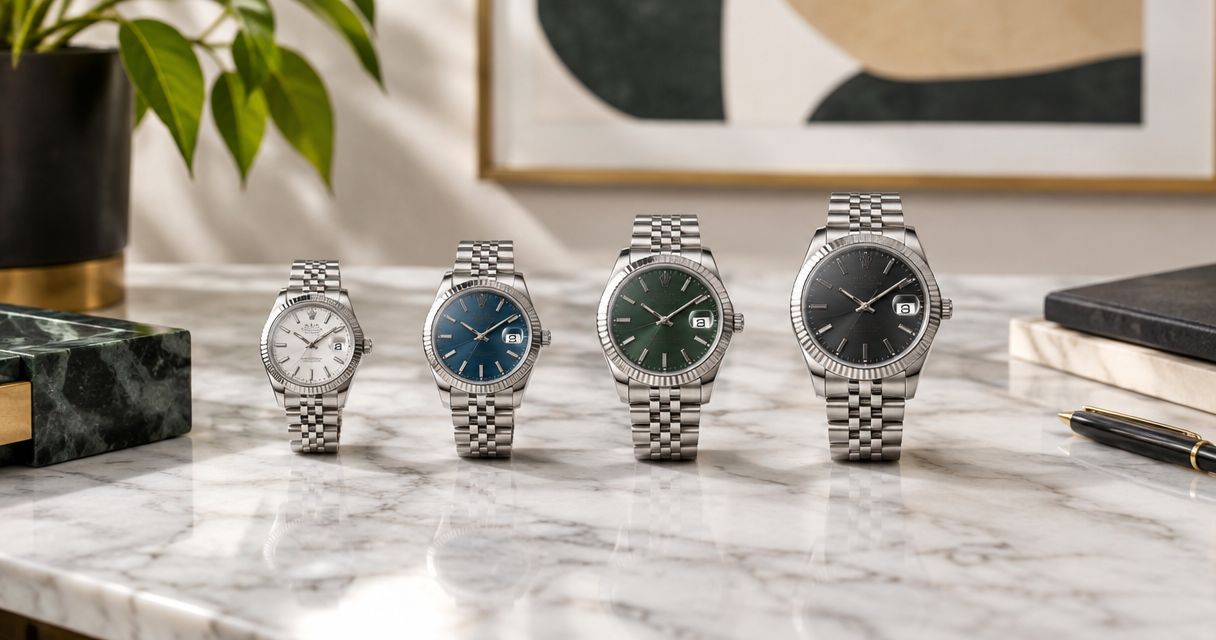
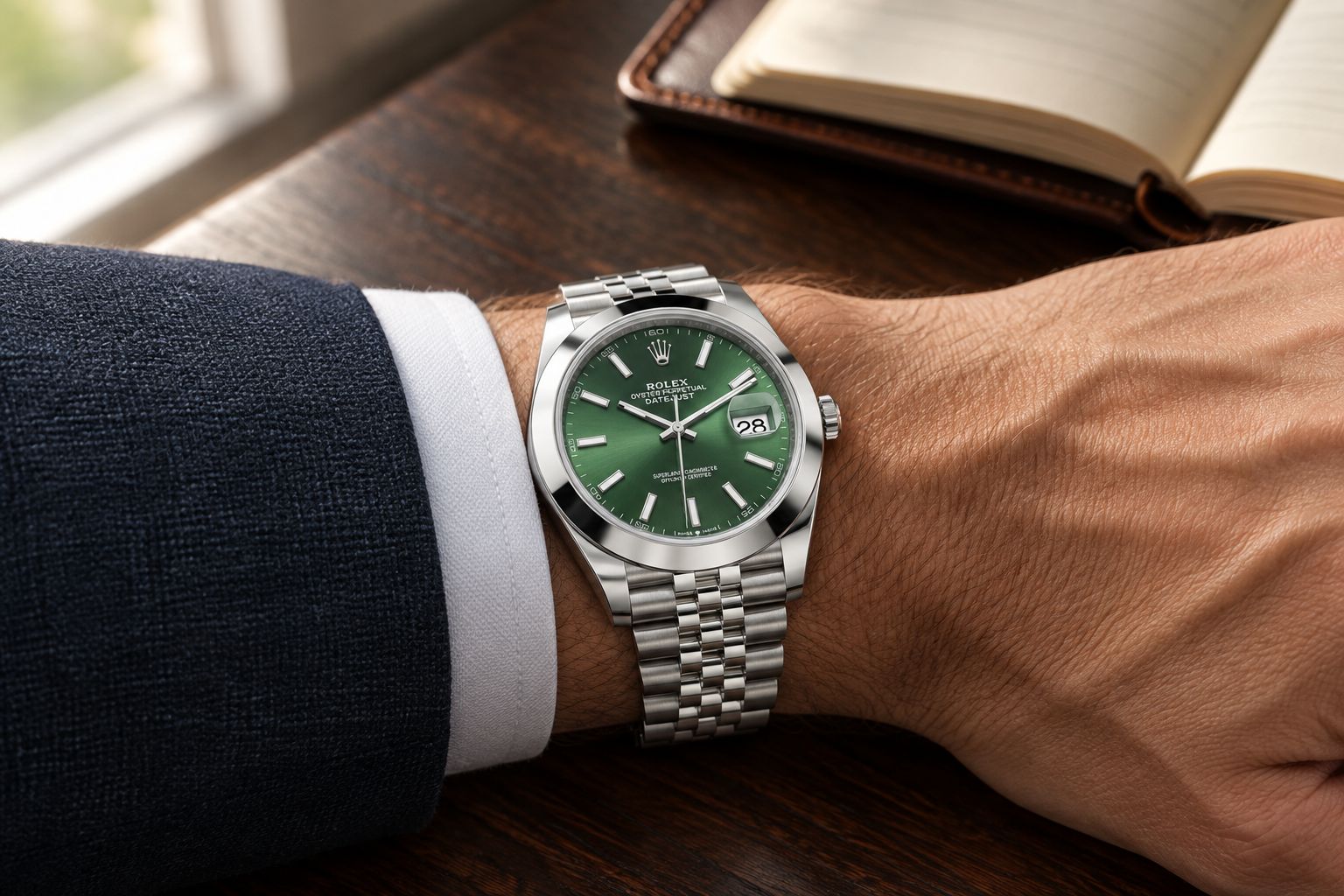
The Datejust is the clearest example of evergreen demand. Launched in 1945, it is one of the oldest Rolex models still in production, and its searches cover price, size, dial color and resale value at once. A 41mm steel Datejust with a green dial covers several of those query clusters in one reference.
The newest families behave differently. The Code 11.59, launched in 2019, draws searches around dial colors and reviews rather than resale value, because it has a short secondary-market history compared with the Royal Oak. For price context by reference, the average Rolex price by model guide breaks the Rolex families down one by one.
Methodology and limits of this data
The brand order reflects public Google Trends comparisons of brand-name queries in the US in 2026. The model families are the core collections each brand markets under its own name, with launch years taken from each brand's published history.
The named limitation: Google Trends reports relative interest on a 0 to 100 scale, not absolute search counts. This page tells you which brands and models lead, not how many searches each gets per month. It also cannot separate buyers from browsers: a spike in "Rolex" searches after a celebrity sighting is attention, not purchase intent.
How to use these benchmarks
The numbers above are only useful when tied to a decision. Four moves turn search benchmarks into better buying, selling and trading outcomes.
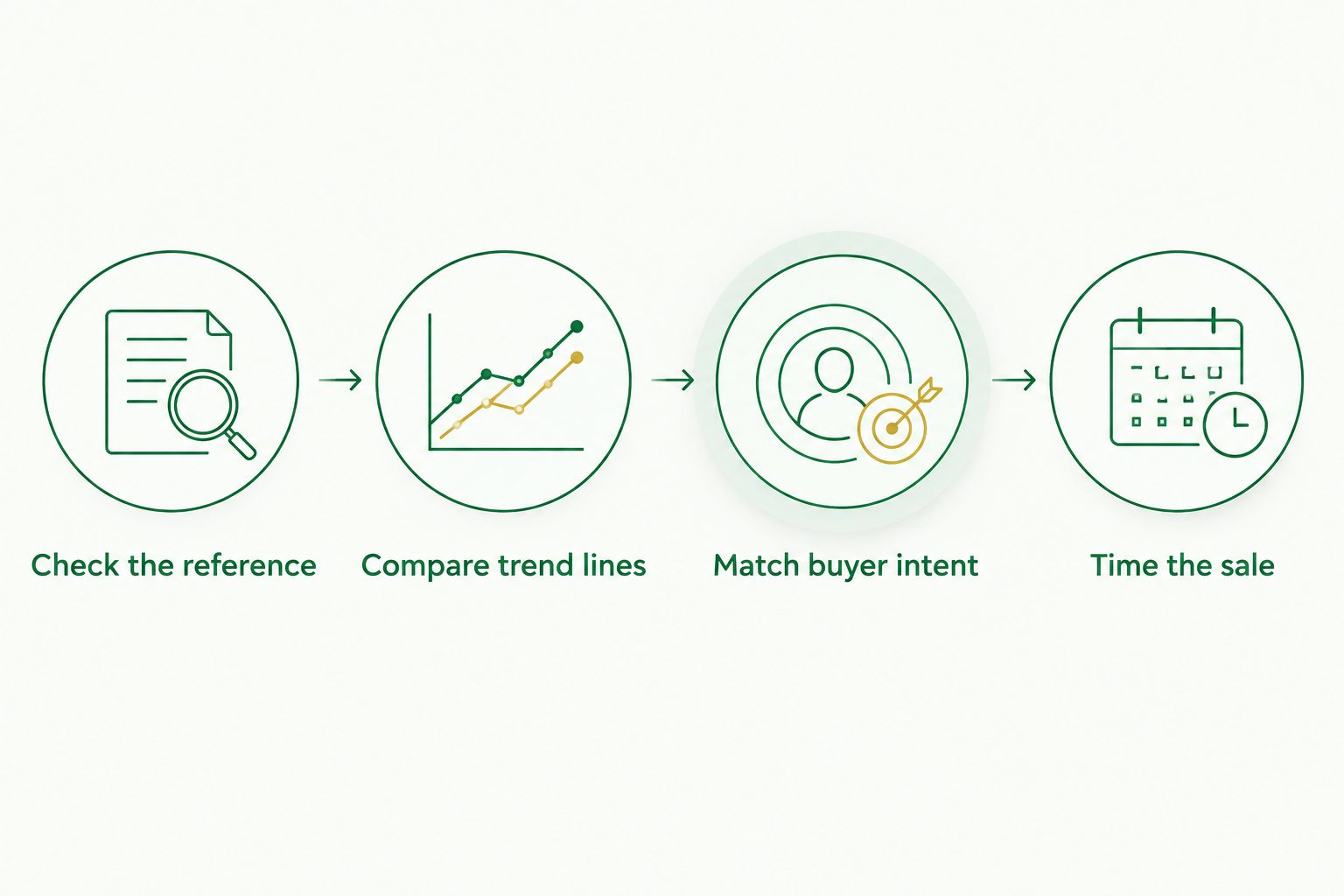
- Check the reference. Search demand for "Rolex" says little about your watch. Search the reference number (126300, 5980/1A, 67650ST) and see what buyers actually type.
- Compare trend lines. Put two model names side by side in Google Trends, such as Nautilus vs Royal Oak. Relative interest is exactly what the 0 to 100 scale is built for.
- Match buyer intent. If searches for your model cluster around authentication, buyers want proof. Sell with box, papers and certified authenticity; buy from a dealer that provides it.
- Time the sale. Sellers of high-demand families (Datejust, Submariner, Royal Oak, Nautilus) face a deep buyer pool year-round. Sellers of niche references gain more from timing and from a dealer who already has buyers waiting.
The practical verdict: Luxury Time NYC is best for collectors trading within the high-demand families in the tables above (Rolex, Patek Philippe and Audemars Piguet), because those are the brands the luxury watch retailer stocks, buys and trades. It is a weaker fit for Cartier or Richard Mille shoppers, since the brand's stated focus sits elsewhere.
The references below come from the most searched families on this page, from the Datejust to the Nautilus and the Royal Oak.


FAQ
What is the most searched luxury watch brand in 2026?
Rolex is the most searched luxury watch brand in 2026. Public Google Trends comparisons put it ahead of Omega, Cartier, Patek Philippe, Audemars Piguet and Richard Mille in the US.
Which Rolex models drive the most search interest?
The Datejust, Submariner, GMT-Master II, Day-Date, Daytona and Sky-Dweller each draw searches of their own. That breadth is why Rolex leads the brand benchmark.
What are the most searched Patek Philippe and Audemars Piguet models?
The Nautilus carries most of Patek Philippe's search attention, and the Royal Oak carries most of Audemars Piguet's. Both brands concentrate demand on one flagship.
Does search volume affect a watch's resale value?
Search volume does not set resale value, but it shows how many buyers are looking. A reference with a deep buyer pool is easier to sell or trade than a niche one.
Where can I check search volume for a watch brand?
Google Trends shows relative interest on a 0 to 100 scale for free. Google Keyword Planner shows volume ranges and requires a Google Ads account.
Why is Richard Mille searched less than Rolex?
Richard Mille was founded in 2001, has a smaller catalog and produces far fewer watches. Buyers search the brand name more than any single model.
How much does a Rolex cost in 2026?
Rolex prices in 2026 depend on the model, reference, metal and condition. Check a price-by-model breakdown or current listings rather than a single brand-wide figure.
Is the most searched watch the best one to buy?
The most searched watch is the easiest to resell, not automatically the best fit for you. Pick the reference you will wear, then use search demand to judge liquidity.
One last thing
The brand-level benchmark is the least useful number when you actually transact. Search the full reference number before you buy or sell in 2026. "Datejust 41" covers dozens of dial, bezel and bracelet combinations; "126300" narrows the results to one configuration, and that is the version a buyer or dealer will price against.