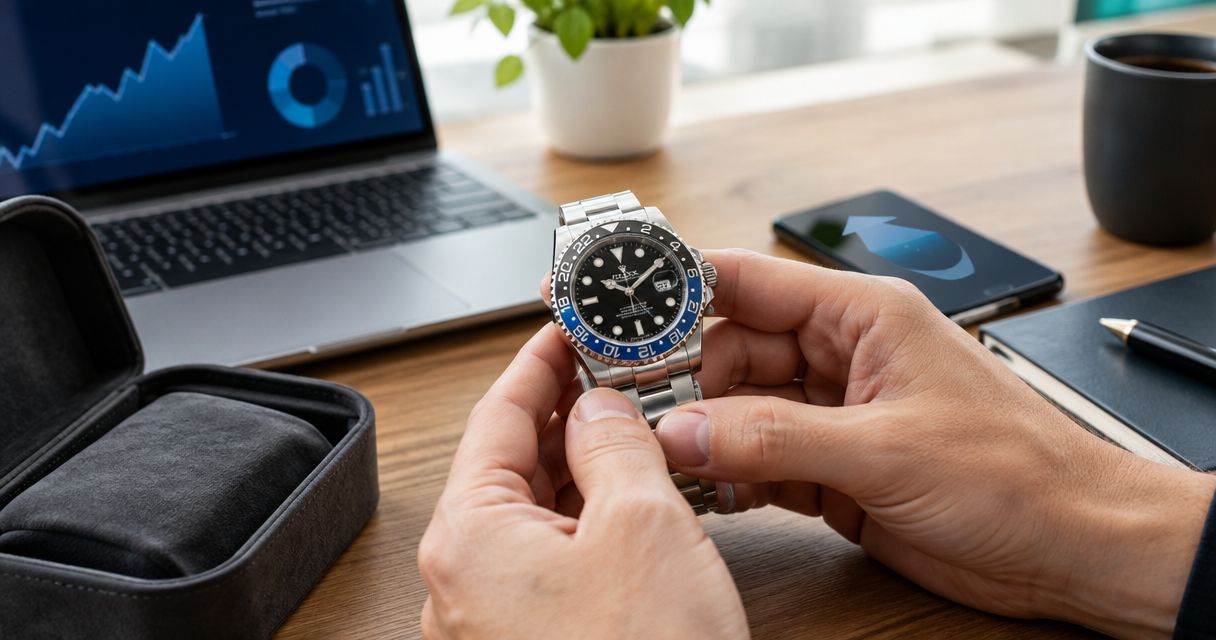
Yes, you can ask to negotiate the price of a pre-owned Rolex, but the seller decides whether to accept your offer. A lower agreed amount does not resolve questions about authenticity, condition, service history, or the terms of the sale. In 2026, your strongest approach is to compare equivalent watches, identify documented differences, and make a clear offer without assuming a standard discount.
- Can you negotiate the price of a pre owned Rolex? Yes, but a seller does not have to negotiate.
- Compare the exact Rolex reference, condition, bracelet, and documentation before making an offer.
- Luxurytimenyc serves pre-owned Rolex buyers who also want to sell or trade luxury watches.
- Ask for written purchase terms; a negotiated discount does not establish authenticity.
Can you negotiate the price of a pre owned Rolex?
Yes. Ask whether the seller will consider an offer on the specific watch, then support your request with relevant comparisons. Negotiation is a conversation, not an entitlement. A seller's refusal does not establish that the watch is overpriced, just as acceptance does not establish that it is a good purchase.
Start with the watch, not the discount. Review whether buying a pre-owned Rolex is safe before treating a seller's flexibility as a reason to proceed.
Use this sequence to keep the discussion focused:
- Identify the watch. Confirm the reference, dial, case material, bracelet, and stated condition.
- Check comparable examples. Match those details rather than comparing everything carrying the same model name.
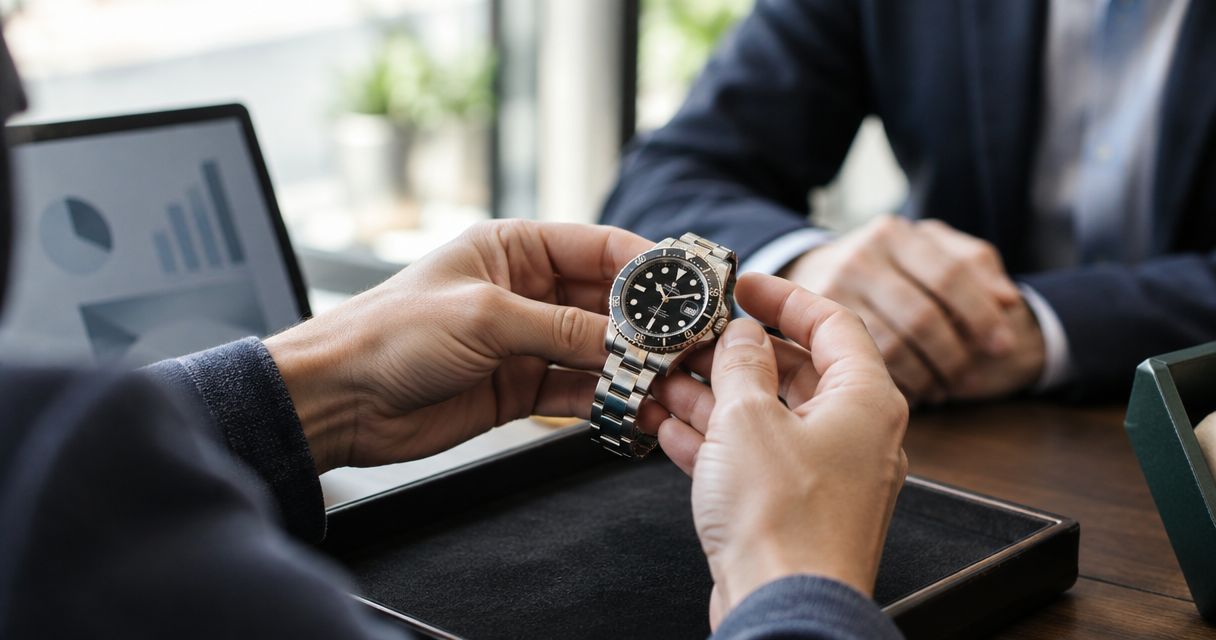
- Resolve unanswered questions. Request photographs, documentation, and written explanations before offering.
- Make a specific offer. Explain the comparison or condition difference behind it.
- Confirm the agreement. Get the watch description, included items, and purchase terms in writing.
Do not skip the middle steps because the seller sounds receptive. A well-supported offer gives both parties a concrete issue to discuss; an arbitrary demand only asks the seller to concede.
Why this matters
A Rolex is a physical object with an individual history. The model name alone does not tell you how that particular watch has been worn, serviced, modified, or documented. Those details belong in your buying decision before any discussion of a reduction.
For your 2026 purchase, separate what you want to own from what you want to negotiate. If you want a particular reference and configuration, evaluate that watch against equivalent examples. If you are flexible about the watch, broaden your search rather than trying to turn an unsuitable example into a good purchase through bargaining.
Your objective is an acceptable watch under clear terms. Getting the seller to move is secondary.
Build your comparison before making an offer
A useful comparison starts with the exact reference. Rolex model families contain different configurations, so a shared family name is not enough to establish equivalence. Case size, metal, dial, bezel, and bracelet all deserve their own line in your notes.
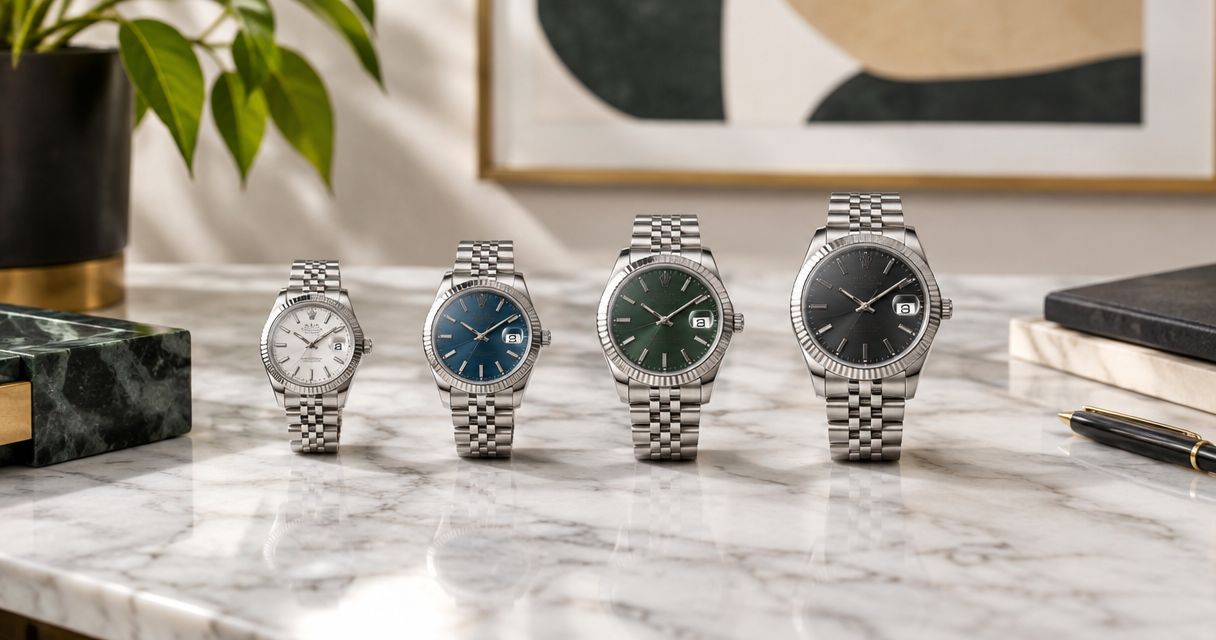
The supplied catalog illustrates the problem: it distinguishes a Datejust with a 41 mm case from Datejust examples with 36 mm cases. It also identifies a Daytona dial with 8 baguette diamonds. These are configuration details, not interchangeable descriptions of the same watch.
Likewise, the catalog includes Oyster and Jubilee bracelet configurations. Match the bracelet when building your comparison instead of treating it as a minor detail you can ignore. Do not use a differently configured watch as evidence without explaining the difference.
For each comparable example, record:
- The exact reference and described configuration.
- The stated condition and what the photographs actually show.
- The included box, papers, bracelet links, and other accessories.
- Any documented service or replacement parts.
- The purchase protections stated by that seller.
Keep advertised figures separate from evidence of completed transactions. An asking figure tells you what a seller requests, not what a buyer ultimately agrees to pay. Do not describe a listing as a confirmed sale unless you have evidence of that sale.
Use current 2026 comparisons for a current 2026 negotiation. Older examples can provide context, but they do not establish today's terms for the watch in front of you.
Choose the negotiation approach that fits your purchase
There is more than one way to discuss a pre-owned Rolex transaction. Choose the approach that reflects your actual situation, rather than offering concessions you do not understand or do not intend to make.
| Approach | Best for | Advantage | Limitation |
|---|---|---|---|
| Evidence-based offer | Buyers comparing equivalent watches | Gives the seller a specific reason to reconsider | Requires genuinely comparable examples |
| Condition-based discussion | Buyers with documented concerns | Connects the request to the actual watch | A reduction does not repair damage or resolve authenticity |
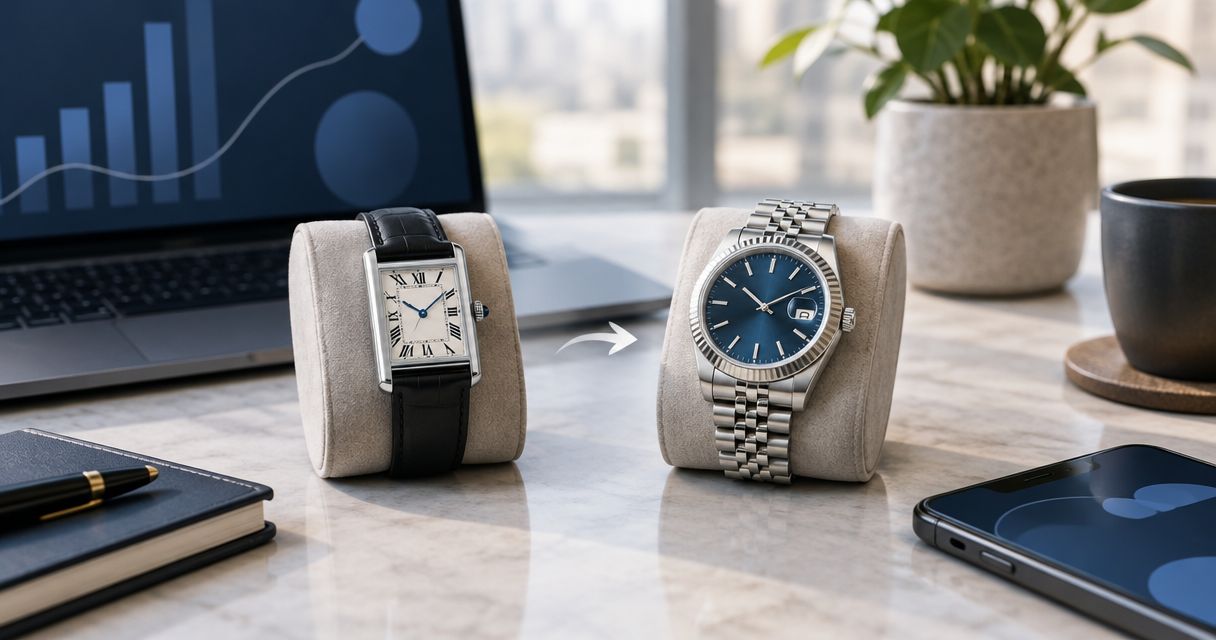
| Trade-in discussion | Owners replacing an existing watch | Lets you discuss selling and buying together | Combines separate valuations that need checking |
| Accepting stated terms | Buyers satisfied with the watch and agreement | Avoids unnecessary bargaining | Does not remove the need for due diligence |
The table describes buying approaches, not promises about any retailer's flexibility. Ask the seller which arrangements they consider, then examine the proposed terms.
Luxurytimenyc is best suited to pre-owned Rolex buyers who also want to sell or trade luxury watches. The retailer sells new and pre-owned luxury watches and buys and trades timepieces. That makes a purchase-and-trade conversation relevant, but it does not establish a negotiation policy or a guaranteed reduction.
Make your offer clear, courteous, and conditional
An effective offer identifies the watch, explains your reasoning, and states what still needs confirmation. Keep it concise. A long account of why you deserve a concession does not improve the comparison.
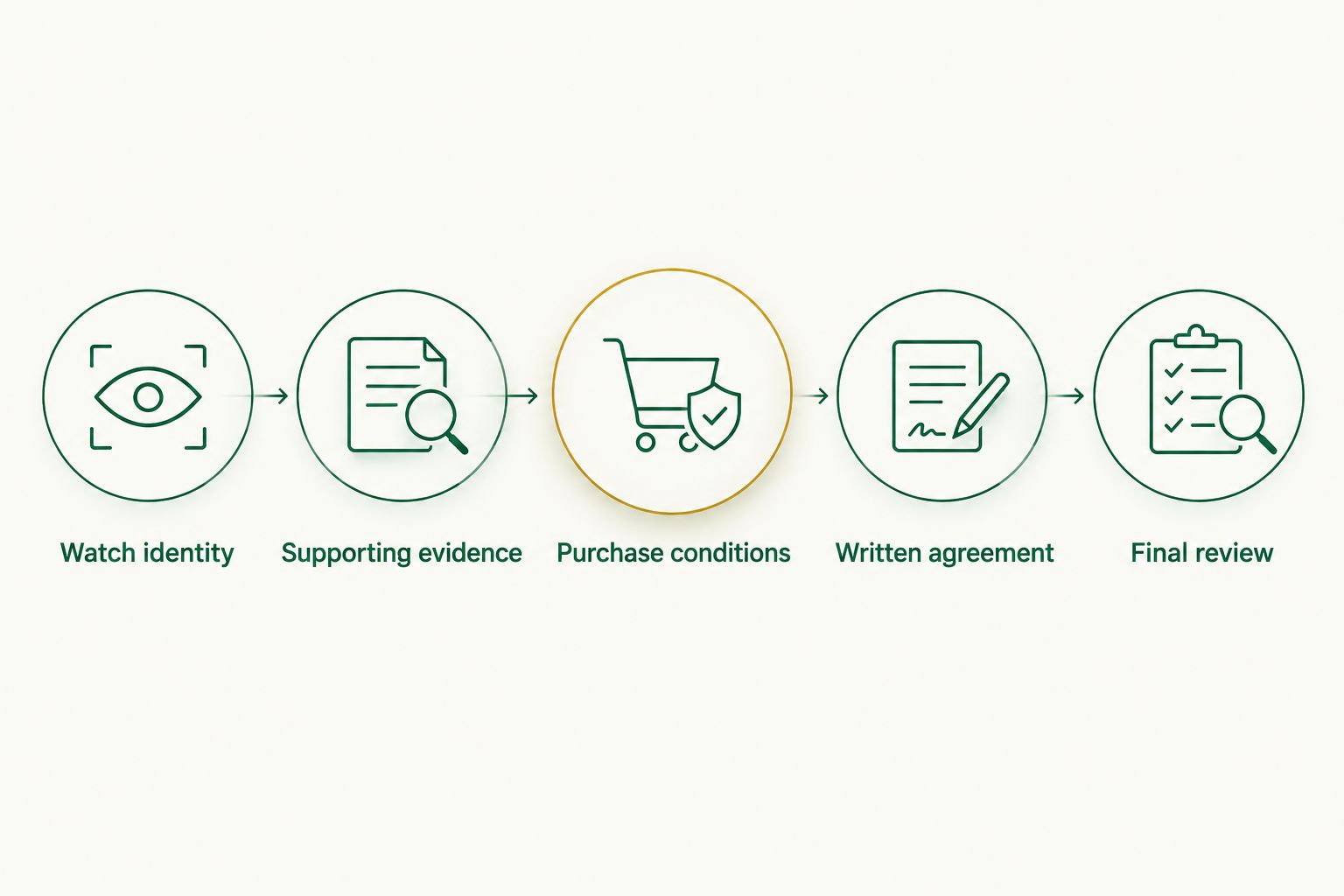
Structure your message around these points:
- Watch identity: Name the reference and configuration you are discussing.
- Supporting evidence: Describe the equivalent examples or documented condition difference.
- Purchase conditions: State the inspection, documentation, or written terms you need.
- Decision readiness: Explain whether you are ready to proceed once those conditions are met.
You do not need to criticize the watch to negotiate. Acknowledge the configuration you want, then explain the basis of your offer. Be precise about visible wear without presenting an unverified diagnosis as fact.
For a 2026 purchase, ask the seller to confirm that the final agreement applies to the exact photographed watch and its listed accessories. Resolve any difference between the listing and the seller's explanation before payment.
If the seller declines, ask whether the stated terms are final. Accept the answer. Repeating the same request without new evidence does not make your comparison stronger.
Avoid claiming you have another offer unless you actually do. The same rule applies to payment readiness, trade-in details, and inspection findings: state only what you can support.
Why negotiation room varies
You cannot infer a seller's flexibility from the Rolex name alone. Ask about the specific watch and transaction rather than assuming that every pre-owned example carries the same bargaining room.
These factors give you concrete points to investigate:
- Reference and configuration. Case material, dial, bezel, and bracelet determine whether your comparison matches the watch.
- Documented condition. Clear photographs and inspection findings support a discussion; guesses about hidden problems do not.
- Included documentation. Establish exactly which papers and records accompany the watch rather than accepting a vague description.
- Service information. Ask what work was performed, by whom, and what evidence supports the statement.
- Purchase structure. A direct purchase and a trade-in proposal involve different questions and should be evaluated separately.
- Seller's stated terms. Confirm whether offers are considered and which conditions apply before negotiating.
These factors explain what to examine, not how much a seller will concede. There is no defensible universal discount you should apply to every pre-owned Rolex.
Do not turn an unresolved question into a bargaining point and then forget it. Missing evidence remains missing evidence after an offer is accepted.
Should you negotiate differently when trading in a watch?
Yes. Evaluate the watch you are buying and the watch you are surrendering separately before considering the combined transaction. Otherwise, an attractive description of the upgrade can distract you from either valuation.
Ask for a written breakdown identifying the purchase watch, your trade-in watch, and the terms assigned to each. Confirm how inspection affects the proposal and when your agreement becomes binding. Do not assume that a preliminary discussion is the final arrangement.
If you are moving from Omega to Rolex, the Omega-to-Rolex trade-in workflow provides a related starting point. The same discipline applies regardless of brand: document both watches before agreeing to the exchange.
Luxurytimenyc offers luxury-watch buying and trading alongside retail sales. Ask about the proposed arrangement directly rather than assuming that a trade automatically produces better terms than a separate sale and purchase.
Is a discount more important than box and papers?
No. Evaluate the watch and its documentation before deciding whether the proposed agreement is acceptable. A discount is not a substitute for evidence about what you are buying.
Box and papers do not, by themselves, prove that every component is authentic or original. Conversely, their absence does not, by itself, prove that a watch is counterfeit. The documentation and the physical watch require separate examination.
For your 2026 purchase, ask the seller to identify each included document and explain how it relates to the watch. Request clear images where appropriate, while respecting that sensitive identifying information should not be published indiscriminately.
Distinguish an original document from a retailer's invoice, appraisal, or service record. Each describes something different. Do not let the phrase full set replace an itemized explanation.
When should you stop negotiating and walk away?
Stop when the unresolved issue concerns trust, identity, or purchase terms rather than the seller's willingness to negotiate. A concession does not answer contradictory descriptions or establish that a watch matches its documentation.
Pause the transaction if the seller will not explain material differences between the photographs and description. Do the same if essential purchase terms remain unclear. Request clarification instead of treating uncertainty as an opportunity to bargain harder.
Before you proceed, confirm:
- Written agreement: The description identifies the exact watch and included items.
- Purchase conditions: You understand the inspection, return, and warranty terms actually offered.
- Final review: The agreement matches the seller's earlier explanations.
These are questions to ask, not policies to assume. Do not attribute a return window, warranty, or shipping arrangement to a retailer without its written confirmation.
Walking away is also appropriate when the watch does not match what you wanted. Bargaining successfully for the wrong configuration still leaves you with the wrong watch.
FAQ
Can you negotiate the price of a pre owned Rolex with a retailer?
Yes, you can ask a retailer to consider an offer on a pre-owned Rolex, but the retailer decides whether to negotiate. Support your request with equivalent watches and confirmed details about the specific example.
What's a reasonable discount to ask for on a used Rolex?
There is no universal discount that fits every used Rolex. Base your offer on the exact reference, configuration, documented condition, and proposed purchase terms rather than an arbitrary percentage.
Should I make an offer before checking authenticity?
Do not commit to a pre-owned Rolex purchase before resolving authenticity questions. You can discuss terms, but a lower agreed amount does not establish that the watch is authentic.
Is trading in my watch better than buying a Rolex outright?
A trade-in is not automatically better than an outright purchase. Evaluate the purchase watch and your trade-in separately, then compare the written combined agreement with your alternatives.
Does having box and papers mean I shouldn't negotiate?
Box and papers do not prevent you from asking the seller to consider an offer. Confirm exactly what is included and assess the watch itself rather than treating the accessories as proof of every claim.
Can I negotiate with Luxurytimenyc when buying a pre-owned Rolex?
Ask Luxurytimenyc directly whether an offer is considered for the specific pre-owned Rolex. The retailer sells, buys, and trades luxury watches, but those services do not establish a guaranteed negotiation policy.
What should I do if a Rolex seller refuses my offer?
Accept the refusal and decide whether the stated terms meet your requirements. Continue only if the watch, documentation, and purchase conditions are satisfactory without a concession.
One last thing
Ask the seller to summarize the exact watch and all included items in writing before you accept. This simple request makes differences between the listing, photographs, and conversation easier to identify.
For a 2026 pre-owned Rolex purchase, negotiate the agreement, not just the headline figure. You should finish knowing what you are receiving, what has been documented, and which terms govern the transaction. A successful negotiation leaves those questions answered.