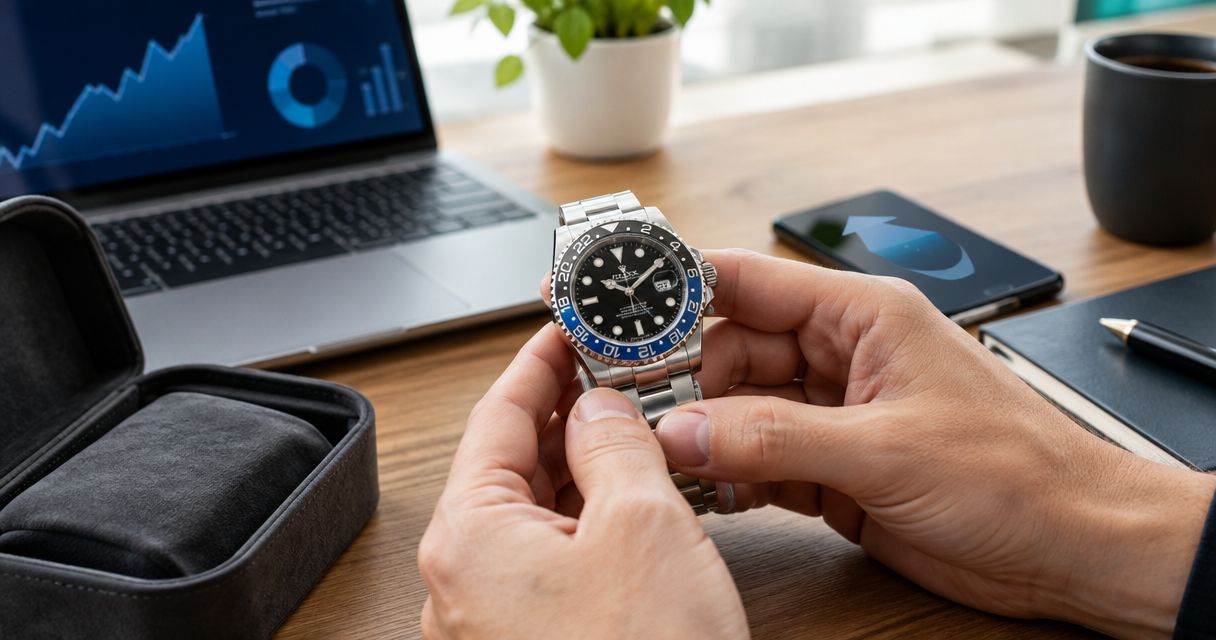
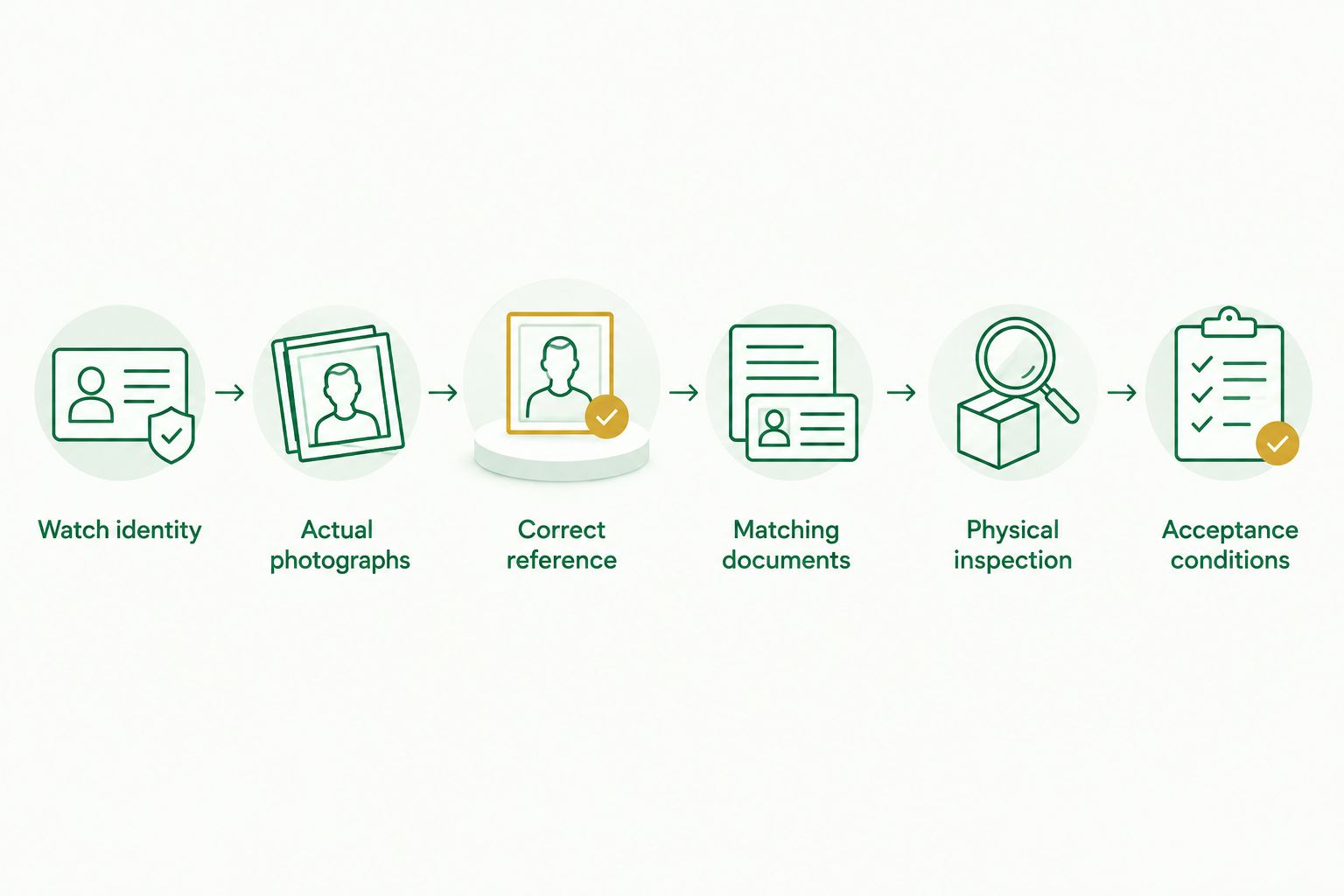
You establish a pre-owned Rolex’s authenticity by checking its identity, comparing its configuration with the correct reference, and arranging a qualified physical inspection before you commit. In 2026, photographs, matching papers, and a convincing serial number are supporting evidence—not substitutes for examining the watch, its movement, and any replacement parts.
- Rolex authentication requires physical inspection; photographs and matching papers do not establish authenticity alone.
- How to know if a pre owned Rolex is authentic: verify its reference, components, movement, and supporting documents.
- Separate authenticity from originality: a genuine Rolex can contain replacement or aftermarket parts.
- Agree on inspection access and written purchase protections before committing to a pre-owned Rolex.
How do you know if a pre-owned Rolex is authentic before buying?
Treat authentication as a sequence of checks, not a hunt for one secret sign. Start with the seller’s description, confirm that the watch matches it, and have a qualified professional examine the physical watch before you accept an unresolved claim.
When considering a pre-owned Rolex from Luxury Time NYC, use the same standard: ask for evidence tied to the individual watch rather than relying on a general description of the model.
1. Establish the watch’s identity
Ask for the exact reference, the serial number through an appropriate private channel, and a written description of the watch’s configuration. Record the dial, bezel, case material, bracelet, and any disclosed modifications. A collection name such as Datejust is not specific enough.
The reference identifies a model configuration; the serial identifies an individual watch. Neither proves authenticity by itself. A copied number remains a copied number, even when it appears neatly engraved.
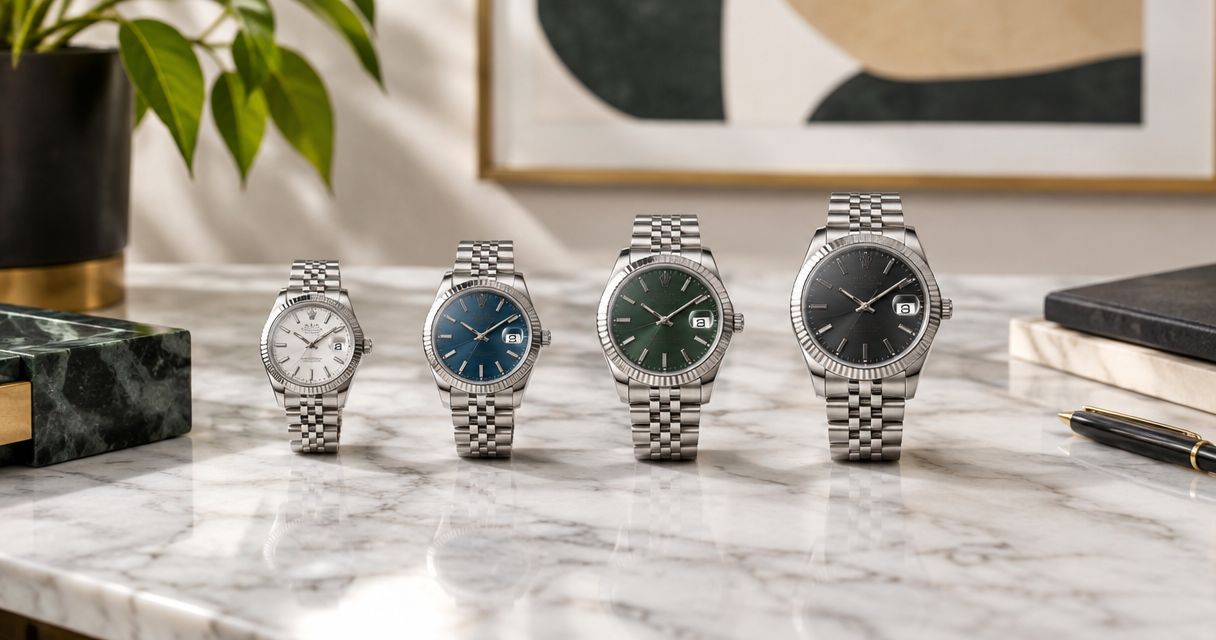
Use the reference to establish what the examiner should expect. The supplied catalog, for example, identifies Datejust reference 126300 with a 41 mm stainless steel case and reference 126234 with a 36 mm white gold/steel configuration. Those are different specifications, not interchangeable descriptions.
Ask the seller to explain any inconsistency before proceeding. A listing error is something to correct; an unexplained mismatch is something to stop over.
2. Request photographs of the actual watch
Request clear photographs of the dial, bezel, case sides, crown, caseback, bracelet, and clasp. Ask for relevant identifying details and pictures of the accompanying documents. Stock photography shows a model, not the watch you will receive.
Look for consistent details across the photographs. The bracelet, dial, wear marks, and case should belong to the same watch throughout the listing and any follow-up images. Ask for clarification when an image hides the area you need to examine.
Dial printing, date alignment, finishing, and engraving can expose problems, but they cannot settle every case. Lighting, reflections, compression, and camera angles affect their appearance. Use photographs to identify questions for the examiner, not to declare a watch authentic.
3. Compare the configuration with the correct reference
Compare the watch with reliable information for its specific reference and production period. Do not judge an older watch against the appearance of a current model. Rolex designs, bracelets, clasps, and movements differ across references and generations.
Check whether the case material, dial, bezel, bracelet, and functions fit the stated configuration. Ask specifically whether the dial, hands, bezel, bracelet, or crystal have been replaced. Request disclosure of aftermarket components separately from genuine service replacements.
On many modern Rolex watches, a small laser-etched crown appears near the crystal’s 6 o’clock position. Its visibility depends on lighting and viewing angle, and its presence is not proof of authenticity. Applying that check indiscriminately to every older Rolex creates a different problem: rejecting a watch because you expected the wrong feature.
4. Match the documents to the watch
Compare the identifying information on any warranty card, original paperwork, service documents, and sales invoice with the watch. Read the documents rather than simply counting them. A box contributes packaging, not mechanical evidence.
Check what each document actually establishes. An original warranty card concerns the original sale; a service invoice concerns the work described on that invoice. Neither automatically establishes the watch’s present configuration or condition.
For a 2026 purchase, ask the seller to put current claims in writing. That includes the watch’s identity, disclosed modifications, included accessories, and any authentication representation. Documents should support the watch in front of you, not replace its examination.
5. Arrange a qualified physical inspection
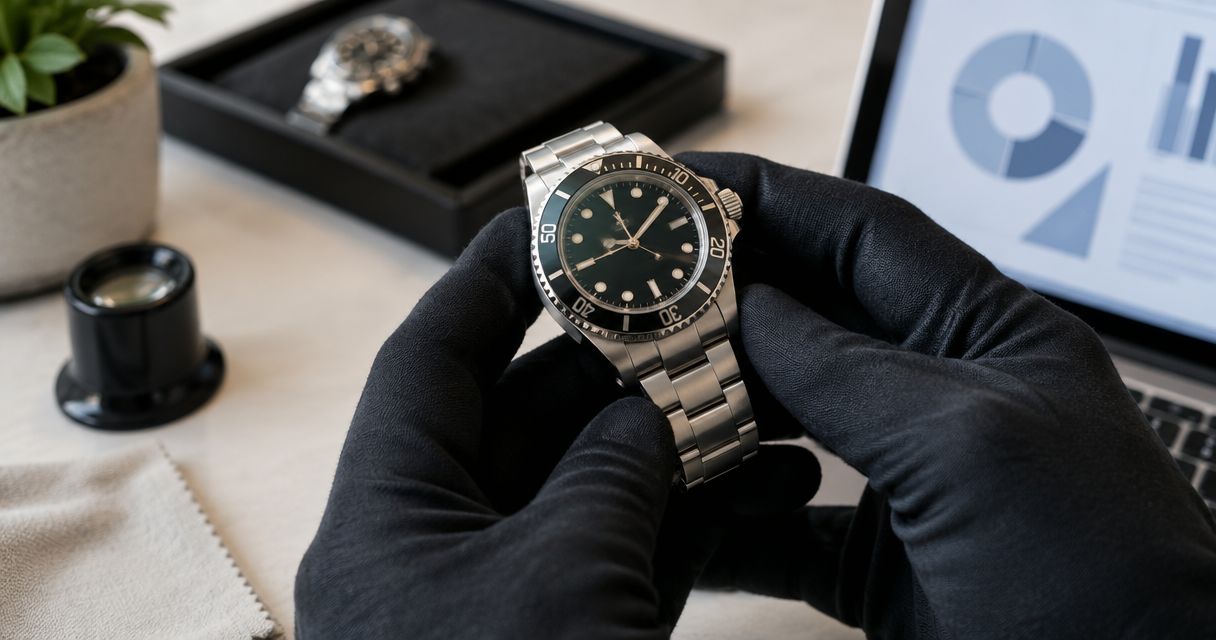
Choose a professional with experience examining the relevant Rolex reference. Ask whether the inspection covers the movement, case, dial, bracelet, identifying marks, and replacement components. A brief exterior look is not the same scope as an internal examination.
Movement inspection requires appropriate tools and expertise. Do not open the watch yourself or ask an unqualified person to improvise. Agree with the seller on who can inspect it, whether opening the case is permitted, and who is responsible for handling it.
Ask for written findings tied to the individual watch. The findings should distinguish an authentication conclusion from unresolved questions, modifications, or condition concerns. If the examiner cannot establish a component’s status, keep that uncertainty visible in your purchase decision.
6. Set the acceptance conditions before committing
Agree on the inspection arrangement and the transaction terms before payment. If inspection occurs after delivery, obtain the applicable return conditions in writing and confirm that the proposed inspection does not conflict with them. Do not assume an informal assurance creates a usable remedy.
Make the invoice describe the watch accurately. Keep the listing, photographs, seller correspondence, inspection findings, and payment record together. These records document what was represented and what you accepted.
Buy only when the physical findings, written description, and transaction terms agree. If access to meaningful inspection is refused, leave the authenticity question unresolved rather than filling the gap with confidence.
Why this matters
Authenticity, originality, condition, and ownership history answer different questions. You can establish that a watch is genuine without establishing that every visible component is original to it. You can also examine a genuine watch that needs servicing.
In 2026, a sensible purchase process keeps these questions separate. Ask what the watch is, what has changed, how it functions, and what evidence accompanies the sale. A positive answer to one does not settle the others.
That distinction matters when your goal is collecting rather than simply wearing the watch. A disclosed replacement dial is a different proposition from a watch described as retaining its original dial. Decide which proposition you want before you assess the evidence.
Which authentication checks should you rely on?
Different checks serve different purposes. The strongest buying decision combines document review, reference comparison, and physical examination. None should be presented as doing work outside its scope.
| Check | Best for | What it helps establish | Limitation |
|---|---|---|---|
| Listing photographs | Initial screening | Visible configuration and questions to investigate | Cannot establish movement authenticity or hidden alterations |
| Reference comparison | Checking consistency | Whether claimed specifications fit the stated model | Does not identify the individual watch as genuine |
| Paperwork review | Supporting identity | Connections between documents, identifiers, and stated history | Documents can be mismatched or falsified |
| Physical inspection | Authentication before acceptance | Whether examined components support the authenticity claim | Its usefulness depends on expertise and inspection scope |
| Written transaction terms | Purchase protection | What the seller represents and what happens if it is disputed | Terms do not authenticate the watch themselves |
Ask the examiner to describe the inspection’s limits. An exterior-only assessment should not be described as a movement inspection, and a condition report should not be mistaken for an originality assessment.
Why the inspection varies between pre-owned Rolex watches
The inspection must match the watch’s stated specifications. The supplied Rolex listings illustrate the fields that need individual attention rather than a generic pass-or-fail checklist:
- Model reference: Establish the exact reference before comparing the watch’s features.
- Case material: Check the stated material configuration rather than judging metal by color alone.
- Case diameter: Confirm the model specification; a 41 mm description should not be accepted for a reference described as 36 mm.
- Dial and bezel: Verify the stated configuration and ask about replacements or modifications.
- Bracelet: Check the bracelet and clasp alongside the watch head, not as incidental accessories.
- Condition and paperwork: Examine present condition and determine exactly which documents accompany this individual watch.
A detailed listing gives the examiner a starting point. It does not remove the need to verify those details against the physical watch.
A genuine Rolex with replacement parts
A genuine Rolex can have genuine replacement components fitted during service. That does not automatically make the watch counterfeit. It does mean that authenticity and originality require separate descriptions.
Ask which components have been replaced and what supports that account. Service documentation helps explain disclosed work, while the physical inspection checks what is currently fitted. Do not treat the phrase all original as a substitute for component-level findings.
Best for buyers comfortable with disclosed maintenance: a genuine watch with clearly explained replacement parts. Its advantage is transparency; its limitation is that it does not satisfy a requirement for untouched originality.
A genuine Rolex with aftermarket modifications
A genuine watch can also carry aftermarket components, such as a replacement dial, bezel, or added diamond setting. A genuine underlying watch does not turn every modification into a Rolex-made component. Ask for those distinctions explicitly.
The examiner should identify what can be established about the watch and its modifications. An invoice should not collapse that finding into an unqualified claim that every component is factory original.
Best for buyers who deliberately want a disclosed customized watch: an individually assessed modified Rolex. The benefit is the chosen appearance; the limitation is that customization does not meet a factory-configuration requirement.
What should you ask a pre-owned Rolex retailer?
Ask direct questions that produce usable answers. Luxury Time NYC sells new and pre-owned luxury watches and buys and trades timepieces; for a pre-owned Rolex purchase, your questions should concern the individual watch under discussion.
- Who examined this watch, and what did the examination include?
- Was the movement inspected, or was the assessment exterior-only?
- Are any components aftermarket or known replacements?
- Which documents and accessories accompany this watch?
- Can an independent examiner inspect it before acceptance?
- What written terms apply if the watch differs from its description?
Luxury Time NYC is a retail option for buyers seeking pre-owned Rolex watches. That describes the retailer’s stated offering, not an authentication result for every watch.
For a 2026 purchase from Luxury Time NYC, request the same watch-specific evidence you would require elsewhere. The practical benefit is access to a retailer offering buying, selling, and trading; the limitation is that the retailer’s business description alone cannot establish an individual watch’s authenticity.
Can you authenticate a Rolex from its serial number alone?
No: a serial number alone does not authenticate a Rolex. It identifies the claimed individual watch, but an identifier can be copied or attached to misleading documentation.
Use the serial as part of a consistency check between the watch, documents, and inspection findings. Do not treat an online serial lookup as a substitute for examining the watch’s construction and movement.
Does an authentic Rolex have to be in good condition?
No: authenticity does not establish mechanical condition. A genuine watch can need service, show wear, or have damage that affects its suitability for your purchase.
Ask for condition findings separately from authentication findings. Before wearing an older or recently opened watch in water, obtain an appropriate water-resistance assessment rather than assuming its original specification still describes its present condition.
FAQ
What's the best way to know if a pre-owned Rolex is authentic?
The best approach combines reference verification, document review, and a qualified physical inspection that addresses the movement and components. Agree on inspection access before committing to the purchase.
Can a Rolex be authentic without its original box and papers?
Yes, a Rolex can be authentic without its original box and papers. Their absence makes physical examination and clear written identification especially important; their presence does not replace those checks.
Does a sweeping seconds hand prove a Rolex is real?
No, a sweeping seconds hand does not prove a Rolex is real. Counterfeit watches can use mechanical movements, so hand motion is not an authentication conclusion.
Can I authenticate a Rolex using photographs in 2026?
Photographs can help screen a Rolex in 2026, but they cannot establish authenticity alone. They do not provide the same access to the movement and hidden components as a qualified physical inspection.
Does a replacement dial make a Rolex fake?
A replacement dial does not automatically make a Rolex fake. Establish whether the dial is a genuine replacement or an aftermarket component, and distinguish authenticity from originality.
Should I open a pre-owned Rolex myself to check the movement?
No, leave movement examination to a qualified professional using appropriate tools. Agree on permission and handling responsibility before anyone opens a watch you do not yet own.
What should I do if the seller refuses an independent inspection?
Do not treat an unresolved authenticity claim as verified when the seller refuses meaningful inspection. Ask for an acceptable inspection arrangement, and decline the purchase if you cannot obtain the evidence you require.
One last thing
Ask for two separate conclusions: Is the watch authentic, and does it match the seller’s description? The second question catches problems that the first leaves open, including undisclosed replacement components and incorrect configuration claims.
For your 2026 purchase, save the description before the transaction and compare it with the examiner’s findings. A watch that passes an authenticity assessment can still be the wrong purchase if it is not the watch you agreed to buy.