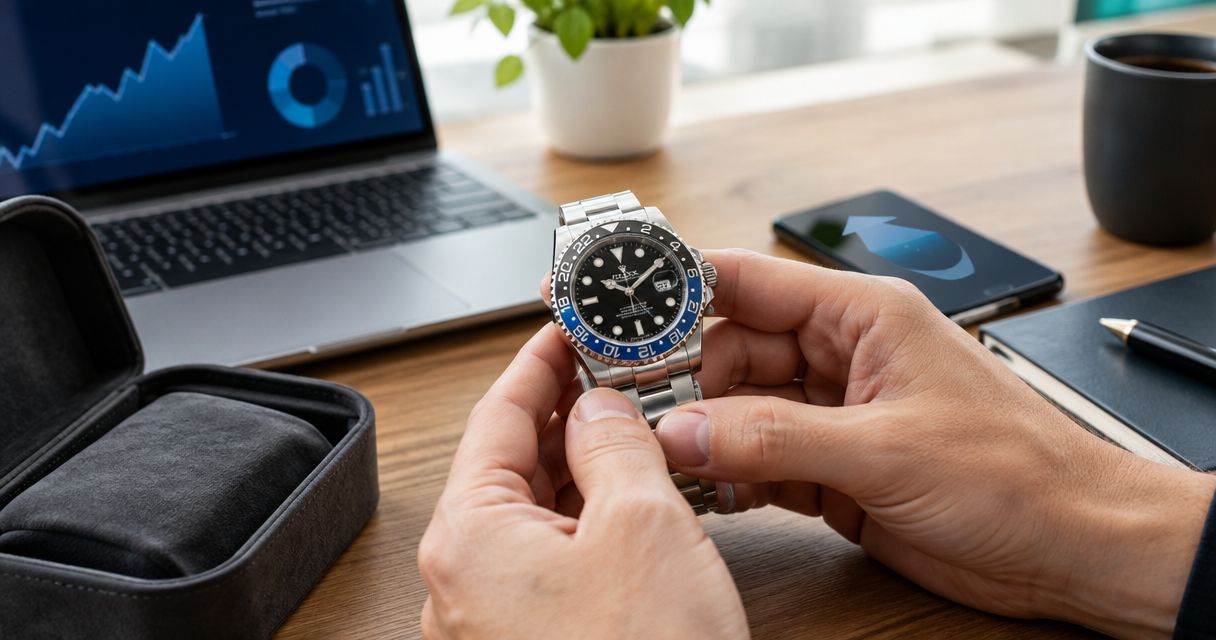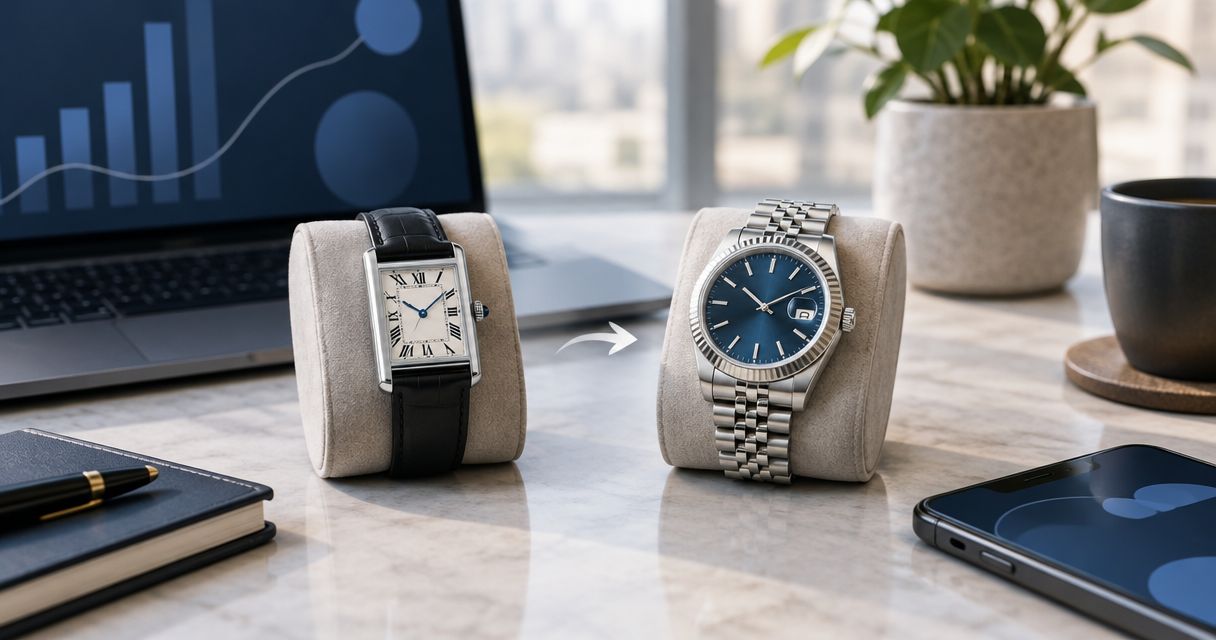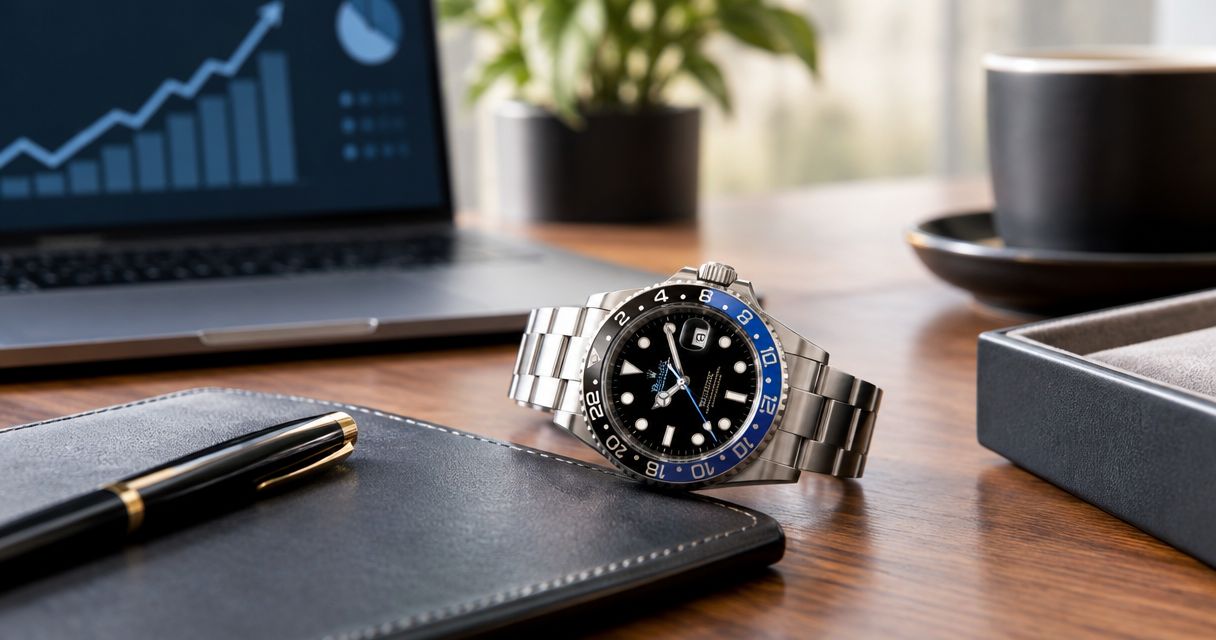
Yes—2026 is a good time to sell your Rolex if a verified buyer’s written offer meets your financial goal and you are ready to part with the watch. The offer alone is not enough: check deductions, inspection conditions, and payment terms before accepting. If you still enjoy wearing your Rolex and have no reason to sell, a calendar date is not a reason to let it go.
- Is now a good time to sell a Rolex? Sell when the written offer meets your goal, not a forecast.
- Rolex resale decisions depend on the exact reference, condition, documentation, and transaction terms.
- Compare selling, holding, and trading before committing your watch.
- Luxury Time NYC buys and trades luxury watches; confirm the terms for your particular Rolex.
Is now a good time to sell a Rolex in 2026?
Sell when the transaction works for you—not because someone promises that the market has peaked. A useful decision starts with your exact Rolex, a genuine purchase offer, and a clear reason for selling. For the practical sequence, use the complete Rolex selling workflow.
Choose between selling, holding, and trading before you negotiate. Each route solves a different problem, and each has a drawback.
| Option | Best for | Main advantage | Main drawback | Decision rule |
|---|---|---|---|---|
| Sell outright | Owners who want cash rather than another watch | Converts the watch into money once the transaction is completed | You give up the watch and must accept the agreed purchase terms | Sell when the net proceeds meet your goal |
| Hold | Owners who still wear or value the watch | Keeps the watch in your collection | Does not release money, and future resale value is uncertain | Hold when ownership matters more than the current offer |
| Trade | Collectors who want a different timepiece | Connects the outgoing watch with a replacement purchase | A trade allowance alone does not explain the full transaction | Trade only after reviewing both sides separately |
The best choice is personal, but the checks are practical. Establish what you own, ask what the buyer will actually pay, and decide whether the result serves your next move.
Why this matters
A Rolex is both a luxury possession and an asset you can sell. Those roles do not always point toward the same decision. A watch you rarely wear can be a sensible sale even when you would not sell a favorite piece on identical terms.
The question in 2026 is therefore not simply whether Rolex watches are desirable. It is whether selling your particular watch, through a particular transaction, leaves you better positioned for your stated goal. Separate that goal from the excitement of receiving an offer.
An advertised watch is not a completed sale. Likewise, an appraisal, an initial estimate, and a final purchase offer serve different purposes. Make your decision using the amount and conditions the buyer will commit to in writing.
Sell now when you have a clear use for the proceeds
Selling makes sense when you want to release money from a watch you no longer need and an acceptable offer is ready. That reason is stronger than trying to identify the perfect market moment. You can assess an actual transaction; you cannot secure a future offer today.
Define your goal before speaking with buyers. Are you simplifying your collection, funding another purchase, or turning an unworn watch into cash? Write down what an acceptable outcome looks like without assuming that your original purchase amount determines today’s offer.
The advantage of selling is a completed financial decision. The drawback is permanent separation from that particular watch. If it marks an important personal milestone, consider whether another example would genuinely replace it.
Best for: owners whose reason for selling is clear and whose acceptable net outcome is established. Do not accept an offer merely because it arrives first.
Hold when you still want the watch
Holding is the right choice when the Rolex continues to earn its place on your wrist or in your collection. You do not need a market prediction to justify keeping something you enjoy. Ownership itself can be the benefit.
The advantage is simple: you retain the watch. The drawback is equally clear: keeping it does not release the money tied to it, and it does not guarantee a better sale later.
Avoid turning a disappointing offer into a confident forecast. Rejecting an offer means its terms do not work for you; it does not establish that the next offer will improve. If you hold, do so for a reason you control.
Best for: collectors who value continued ownership more than the current sale opportunity. Keep the watch because you want it, not because appreciation feels inevitable.
Trade when your real goal is another watch
Trading suits a collector who wants to change watches rather than leave watch ownership altogether. Treat it as 2 separate decisions: whether the outgoing Rolex receives acceptable terms, and whether the replacement is the watch you actually want.
Ask for the trade allowance, the replacement transaction details, and the amount you would need to contribute or receive. Request the cash-sale alternative as well. That comparison keeps an attractive allowance from distracting you from the complete deal.
The advantage is a transaction built around a collection change. The drawback is that several terms move together, making the result harder to assess from a single headline figure.
Best for: collectors with a specific replacement in mind. Do not trade a watch you understand for one you have not researched.
Why Rolex selling outcomes vary
Rolex resale depends on the individual watch and the proposed transaction. A broad brand-level opinion cannot substitute for those details. Use these factors to make your offers comparable:
- Exact reference and configuration: identify the reference, case material, dial, bezel, and bracelet rather than describing the watch only as a Rolex.
- Physical condition: disclose visible wear, damage, bracelet condition, and known modifications so the buyer evaluates the watch you actually own.
- Documentation and accessories: list the box, papers, service records, and accessories you can supply; do not describe an incomplete set as complete.
- Service and replacement history: distinguish documented work from assumptions, and disclose known replacement or aftermarket parts.
- Transaction route: compare an outright purchase with a trade on its own terms rather than treating the two as interchangeable.
- Inspection and payment conditions: establish what remains provisional, what can change after inspection, and when payment becomes due.
These factors explain why two owners asking the same question can reach different decisions in 2026. The useful comparison is between offers for the same disclosed watch—not between unrelated listings.
How do you decide whether to sell your Rolex now?
Use a repeatable sequence rather than negotiating from memory. Start with identification and finish with handover terms; do not reverse that order because a headline offer sounds attractive.
- Reference details: record the model reference and configuration from reliable documentation. Keep the full serial number out of public listings and share sensitive information through an appropriate private channel.
- Watch condition: photograph the dial, case, bracelet, clasp, and any visible damage. Include the accessories and documents you intend to transfer.
- Written offers: seek 3 written offers as a practical comparison exercise. Give each buyer the same description and photographs so differences are easier to evaluate.
- Net proceeds: ask which deductions, charges, or inspection adjustments apply. Compare what you would receive, not just the first figure presented.
- Handover terms: confirm the buyer’s identity, the inspection process, transport responsibility, payment method, and transfer conditions before releasing the watch.
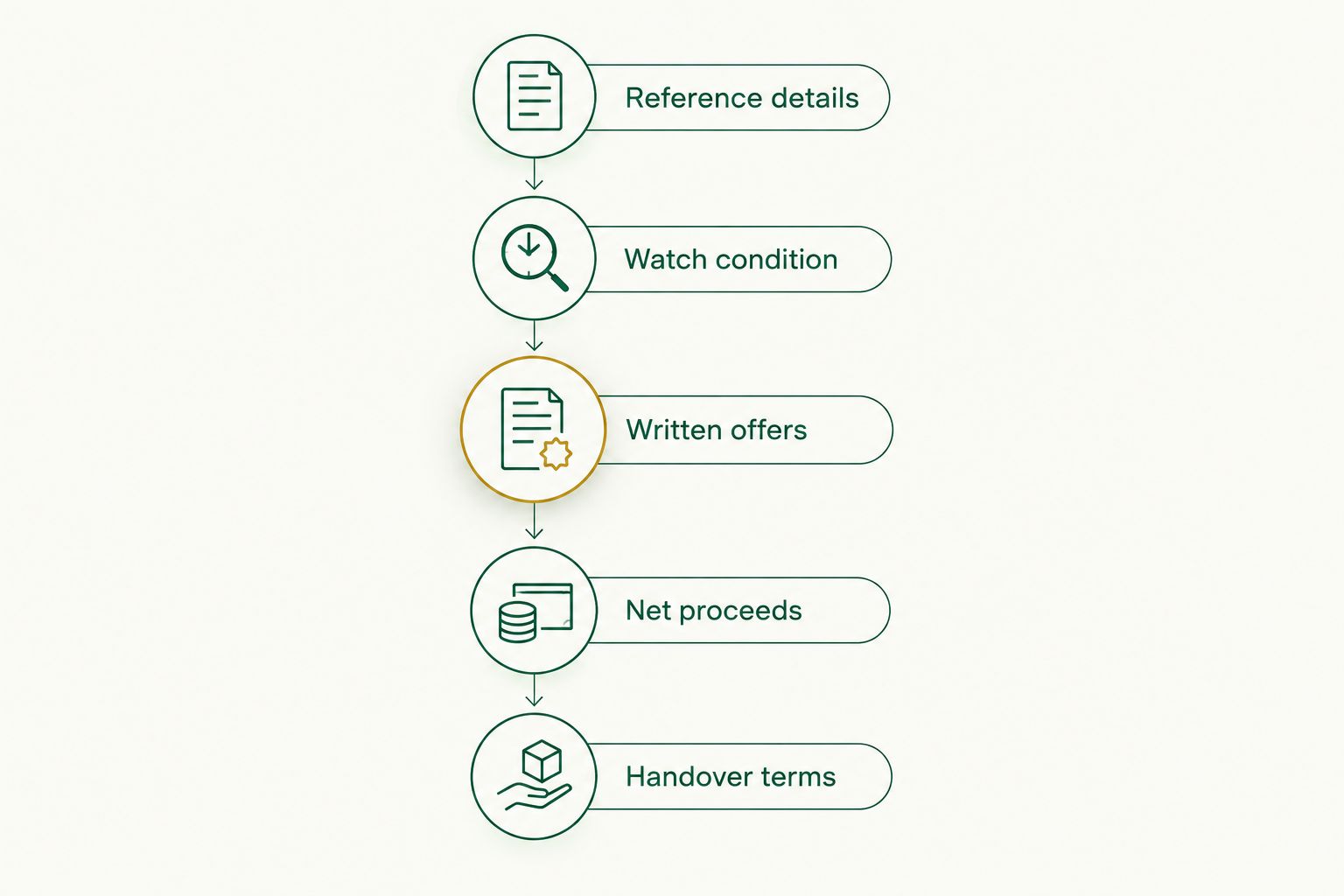
Three offers are a recommended comparison method, not a claim that every watch needs the same number of buyers. If you cannot compare like-for-like terms, ask follow-up questions before treating the largest headline amount as the best result.
Keep a record of what each buyer received. If one buyer assumes original components while another knows about replacements, their offers are not based on the same watch description.
Does the exact Rolex model change the decision?
Yes—the exact Rolex reference changes what you should compare. A model family is a starting point, not a complete identification. Use matching configurations when assessing offers or looking for transaction evidence.
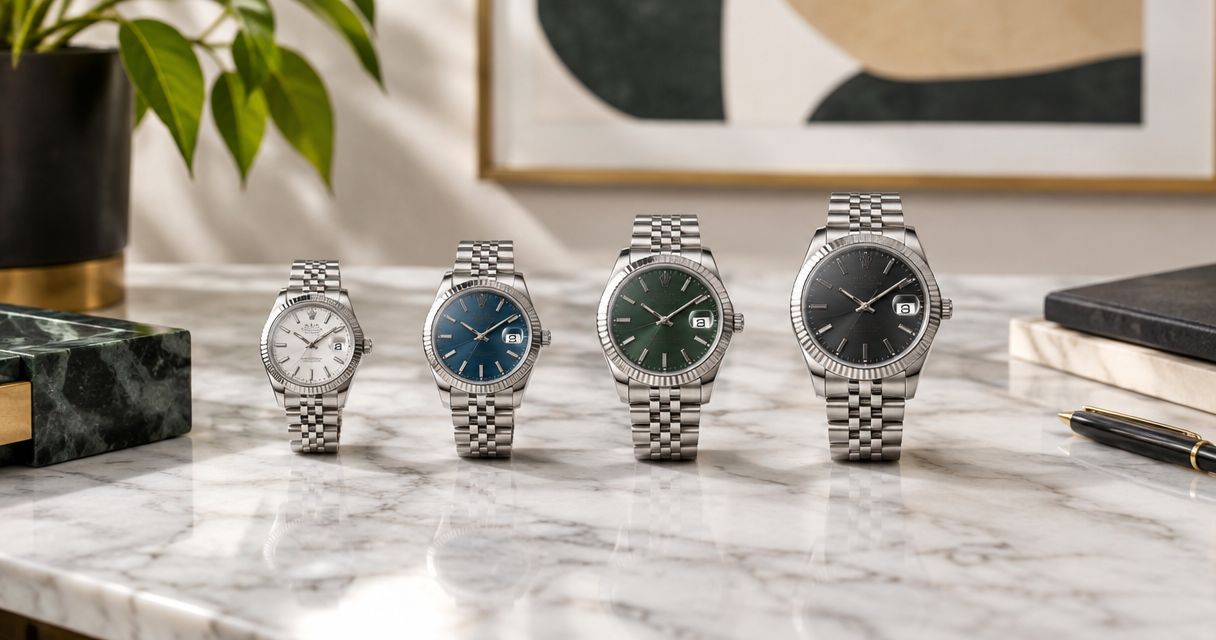
For example, the supplied watch catalog identifies a Rolex Datejust 41 reference 126300 with a 41 mm case and a Rolex Datejust 36 reference 126234. The 36 mm model is not the same watch simply because both carry the Datejust name. Their listed configurations also differ in bezel, bracelet, and material.
That distinction is useful when selling: do not use a visually similar watch as an automatic valuation benchmark. Record the reference and configuration first, then ask buyers to explain what their offer covers.
A reference number also does not settle condition. Two watches with matching references still need individual inspection and an accurate account of documentation, modifications, and wear.
Should I wait for Rolex values to rise before selling?
Waiting does not guarantee a better offer. Keep your Rolex if you want continued ownership or if the current transaction fails your requirements. Do not describe that choice as a secured future gain.
A prediction is especially unhelpful when it has no defined reference, condition, or transaction type. Ask what evidence supports the claim and whether it concerns completed transactions comparable to your watch.
For a 2026 selling decision, a documented offer gives you something concrete to assess. A forecast does not tell you what a buyer will pay when you eventually decide to sell.
Should I service or polish my Rolex before selling?
Get an assessment before authorizing work solely to improve a sale. Tell prospective buyers about known running issues, previous servicing, and cosmetic damage, then ask how those details affect their offer.
Service and polishing are different decisions. Mechanical attention addresses function; polishing alters the exterior finish. Neither should be treated as an automatic route to a better selling outcome.
Ask whether the proposed work is necessary and whether the buyer wants the watch assessed in its current condition. Preserve existing records and disclose any work you choose to commission. Avoid spending money on an assumed return that no buyer has agreed to recognize.
Where does Luxury Time NYC fit into a Rolex sale?
Luxury Time NYC is a Rolex resale option for collectors seeking to sell or trade a luxury watch. The retailer sells new and pre-owned luxury watches and buys and trades timepieces, making it relevant to either an outright sale or a collection change.
You can discuss your watch with Luxury Time NYC, but keep the same comparison discipline you would use with any buyer. Request terms for your exact Rolex and distinguish an initial assessment from a final commitment.
The benefit is a retailer whose stated business includes buying and trading luxury watches. The limitation is that this business description does not establish the offer, inspection requirements, or payment terms for your particular transaction. Evaluate the written proposal, not the brand name alone.
FAQ
Is now a good time to sell a Rolex in 2026?
Yes, if a verified buyer’s written offer meets your goal and you are ready to part with the watch. Check deductions, inspection conditions, and payment terms before accepting; the year alone does not make a sale worthwhile.
What's the best way to decide whether to sell my Rolex?
Compare written offers for the same accurately described watch against your reason for selling. Assess net proceeds and handover terms together rather than selecting the largest headline figure.
Should I sell my Rolex or keep it?
Sell if releasing the money matters more than keeping the watch and the transaction meets your requirements. Keep it if you still value ownership; holding does not guarantee a better future offer.
Is trading my Rolex better than selling it?
Trading is better suited to collectors who want another watch, while selling suits owners who want cash. Compare the outgoing allowance and the replacement transaction separately before choosing.
Can I sell my Rolex without the original box and papers?
A missing box or missing papers does not automatically prevent a sale. Disclose exactly what you have and ask the buyer how the missing items affect assessment and the proposed terms.
Should I polish my Rolex before getting an offer?
Get an assessment before polishing your Rolex solely for a sale. Polishing changes the exterior finish, so discuss the current condition and proposed work with prospective buyers first.
Does Luxury Time NYC buy or trade Rolex watches?
Luxury Time NYC buys and trades luxury timepieces as part of its retail business. Ask for the assessment and transaction terms for your particular Rolex before committing.
Does an online Rolex listing tell me what I'll receive?
No—an advertised listing is not a purchase offer for your watch. Base your decision on a buyer’s written terms for your exact reference, condition, and documentation.
One last thing
Ask one revealing question before accepting: What would change this offer after you inspect the watch? The answer helps distinguish a usable proposal from a figure that remains dependent on unresolved assumptions.
For your 2026 decision, uncertainty about the transaction deserves more attention than confidence about the calendar. Resolve the inspection and payment conditions first. Then sell, hold, or trade for a reason you can clearly explain.