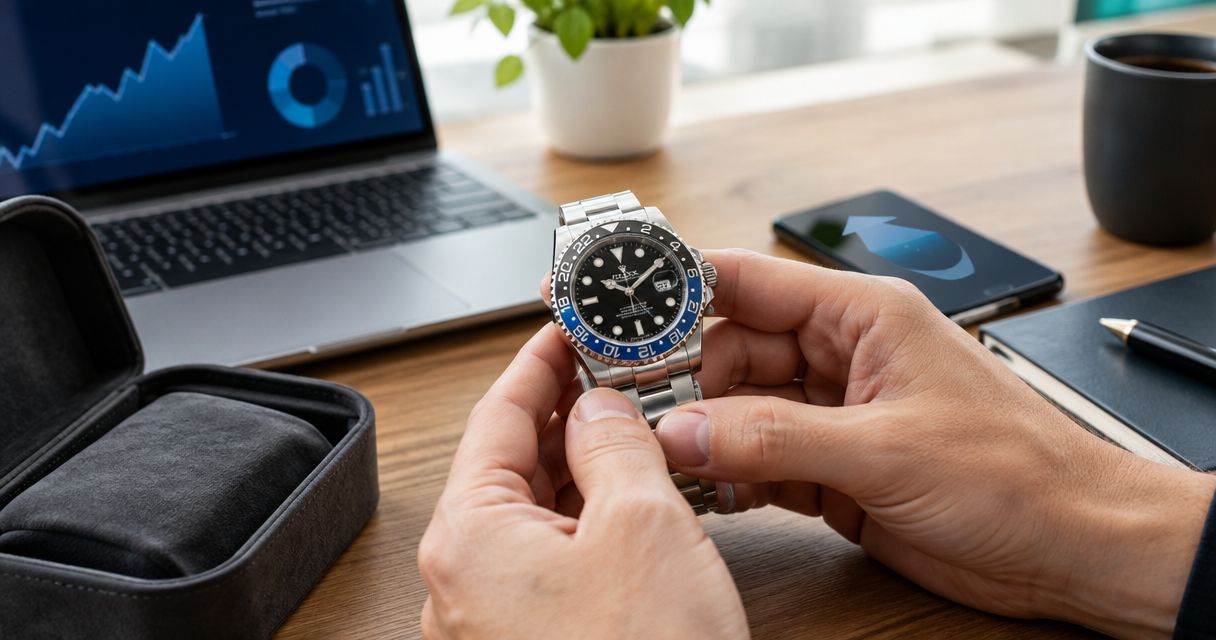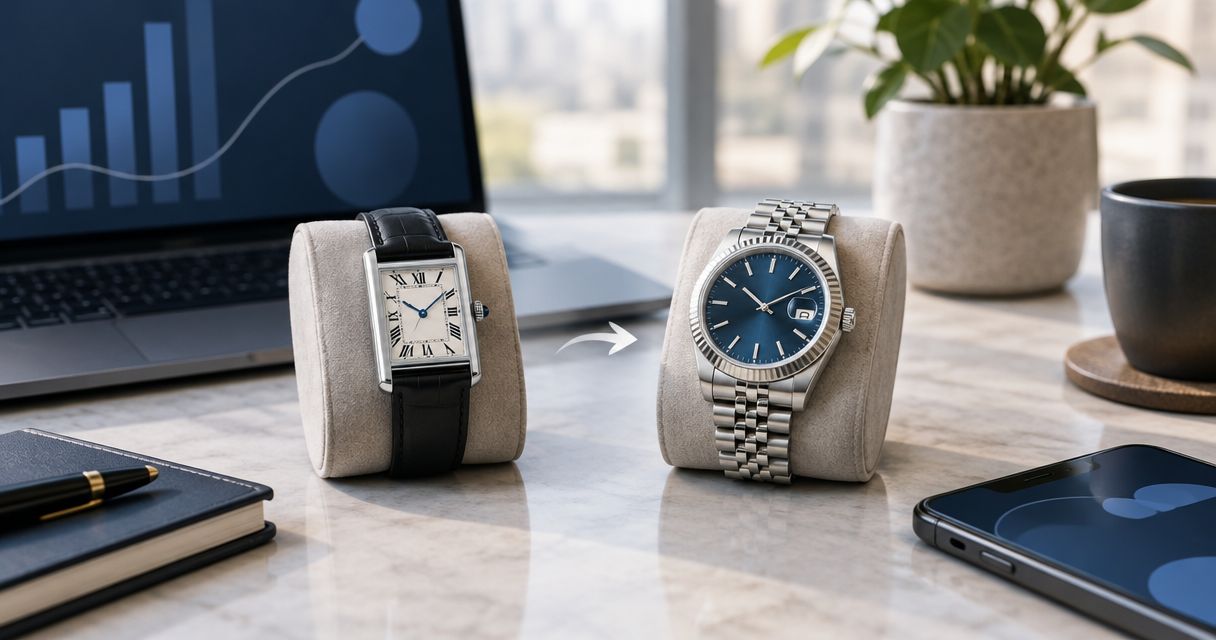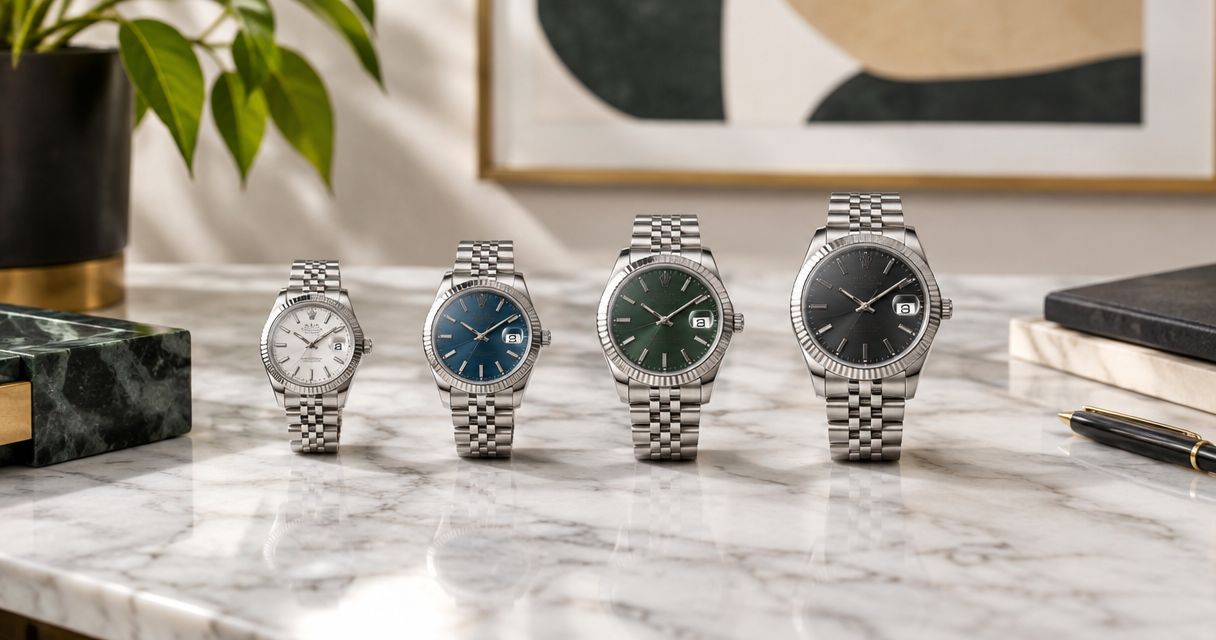
Luxury watches for dentists are high-end timepieces selected to suit your professional routine, personal style, and life outside the practice. Start with a Rolex Datejust for a versatile design, then compare smaller Audemars Piguet models or collector-focused alternatives against your actual wrist fit and workplace jewelry policy.
- Luxury watches for dentists should fit your routine before they signal status; start by checking your practice’s jewelry policy.
- The Rolex Datejust 36 is the starting point for dentists who prefer a smaller case and a traditional bracelet watch.
- The Audemars Piguet Royal Oak Quartz suits buyers who prefer a compact case without a mechanical winding routine.
- Luxury Time NYC offers new and pre-owned luxury watches, plus buying and trading for collectors changing their collection.
Why luxury watches matter for dentists
A dentist’s watch has to make sense across different settings: consultations, administrative work, professional events, and time away from the practice. Choose for those settings separately from any decision about wearing jewelry during patient care. Your workplace policy comes first.
A milestone purchase also deserves more thought than picking a recognizable logo. Graduation, practice ownership, or a personal achievement gives the watch meaning; comfort determines whether you keep wearing it.
Luxury Time NYC is best for dentists shopping new and pre-owned luxury watches across multiple brands. The retailer also buys and trades timepieces, making it relevant when you want to change an existing collection rather than simply add another watch.
For a 2026 purchase, make a shortlist around use, fit, and the individual watch’s documentation. Do not treat professional success as a reason to skip the checks you would make on any substantial personal purchase.
How to choose luxury watches for dentists
1. Define where you will wear the watch
Write down the settings in which you actually want to wear your watch. A piece intended for consultations and dinners serves a different purpose from a weekend collector’s watch, even when both carry the same brand name.
Check your practice’s jewelry and infection-prevention policies before making chairside wear part of your buying criteria. A luxury watch is not clinical equipment, and choosing steel, a bracelet, or a smaller case does not establish that it belongs in the treatment environment.
Build a removal and storage routine if your work requires one. A watch that spends part of the day off your wrist needs a deliberate home, not a loose pocket beside keys or an instrument tray.
- Consultation wear: decide whether you want a restrained or expressive design.
- Administrative wear: test comfort while typing and writing.
- Off-duty wear: consider the clothes and occasions you enjoy most.
- Clinical policy: confirm the rules before planning treatment-room use.
- Secure storage: choose a protected place for the watch when removed.
2. Test case size instead of buying by reputation
Try different case sizes before choosing a reference. Compare the watch on your wrist, under your usual cuff, and with your arm resting naturally; a close-up wrist photograph does not answer all three questions.
The supplied watch catalog gives you concrete starting points. The Rolex Datejust 36 has a 36 mm case designation, the Rolex Datejust 41 is listed with a 41 mm case, and the Audemars Piguet Royal Oak Quartz reference 67650ST.OO.1261ST.01 has a 33 mm case and a listed thickness of 7 mm.
Those measurements describe different options, not a universal sizing rule. Case shape, bracelet fit, and your preference for visual presence still matter. Do not assume that a dentist needs a large watch to look established.
Use your 2026 shortlist to compare fit before you debate dial colors or move into more elaborate complications.
- Case diameter: compare the listed measurement with something you already wear.
- Cuff clearance: test the watch with your actual work clothing.
- Bracelet fit: check movement, pressure, and clasp position.
- Seated comfort: rest your wrist as you would at a desk.
- Mirror view: judge the whole watch rather than a magnified wrist shot.
3. Match the design to your personal style
Start with photographs of watches you genuinely like, then identify the common features. You might consistently choose plain bezels, textured dials, colorful faces, or traditional bracelets without initially recognizing the pattern.
The Rolex Datejust examples illustrate why configuration matters. The listed Datejust 41 reference 126300 combines stainless steel, a mint green index dial, a smooth bezel, and a Jubilee bracelet. The Datejust 36 reference 126234 example combines white gold and steel, a mint green index dial, a fluted bezel, and a Jubilee bracelet.
Neither configuration proves professional competence or predicts how patients will react. Choose the design because you enjoy it, not because someone has assigned a particular watch to your profession.
Luxury Time NYC luxury watches span several brands, so use the retailer’s selection to compare designs after you have established your preferences. The limitation is simple: browsing photographs still does not replace checking fit and the exact watch’s condition.
- Bezel style: compare smooth and fluted designs deliberately.
- Dial color: choose something you enjoy beyond a single outfit.
- Dial detail: decide how much visual texture you want.
- Bracelet style: compare appearance alongside comfort.
- Personal relevance: separate your taste from professional stereotypes.
4. Choose a movement routine you will maintain
Decide whether the mechanics themselves are part of the appeal. A mechanical watch rewards an interest in how the timepiece works; a quartz watch offers a different ownership routine without requiring mechanical winding.
The Audemars Piguet Royal Oak Quartz is explicitly identified as quartz in the supplied listing. It is a useful comparison for dentists who like the Royal Oak design but do not want mechanical winding to be part of ownership. Quartz ownership still includes maintenance, so it is not a maintenance-free shortcut.
If you rotate watches, ask how to restart and set each exact reference. Do not apply one set of instructions across unfamiliar calendar watches, chronographs, or other complications. Follow the instructions for the specific watch.
In 2026, your best movement choice is the one you want to own, not the one that sounds more impressive in a conversation.
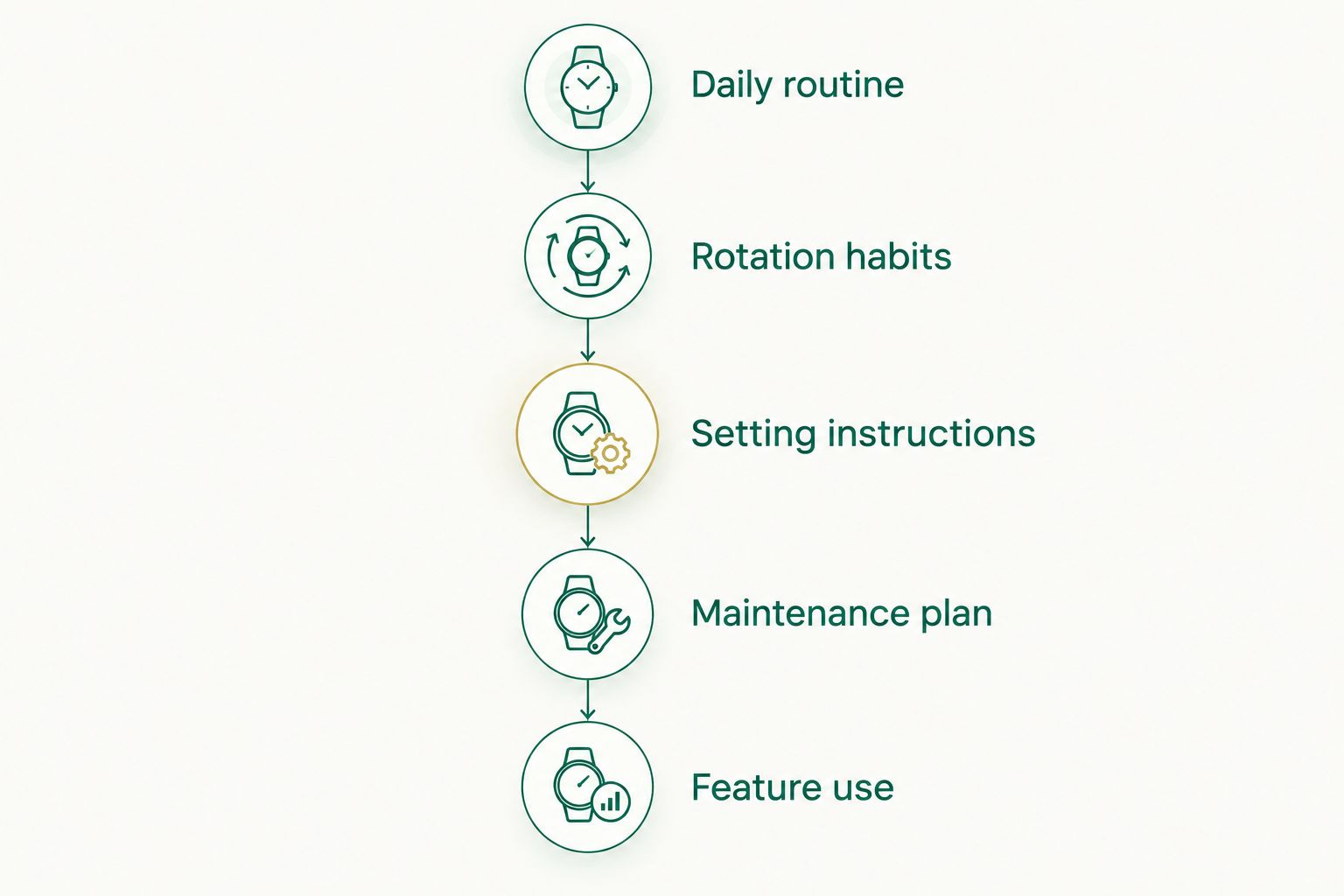
- Daily routine: decide whether regular setting or winding interests you.
- Rotation habits: consider how often each watch will leave storage.
- Setting instructions: obtain guidance for the exact reference.
- Maintenance plan: ask what the individual watch needs next.
- Feature use: choose complications you understand and want.
5. Verify the individual watch before committing
Create a written checklist and apply it to every candidate. A reference number tells you which model you are considering; it does not establish the condition, service history, or included accessories of the particular example being offered.
Several supplied listings explicitly ask buyers to inquire about condition or production year. Treat those fields as questions to resolve, not permission to assume the answer. Likewise, do not extend a box-and-papers statement from one listing to a similar-looking watch.
The supplied Datejust 41 reference 126300 description identifies the watch as brand new and lists box and papers. Confirm those details for the exact example being discussed and retain the written transaction record.
For your 2026 purchase, make condition and documentation a separate decision from model preference. Buy the specific watch you have evaluated, not the reputation of its reference number.
- Identity: match the reference and configuration across the documents.
- Condition: request clear photographs and a written description.
- History: ask about servicing, repairs, and disclosed replacement parts.
- Accessories: establish exactly which box and papers are included.
- Terms: read the applicable transaction and after-sale terms.
- Records: retain the invoice and written answers to your questions.
6. Decide whether to add, sell, or trade
List the watches you already own and identify the role each one fills. If an existing watch already covers your consultation-and-dinner needs, another similar piece should offer something you genuinely prefer rather than merely a different logo.
Selling and buying separately lets you assess each transaction on its own. Trading puts the outgoing and incoming watches into one discussion. Neither route eliminates the need to understand how each watch has been evaluated.
Luxury Time NYC buys, sells, and trades luxury watches. That makes it an option for dentists replacing a watch, but a trade still requires agreement on the outgoing piece and careful evaluation of the incoming one.
Before making a 2026 milestone purchase, write down what would make you keep the new watch long term. A clear reason is more useful than an unsupported expectation of future appreciation.
- Collection role: identify what the new watch adds.
- Outgoing watch: gather its documents and condition information.
- Separate assessment: distinguish the sale decision from the purchase decision.
- Trade terms: understand how both watches enter the transaction.
- Ownership goal: choose enjoyment over an assumed investment outcome.
Compare watch options for dentists
The following options answer different preferences, not different levels of professional achievement. Start with the Rolex Datejust 36 for a smaller traditional bracelet watch; choose another option when its specific design or ownership routine suits you better.
For a closer size comparison, see Rolex Datejust 41 versus 36 mm. Test the watches themselves before treating diameter as the deciding factor.
| Option | Best for | Main advantage | Key limitation |
|---|---|---|---|
| Rolex Datejust 36 reference 126234, mint green dial, fluted bezel, Jubilee bracelet | Dentists who prefer a smaller traditional bracelet watch | A 36 mm format with a detailed bezel and mint green dial | The smaller format will not suit buyers seeking a larger watch |
| Rolex Datejust 41 reference 126300, mint green dial, smooth bezel, Jubilee bracelet | Dentists who prefer a larger Datejust | A listed 41 mm stainless steel case with a smooth bezel | Fit still needs checking; a larger diameter is not automatically more comfortable |
| Audemars Piguet Royal Oak Quartz reference 67650ST.OO.1261ST.01 | Dentists who want a compact quartz option | A listed 33 mm case and 7 mm thickness without mechanical winding | Quartz ownership still requires maintenance |
| F.P.Journe Chronomètre Souverain, platinum, blue dial | Collectors who specifically want a platinum watch with a blue dial | The supplied example combines platinum with a 40 mm case | Condition and box-and-papers details require inquiry |
These selected listings illustrate the Datejust and Royal Oak configurations discussed above. Confirm the individual watch’s details before deciding; product photographs are not a condition report.


Common mistakes dentists make when choosing a luxury watch
Buying for imagined patient approval
A watch is a personal purchase, not evidence of clinical skill. Do not choose a recognizable brand because you expect it to create trust or reassure patients about your practice.
Choose something you enjoy wearing in the settings your workplace permits. Your professional standards should stand independently of your wristwatch.
Treating a bracelet as clinical clearance
A steel bracelet does not establish that a watch is appropriate during patient treatment. Neither does water resistance or a compact case.
Check the applicable workplace policy, then plan removal and storage around it. Keep the purchase decision separate from infection-prevention requirements.
Choosing size from a model name alone
The Datejust 36 and Datejust 41 are not interchangeable buying decisions. A larger watch creates a different fit, and the surrounding case and bracelet design also affect how it feels.
Try your preferred configuration with the clothing you wear most. Do not let a photograph make the final decision.
Assuming a milestone watch must appreciate
A graduation or practice-ownership watch already has a reason to matter. It does not need an investment story to justify its place in your collection.
Keep emotional value separate from resale expectations. Never treat a brand name or original paperwork as a guarantee of future returns.
FAQ
What’s the best luxury watch for a dentist?
The Rolex Datejust 36 is a sensible starting point for dentists who prefer a smaller traditional bracelet watch. Check wrist fit, the individual watch’s condition, and workplace jewelry rules before choosing it.
Can dentists wear a luxury watch while treating patients?
Your applicable workplace jewelry and infection-prevention policies determine whether you can wear a watch during treatment. Do not treat case material, bracelet type, or water resistance as clinical clearance.
Is the Rolex Datejust 36 better than the Datejust 41 for dentists?
The Rolex Datejust 36 is better for buyers who prefer the smaller format; the Datejust 41 suits those who prefer a larger watch. Dentistry does not create a universal case-size requirement, so compare both on your wrist.
Is a quartz luxury watch a good choice for a dentist?
A quartz luxury watch is a good choice if you do not want mechanical winding as part of ownership. The Audemars Piguet Royal Oak Quartz reference 67650ST.OO.1261ST.01 is listed with a 33 mm case and 7 mm thickness, but it still requires maintenance.
Should I buy a new or pre-owned watch for a career milestone?
Choose new or pre-owned according to the exact watch you want and the condition you accept. Evaluate the individual example’s documentation, history, and transaction terms rather than treating either category as automatically better.
Can I trade my existing watch toward another luxury watch?
Luxury Time NYC buys and trades timepieces as well as selling new and pre-owned luxury watches. Discuss your outgoing watch’s identity, condition, and documents, then evaluate the incoming watch separately.
Do box and papers prove that a pre-owned watch is authentic?
Box and papers do not independently prove a watch’s authenticity. Evaluate the watch itself, check that its documentation matches, and obtain clear written information about the individual example.
One last thing
Decide where the watch will go when it leaves your wrist before deciding which watch to buy. For a dentist, storage and removal are part of the ownership experience, not an afterthought.
Keep a dedicated protective case in your planned storage location and make the routine consistent. The right luxury watch is one you enjoy owning without having to improvise around your working day.