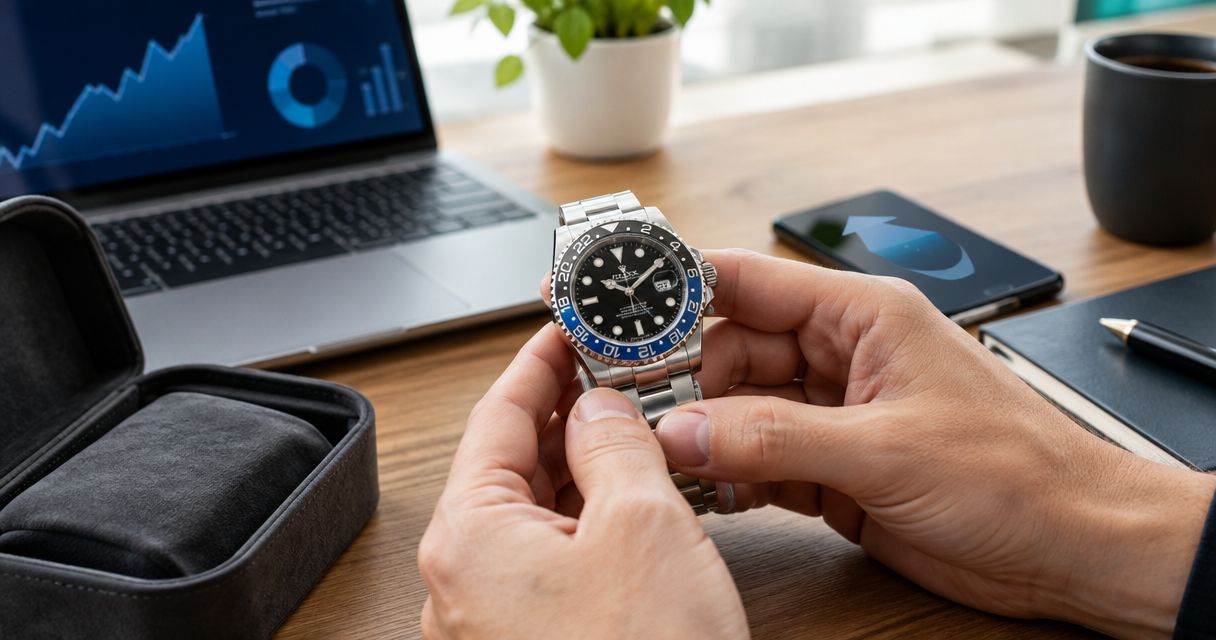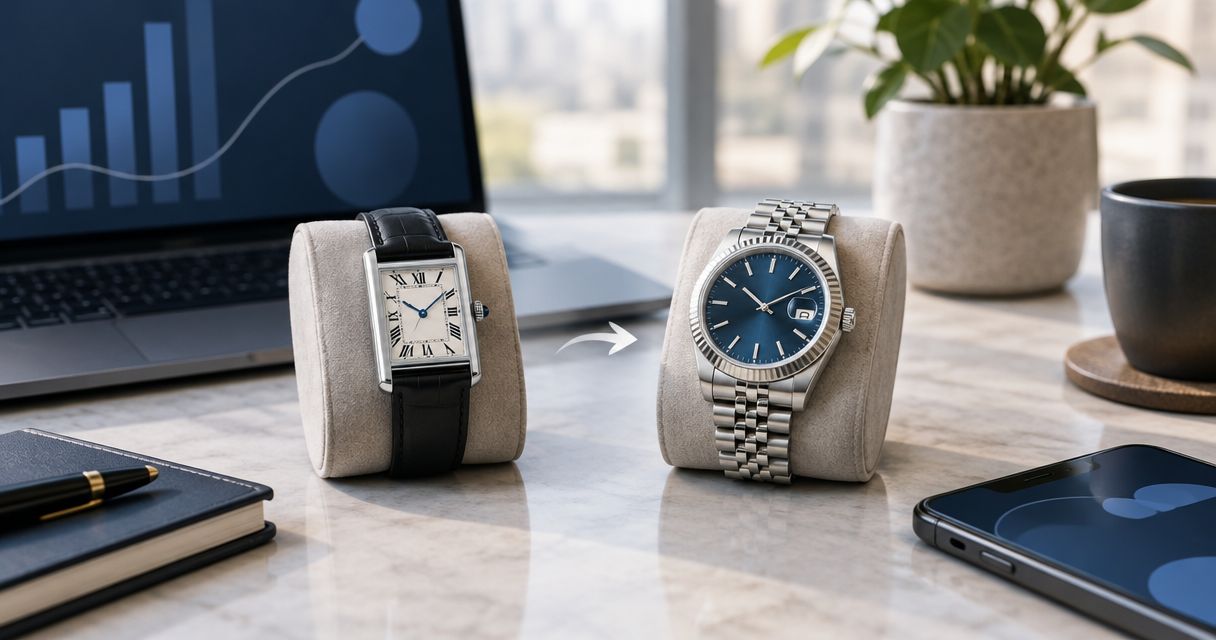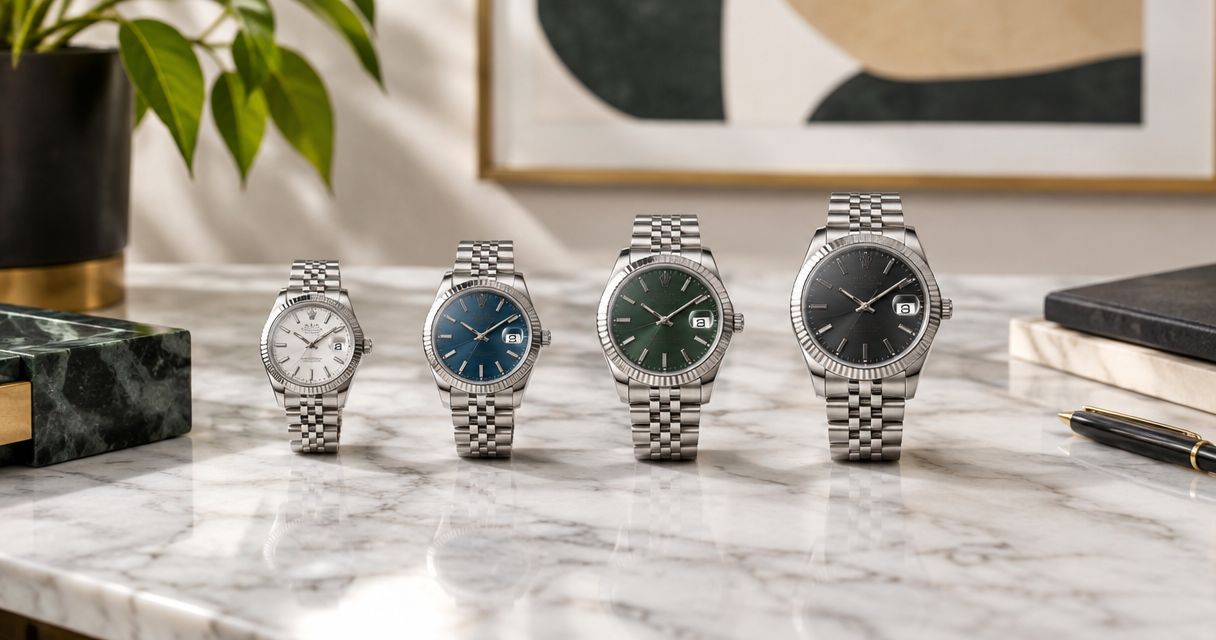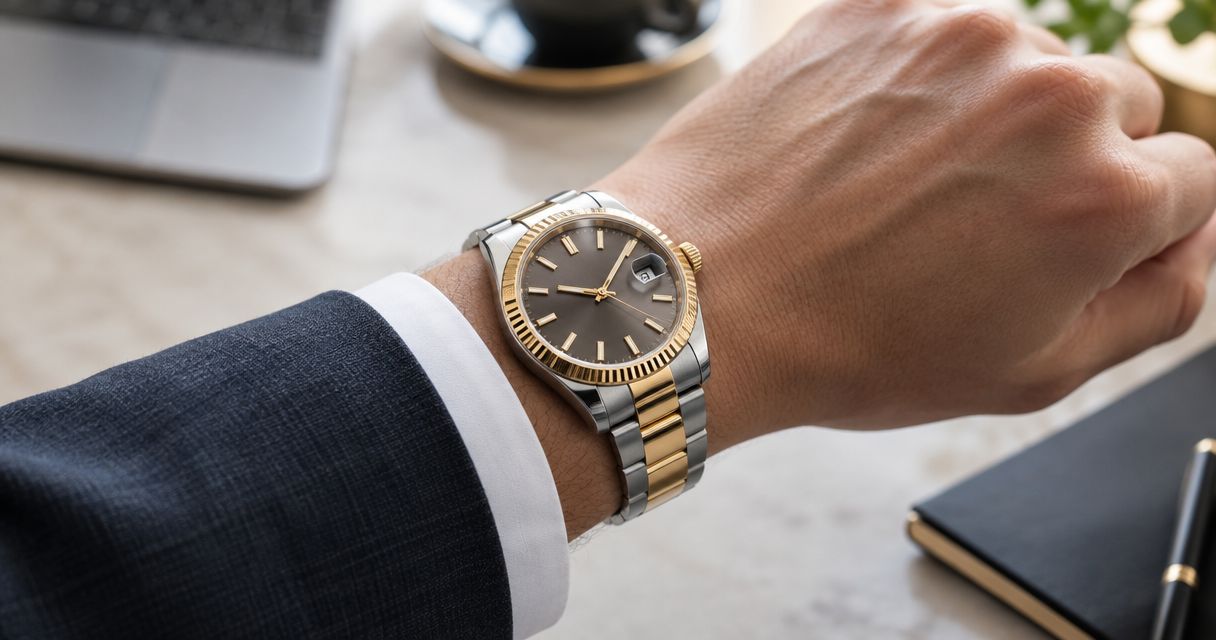
Yes—a two-tone Rolex is still a stylish choice in 2026, especially if you want visible gold accents without an entirely gold watch. The caveat is visual, not chronological: case size, dial color, bracelet, and the rest of your outfit determine whether the watch looks balanced or overdone.
- Is a two tone Rolex still in style? Yes—choose it for mixed-metal contrast, not a promised resale gain.
- Rolex Datejust suits dressier styling; two-tone sports models suit buyers who want a stronger wrist presence.
- White gold and steel combine metals without the warm contrast associated with yellow-gold two-tone watches.
- Luxury Time NYC serves buyers seeking new or pre-owned luxury watches, with buying and trading options.
Why this matters
A watch does not become unsuitable because someone calls its metal combination dated. The useful question is whether you enjoy wearing it with your actual clothes. Two-tone gives you a deliberate contrast; an all-steel watch gives you a more uniform look.
Separate that choice from size. A compact watch with gold accents can look less conspicuous than a larger steel watch, particularly when the larger case dominates your wrist. Start with the Rolex Datejust 41 versus 36 mm comparison if proportions are your main concern.
Choose the appearance you want to wear, not the appearance you think a collector expects. That principle is more useful than trying to label an entire metal combination fashionable or unfashionable.
Is a two-tone Rolex still in style in 2026?
Yes, as a style choice—not as a measurable claim that every two-tone reference is currently more popular than steel. A steel-and-gold Rolex offers a distinct look, and its suitability depends on the configuration and your preference for visible contrast.
For this 2026 decision, compare the visual effect before comparing individual watches. The table below separates metal combinations that buyers sometimes group together, even though they look different on the wrist.
| Metal combination | Best for | Main advantage | Main drawback |
|---|---|---|---|
| Steel and yellow gold | Buyers who want clearly visible gold accents | Strong warm-and-cool contrast | More conspicuous than a uniform silver-colored watch |
| Steel and Everose gold | Buyers who prefer rose-toned accents | A softer-looking warm contrast | The rose tone is a specific preference, not a neutral choice |
| Steel and white gold | Buyers who want a largely silver-colored appearance | Mixed materials without a strong color split | Does not deliver the warm two-tone look some buyers expect |
| All steel | Buyers who prefer visual restraint | A consistent metal color | Less contrast for buyers who enjoy gold details |
Rolex uses the name Rolesor for its combinations of gold and steel. The distinction matters because a white-gold-and-steel Datejust is not visually equivalent to a yellow-gold-and-steel watch, despite both combining metals.
The strongest reason to choose warm two-tone is that you like seeing gold against steel. If you are trying to make that contrast disappear, choose a silver-colored configuration instead.
Yellow-gold two-tone: best for a clearly defined gold accent
Yellow gold creates an unmistakable contrast against steel. It suits buyers who want the bracelet and bezel to contribute to the watch's appearance rather than letting the dial carry all the attention.
The advantage is clarity: you are choosing a visibly mixed-metal watch. The drawback is the same visibility, especially when you combine it with a bright dial, a reflective bezel, and several other statement accessories.
For a restrained approach, try yellow-gold two-tone with a plain shirt or knitwear and limited jewelry. Let the watch supply the contrast. If you prefer an expressive outfit, keep the watch in the comparison rather than treating it as a separate finishing detail.
Recommendation: choose yellow-gold two-tone when the warm contrast is the feature you want, not something you plan to tolerate.
Everose two-tone: best for buyers who prefer rose tones
Rolex's Everose gold gives a different warm-metal appearance from yellow gold. Choose it because you prefer the color against your skin and clothing, not because it is automatically more contemporary.
Its strength is a distinct rose-toned contrast with steel. Its limitation is that the color remains noticeable; buyers seeking a neutral, silver-colored watch will not get that effect simply by switching from yellow gold to Everose.
Compare both warm tones under ordinary light. A photograph can help you shortlist watches, but lighting and reflections influence how gold appears on a screen. Look at the whole watch, including the dial and bracelet, rather than judging a cropped bezel photograph.
Recommendation: choose Everose two-tone if the rose tone wins your direct visual comparison.
White gold and steel: best for a quieter mixed-metal look
White gold and steel answer a different question: how do you combine materials while keeping a largely silver-colored appearance? This is useful if you like a Datejust with a fluted bezel but do not want yellow or rose-colored contrast.
Two relevant examples are the Rolex Datejust 36 White Gold/Steel Mint Green Index Dial & Fluted Bezel on an Oyster bracelet and the same described configuration on a Jubilee bracelet, both reference 126234. Each has a 36 mm case. The decision between them centers on bracelet appearance, not a change in case diameter.
| Configuration | Best for | Advantage | Trade-off |
|---|---|---|---|
| Datejust 36 white gold/steel, mint green dial, Oyster bracelet | Buyers who prefer a simpler bracelet pattern | Broad links give the bracelet a less intricate appearance | Less decorative than the Jubilee alternative |
| Datejust 36 white gold/steel, mint green dial, Jubilee bracelet | Buyers who want a more detailed bracelet | A more intricate link pattern | Adds visual activity beside the fluted bezel |
| Datejust 41 steel, mint green dial, smooth bezel, Jubilee bracelet | Buyers comparing a larger, silver-colored configuration | A 41 mm case and smooth bezel offer a different balance | Larger case proportions; no warm gold contrast |
The 41 mm case is 5 mm larger in diameter than the 36 mm case. That difference is not a wrist-fit formula: case shape, bracelet fit, and your preferred proportions still need a direct comparison.
These white-gold-and-steel options are relevant if your objection is visible warm gold. They are not substitutes for the yellow-gold look if that contrast is what attracted you to two-tone in the first place.


Why a two-tone Rolex's appearance varies
Two watches can share a metal combination and still create different impressions. Before deciding that two-tone does or does not suit you, isolate these five factors:
- Metal color: Yellow gold, Everose gold, and white gold produce different levels and types of color contrast against steel.
- Case size: Compare the watch's proportions on your wrist rather than assuming gold is responsible for all its visual presence.
- Dial color: Judge the dial together with the metal. A color you enjoy alone is not automatically your preferred combination.
- Bezel: A fluted bezel has a different surface pattern from a smooth bezel. Include that detail when judging overall visual activity.
- Bracelet: Oyster and Jubilee bracelets use different link patterns. Compare the full bracelet, not only the watch head.
Your outfit supplies the surrounding context. The same watch is the focal point beside a plain sleeve and part of a busier composition beside patterned clothing and several accessories.
For a 2026 purchase, record the actual configuration you prefer. A note such as yellow gold, quiet dial, smaller case is more useful than a broad decision to buy something modern.
How do you choose a two-tone Rolex that suits your wardrobe?
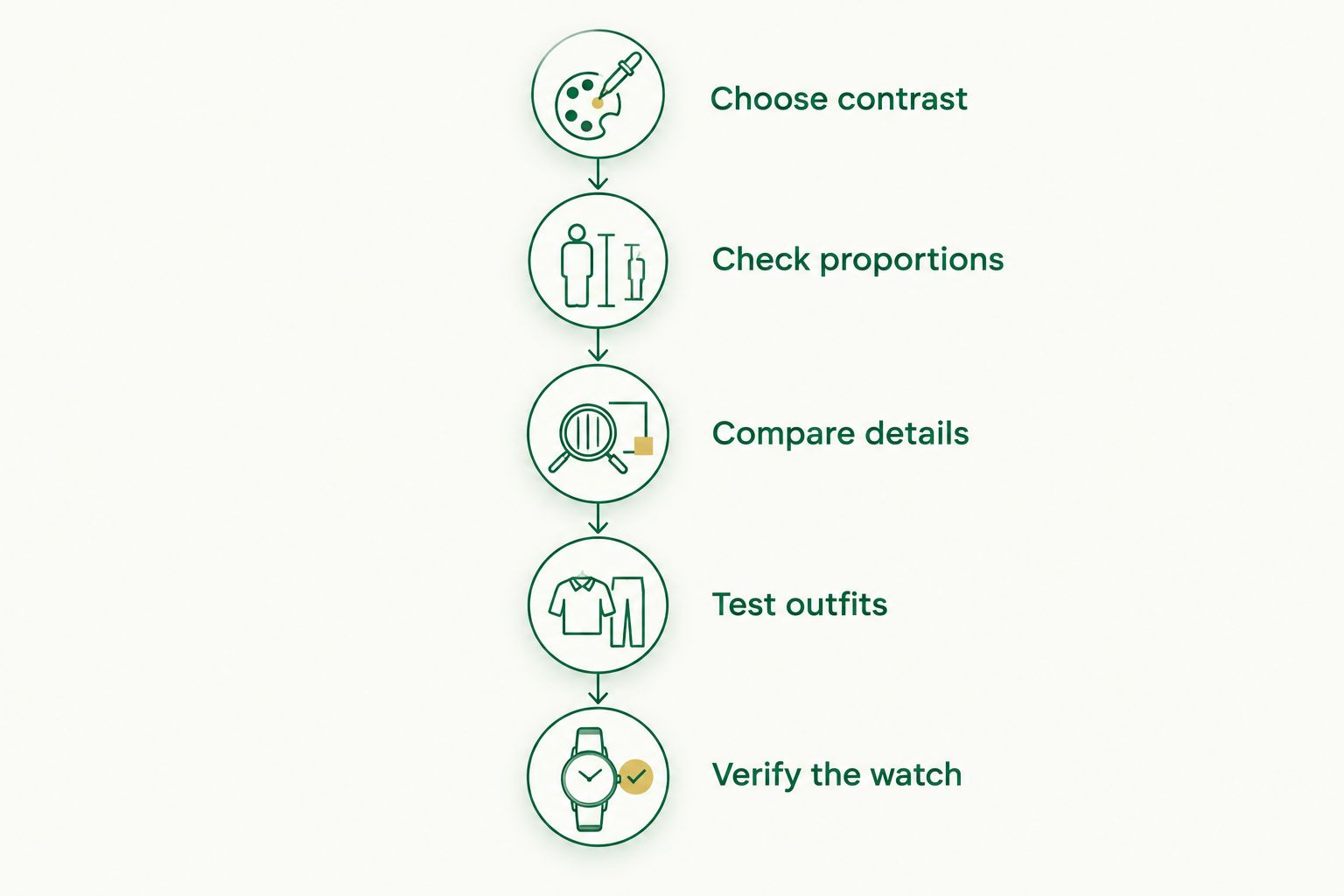
Use the same sequence for each candidate. It keeps one appealing detail from distracting you from a watch you would not enjoy wearing as a whole.
- Choose contrast. Decide whether you want visible warm gold or a mostly silver-colored appearance. This eliminates the largest stylistic mismatch first.
- Check proportions. View the watch on your wrist and from a normal conversational distance. Do not rely only on a close-up photograph.
- Compare details. Consider the dial, bezel, and bracelet together. Avoid making separate decisions that produce an overall look you dislike.
- Test outfits. Compare the watch with clothes you wear regularly, including casual clothing if this will be your everyday watch.
- Verify the watch. Confirm the exact reference, materials, condition, and supporting documentation before making a purchase decision.
Finish the style comparison before letting a seller's description steer you toward a different configuration. Then apply the buying checks to the specific watch; an attractive metal combination does not establish authenticity or condition.
Can you wear a two-tone Rolex with casual clothes?
Yes—a two-tone Rolex can be worn with casual clothes when you like the contrast it creates. Start with a plain T-shirt, knitwear, or an uncomplicated shirt rather than reserving the watch for a suit.
The benefit is that the watch can provide the outfit's main decorative element. The drawback is attention: if you want the watch to disappear into the outfit, a visible gold-and-steel combination works against that goal.
Do not build an entirely new wardrobe to justify one watch. Test the watch against what you already reach for, and choose the configuration that fits those habits.
Does a two-tone Rolex have to match your jewelry?
No—a two-tone Rolex does not require every other metal accessory to match exactly. The watch already contains a combination of metals, so uniform color is not a requirement for wearing it.
A practical starting point is to repeat one of its tones elsewhere, then assess the result. A ring or buckle is enough for that experiment; adding more jewelry is not necessary.
Keep the distinction between preference and rule. If a mixed-metal outfit looks right to you, wear it; if you prefer a single metal color across your accessories, use that preference to narrow your watch choice.
Does being stylish make a two-tone Rolex a good investment?
No—a style verdict in 2026 is not an investment verdict. Enjoying a watch's appearance does not establish its future resale value, and the metal combination alone cannot answer that financial question.
Separate the decisions. Choose a configuration you want to wear, then evaluate the particular watch's condition, originality, documentation, and purchase terms without assuming that fashion appeal guarantees a financial return.
Buy two-tone for the wearing experience first. That gives you a reason to own the watch that does not depend on a future buyer sharing your taste.
Where Luxury Time NYC fits your decision
Luxury Time NYC is best for buyers seeking a retailer that buys, sells, and trades luxury watches. Its stated offering includes new and pre-owned watches, which makes it relevant whether you are starting a collection or considering a change from a watch you already own.
The range of buying routes is useful, but the retailer's business model does not decide which configuration suits you. Ask about the specific watch rather than treating the brand name, reference family, or a promotional description as a complete answer.
When discussing luxury watches with Luxury Time NYC, explain your preferred metal contrast, case proportions, dial, and bracelet. That is a clearer brief than asking for whichever two-tone Rolex is most fashionable in 2026.
FAQ
Is a two tone Rolex still in style in 2026?
Yes—a two-tone Rolex remains a stylish choice for buyers who enjoy gold-and-steel contrast. Choose the case size, dial, bezel, and bracelet as a complete configuration rather than judging the metal combination alone.
Does a two-tone Rolex look dated?
A two-tone Rolex does not automatically look dated. Its overall appearance depends on proportions, color combinations, bracelet details, and how you wear it.
Is a two-tone Rolex better than an all-steel Rolex?
A two-tone Rolex is better for visible gold contrast; an all-steel Rolex is better for a uniform metal color. Neither appearance is objectively better for every buyer.
Is white gold and steel the same look as yellow-gold two-tone?
No—white gold and steel create a largely silver-colored appearance, while yellow gold creates visible warm contrast against steel. Compare the actual configuration rather than treating every mixed-metal Rolex as visually equivalent.
Should I choose a 36 mm or 41 mm Datejust?
A 36 mm Datejust is the smaller case option; a 41 mm Datejust has a diameter 5 mm larger. Compare both on your wrist because diameter alone does not determine your preferred fit.
Can I wear a two-tone Rolex with jeans?
Yes—you can wear a two-tone Rolex with jeans. Try a simple top and limited accessories if you want the watch to provide the outfit's main contrast.
Will a stylish two-tone Rolex hold its value?
A stylish appearance does not guarantee that a two-tone Rolex will hold its value. Evaluate the specific watch separately from your style preference, and do not assume a future resale gain.
One last thing
Before rejecting two-tone, compare watches with similar proportions and similarly restrained dials. Otherwise, you risk comparing a decorative gold-and-steel configuration with a quieter steel configuration and blaming the entire difference on the metal.
For your final 2026 shortlist, change one feature at a time. If you still prefer steel after that comparison, buy steel; if the gold contrast is what you keep noticing and enjoying, choose two-tone. You do not need a trend forecast to recognize your own preference.